
🍃 90% of the world has electricity. US PreK–12 book sales hit over $5B. Difficulties in adopting physical AI.
Chart of the Day #535 Looks at PreK-12 book sales in the US, global access to electricity and physical barriers to adopting AI.
Hello 👋
Vietnam collaborates with Germany in speeding up green energy transition. Apple invests $50M in boosting AM workforce in India. NIIT to upskill digital and AI workforce.
NASA’s Johnson Space Center and the University of Texas System partnered to expand research and workforce development. LingoAce expands its platform beyond Chinese, adding K-12 math, science and English with AI support. Apple to train Indian workers in robotics.
Today's Topics
🏫 K-12 Education. PreK-12 book sales surpassed $5B
🍃 Green Skills. Over 90% of the global population has access to electricity
🤖 Artificial Intelligence. Infrastructure integration posed a difficulty in adopting AI
Thanks for reading!
Not a subscriber yet?
🏫 PreK-12 book sales surpassed $5B
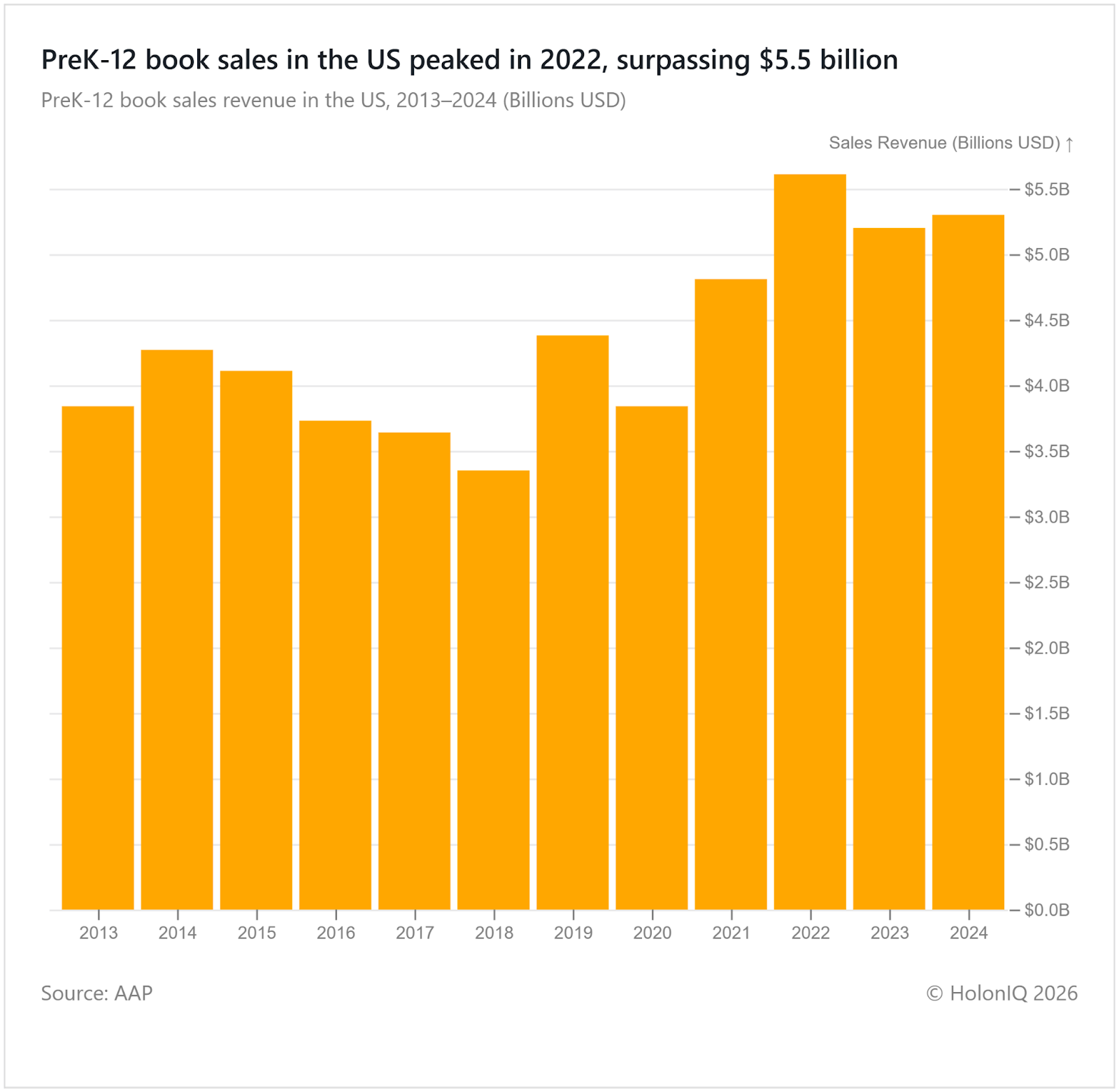
PreK-12 book sales revenue in the US peaked at $5.6B in 2022, the highest level over the past decade. Federal stimulus funding, including the ESSER programme, accelerated purchasing cycles that are usually spread over several years. Despite the growth of digital learning tools, physical and print-based books continue to play a central role in classrooms, particularly for early literacy and structured instruction, where educators value their reliability, accessibility, and reduced screen time compared to fully digital materials.
🍃 Over 90% of the global population has access to electricity
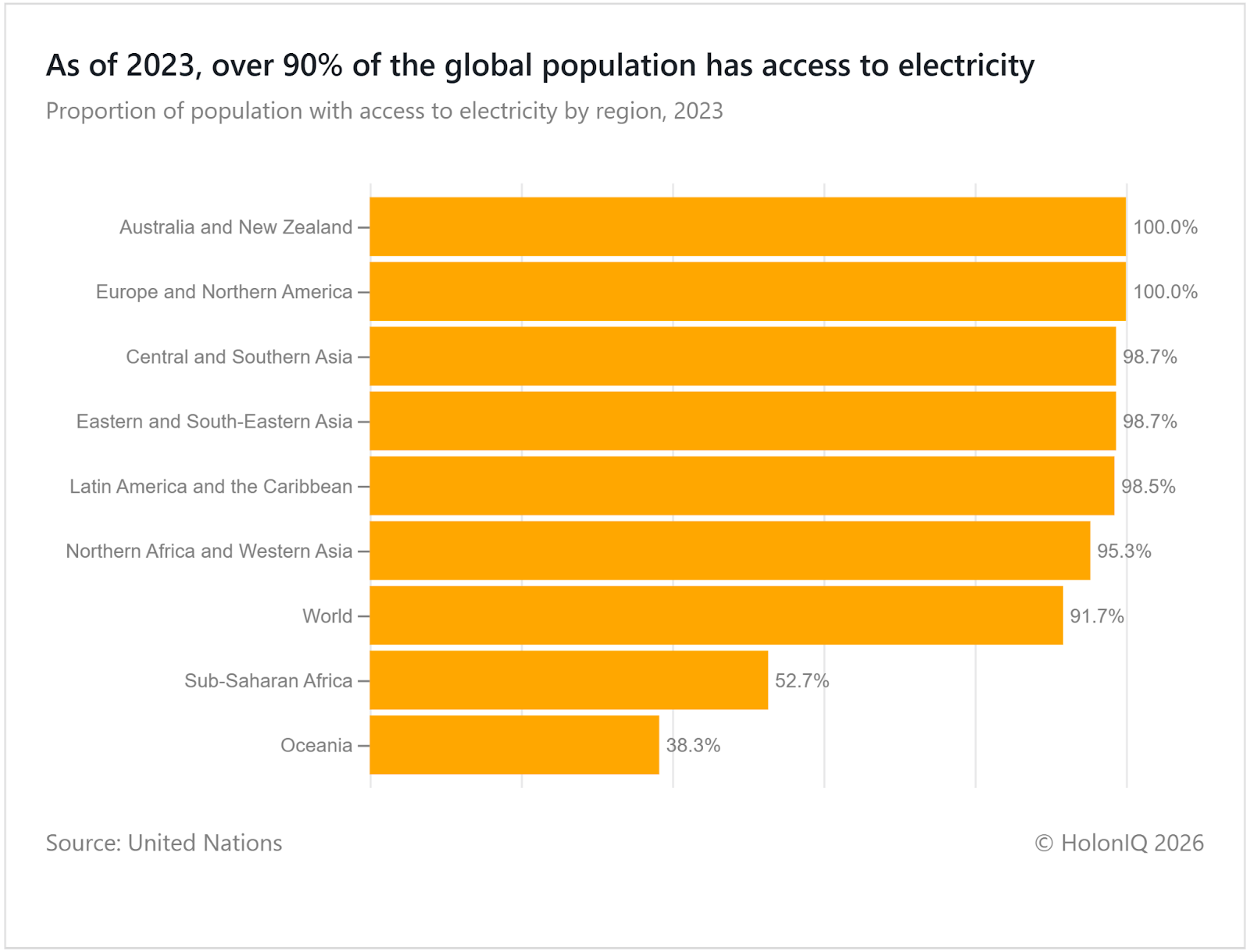
Electricity access continued to expand globally as of 2023, with coverage approaching universal levels across most regions. As access reaches over 90% worldwide, the energy conversation is shifting from expansion to sustainability and resilience. In 2025, renewables surpassed coal as the largest source of global electricity generation, reflecting accelerating investments in solar, wind, and grid modernisation. This transition is reshaping power systems by reducing emissions and fuel dependence, aligning with UN Sustainable Development Goal 7 and national clean energy strategies.
🤖 Infrastructure integration posed a difficulty in adopting AI
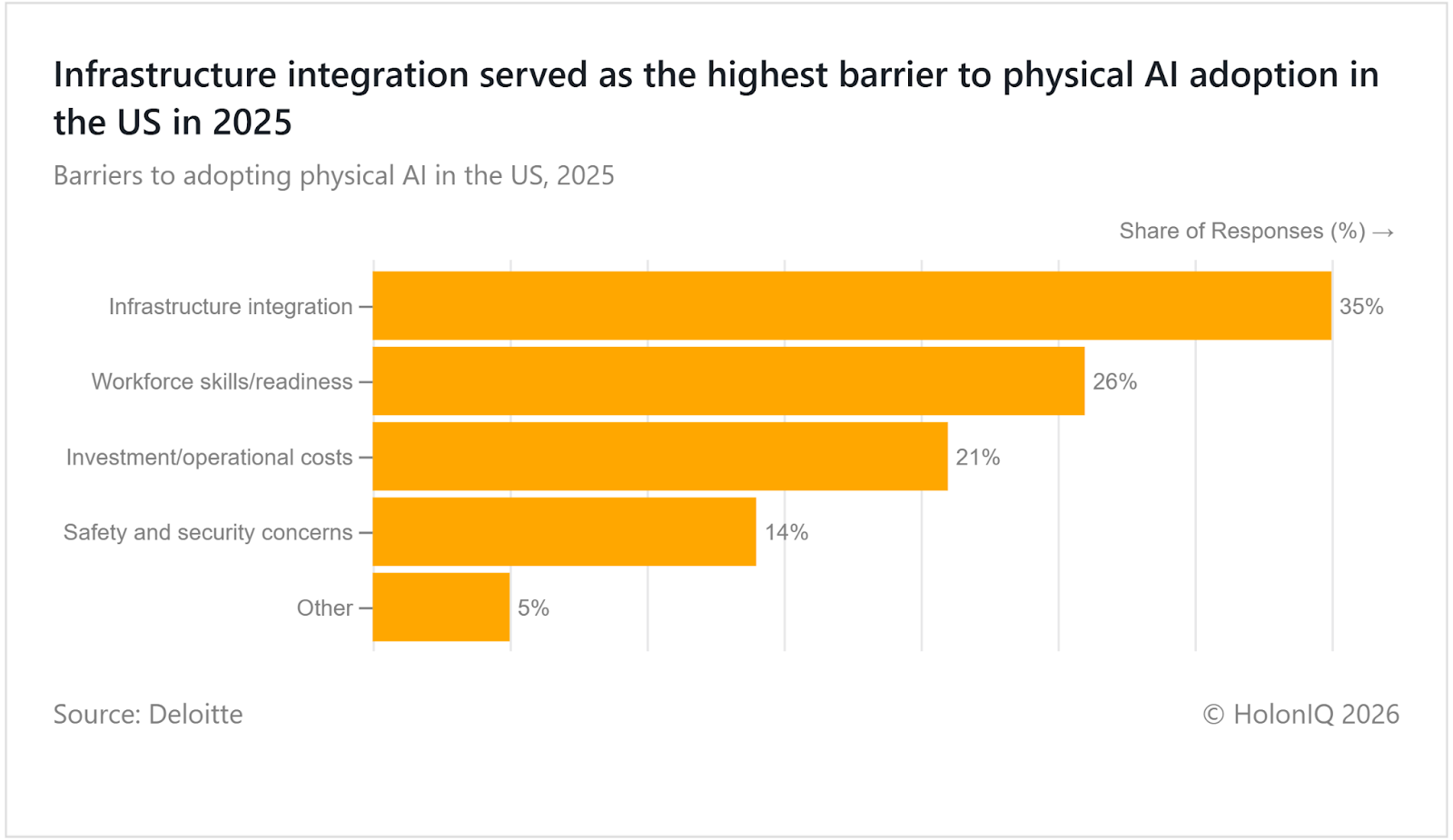
Infrastructure integration remains the top barrier to adopting physical AI in the US. Many factories and facilities rely on legacy machinery and fragmented IT systems that were not designed for real time data exchange. Upgrading sensors, networks, and control systems requires significant investment and operational downtime, creating delays in implementation. Addressing these integration challenges is crucial for scaling AI adoption and unlocking the full potential of automation across various industries.
Like getting this newsletter? Request a demo for unlimited access to over one million charts
Thank you for reading. Have a great week ahead!
Have some feedback or want to sponsor this newsletter? Let us know at qs.com.