
🏭 Agribusiness topped US projects. China led employee board representation. Energy firms emphasise non-financial KPIs.
Chart of the Day #572 looks at employee board representation, non- financial KPIs among energy companies and domestic manufacturing projects in the US.
Hello 👋
Nigeria launches nationwide programme to expand digital and financial literacy for 10 million people. Raspberry Pi Foundation secures $4.6M to expand AI education programs across Latin America. Chungnam National University established South Korea’s first national AI Computing Center, strengthening its role as an AI hub.
Today's Topics
💼 Workforce. Nearly one-third of Chinese companies include employees on their board
🍃 Green Skills. Energy companies focus on non-financial KPIs
🏭 Advanced Manufacturing. Agribusinesses led domestic manufacturing projects in the US
Thanks for reading!
Not a subscriber yet?
💼 Nearly one-third of Chinese companies include employees on their board
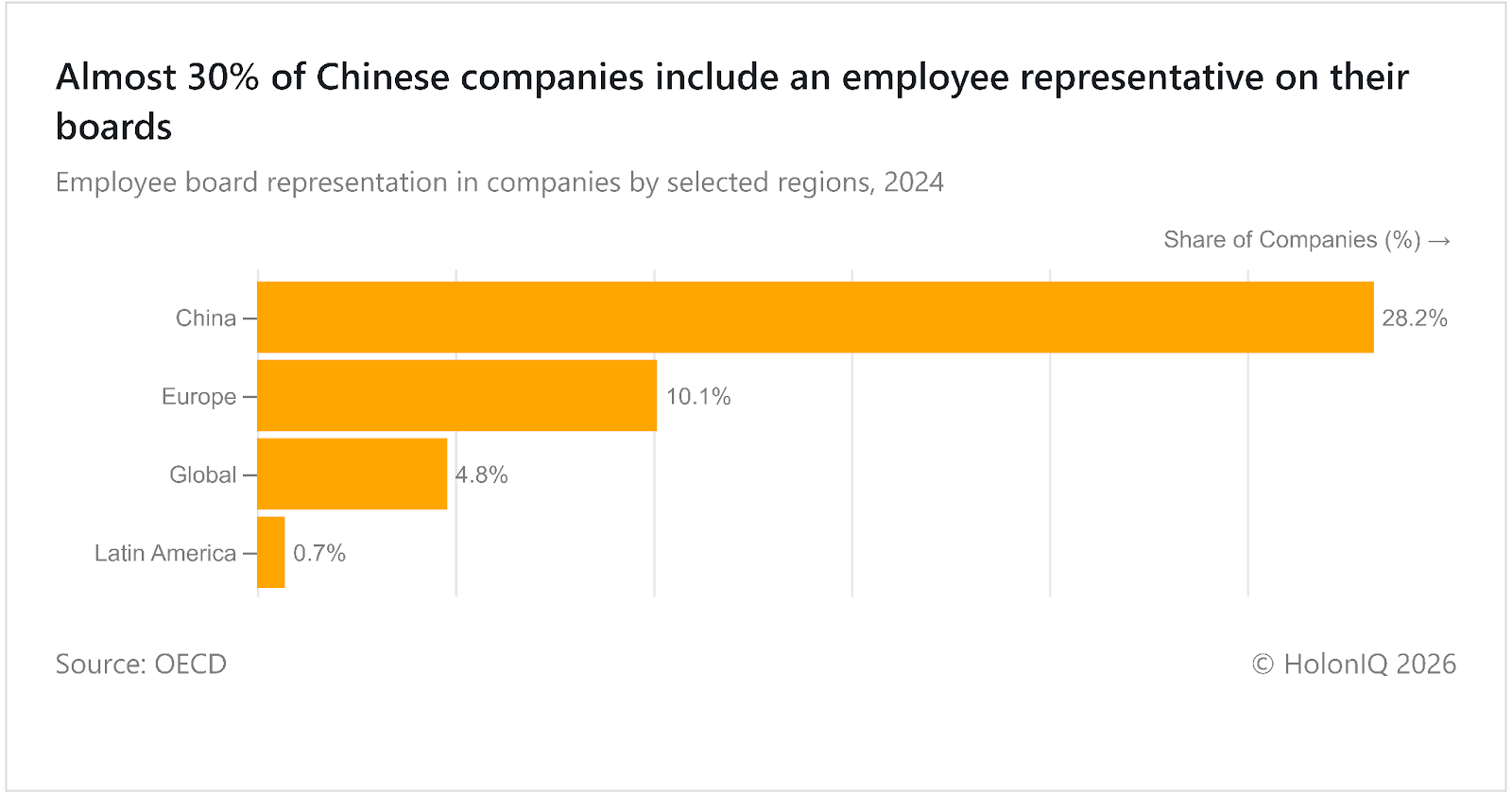
Employee board representation in China was over 20 percentage points higher than the global average. This shows significant regional variation in worker participation in corporate governance. Employee board representation means workers hold seats on company boards, influencing strategic decisions. China’s higher share reflects state ownership structures and mandatory worker director requirements in many firms. Under recent policy changes in China, private companies with more than 300 employees are required to have employee representatives on their boards.
🍃 Energy companies focus on non-financial KPIs
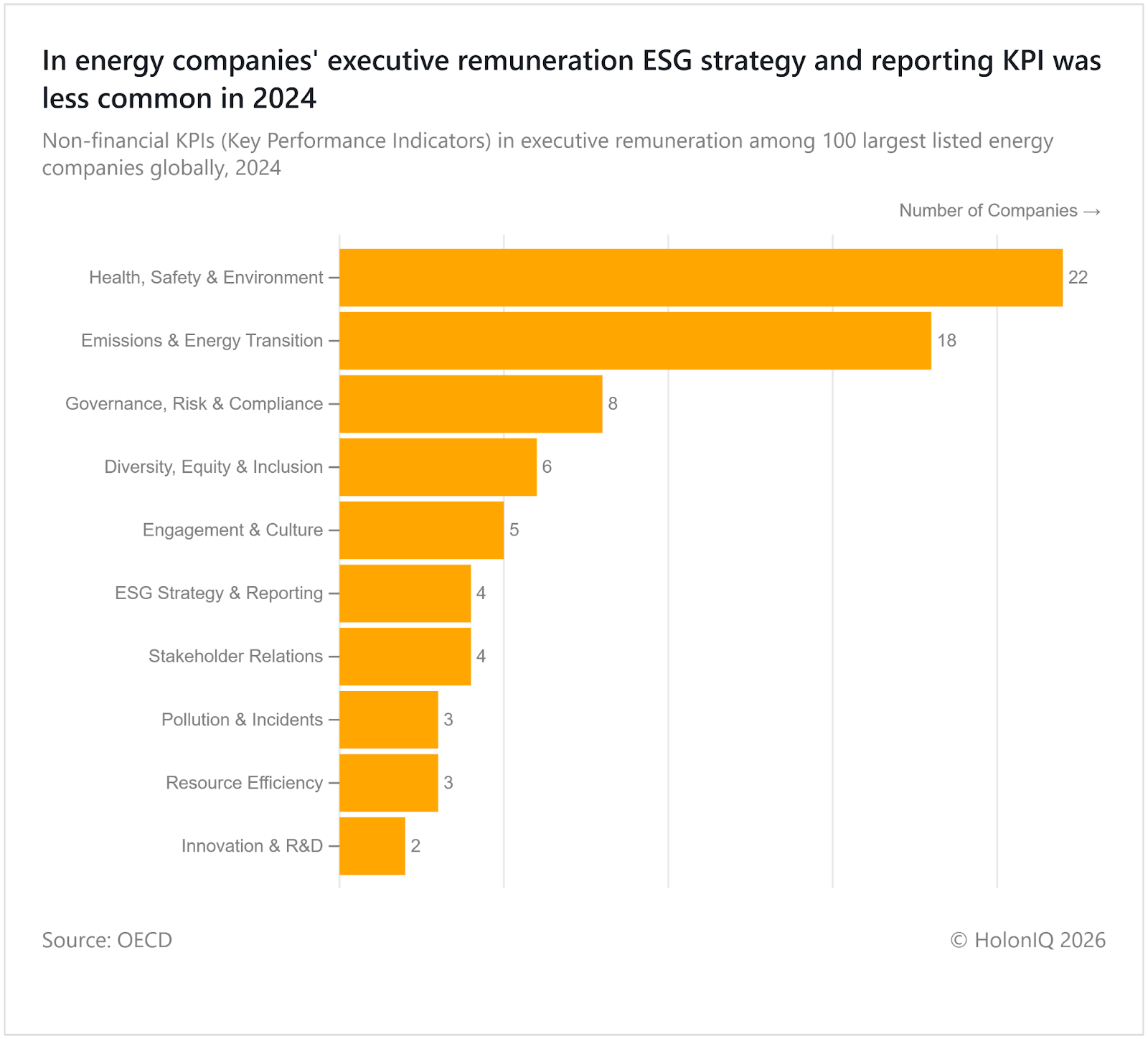
Energy companies are increasingly linking executive pay to non-financial measures beyond profit. Health, safety, and environment and emissions targets are the most common factors, while ESG strategy and reporting appear far less frequently. Non-financial KPIs in executive pay mean bonuses depend on goals beyond profit, such as emissions or safety. ESG strategy is lower as it is harder to measure directly. The OECD Principles of Corporate Governance promote linking remuneration to long term sustainability goals.
🏭 Agribusinesses led domestic manufacturing projects in the US
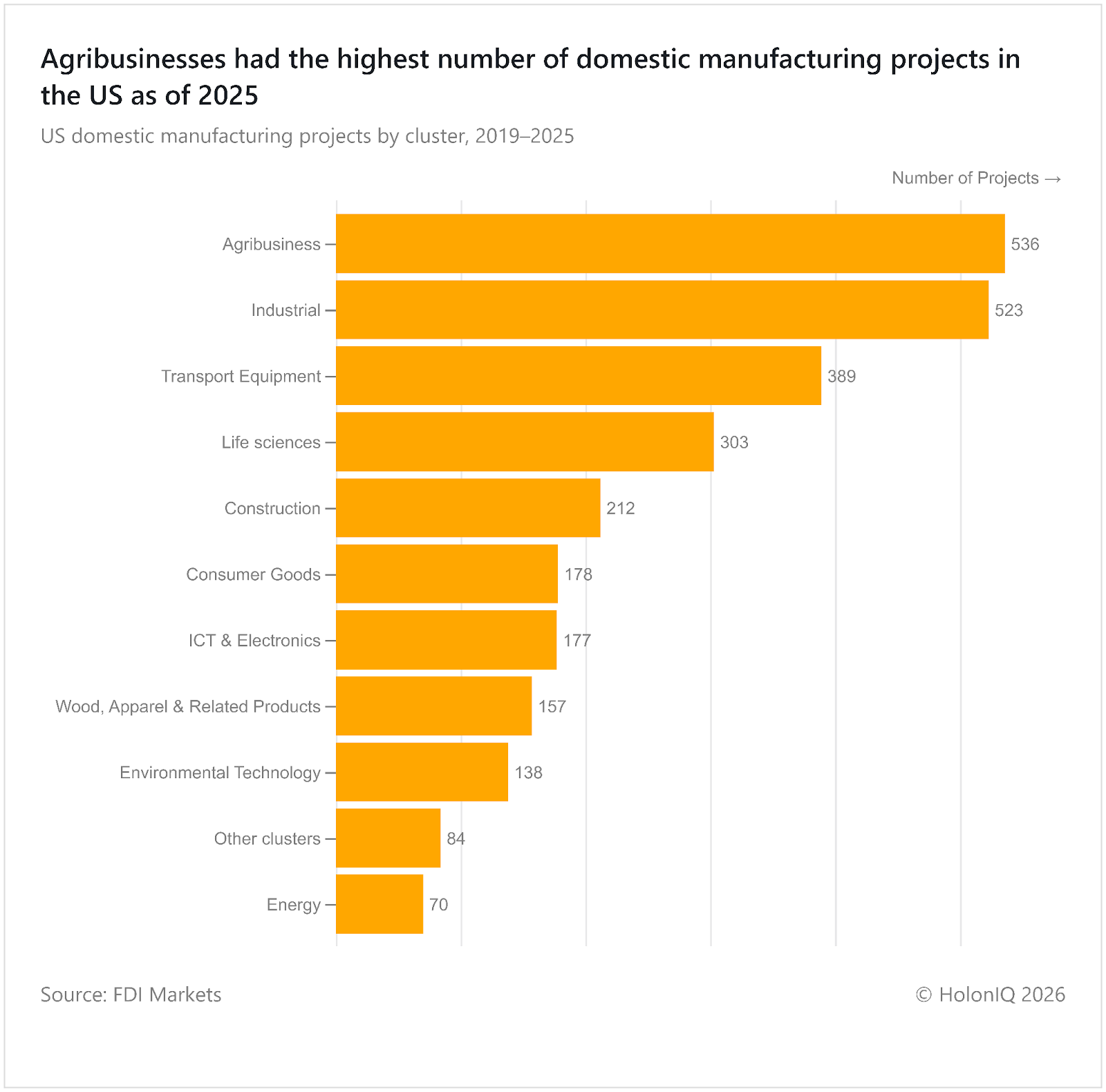
US domestic manufacturing projects reached over 2,500 between 2019 and 2025, with agribusiness leading at nearly 540 projects. This shows strong momentum in food processing and agricultural supply chains. High agribusiness investment reflects demand for food security, rural job creation and resilient domestic production. Smart farming connects agribusiness to advanced manufacturing by using sensors, data analytics, and automated machinery in production. The Inflation Reduction Act implemented by the US Department of the Treasury supports domestic production and supply chain resilience.
Like getting this newsletter? Request a demo for unlimited access to over one million charts
Thank you for reading. Have a great week ahead!
Have some feedback or want to sponsor this newsletter? Let us know at qs.com.