
🍃 Eco-Friendly Products Remain Expensive. EdTech Seed Funding Rises. US AI Investment 4× Global Average.
Chart of the Day #521 Looks at Global Funding in Edtech, Barriers to Sustainable Practices, and a Comparison of US and Global AI Investment.
Welcome,
Nevada scores $180M federal boost to revitalize rural health care. New aerospace skills academy launched in Filton. DLO launches renewable energy skills program. DLO launches renewable energy skills program. Howard University and Bowie State University launched a $4M initiative to build AI literacy and workforce skills.
Microsoft introduces Elevate for Educators, alongside new AI tools and programs designed to support teaching and educator capacity. Benue State partners with Cisco to train youths in tech skills. India and Germany launched a higher education roadmap, with German universities invited to set up campuses in India.
Today's Topics
💵 Funding. More EdTech innovations to be expected as seed funded companies rise
🍃 Green Skills. The cost of eco-friendly options are dampening consumer demand
🤖 Artificial Intelligence. US AI funding is nearly 4x more than the rest of the world
Thanks for reading!
Not a subscriber yet?
💵 More EdTech Innovations to Be Expected as Seed Funded Companies Rise
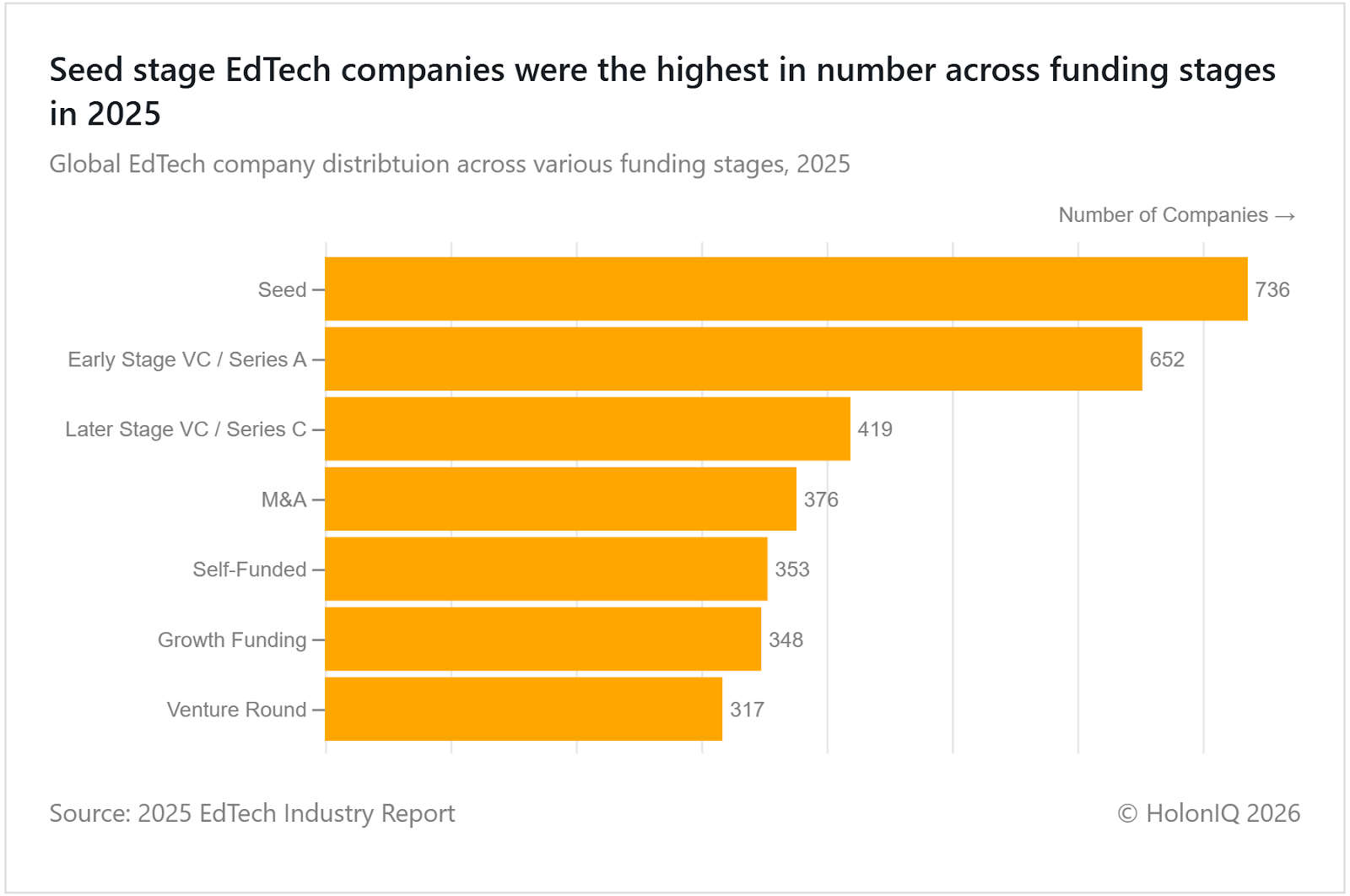
Seed-stage EdTech companies led the way with over 700 in 2025. Interest in seed funding is driven by the growing adoption of AI-powered tutoring, workforce upskilling, and mobile learning. However, seed-to-Series A success rates remain challenging amid tightening markets. Regulations around EdTech startups intensified: FERPA requires data processing agreements with schools, while COPPA mandates parental consent for under-13 data collection, scrutinises behavioural advertising, and requires SDK inventory audits. State-specific laws create compliance complexity, with districts using 100-300+ EdTech vendors requiring continuous monitoring, positioning compliance as a critical competitive differentiator.
🍃 Costs of Eco-friendly Options
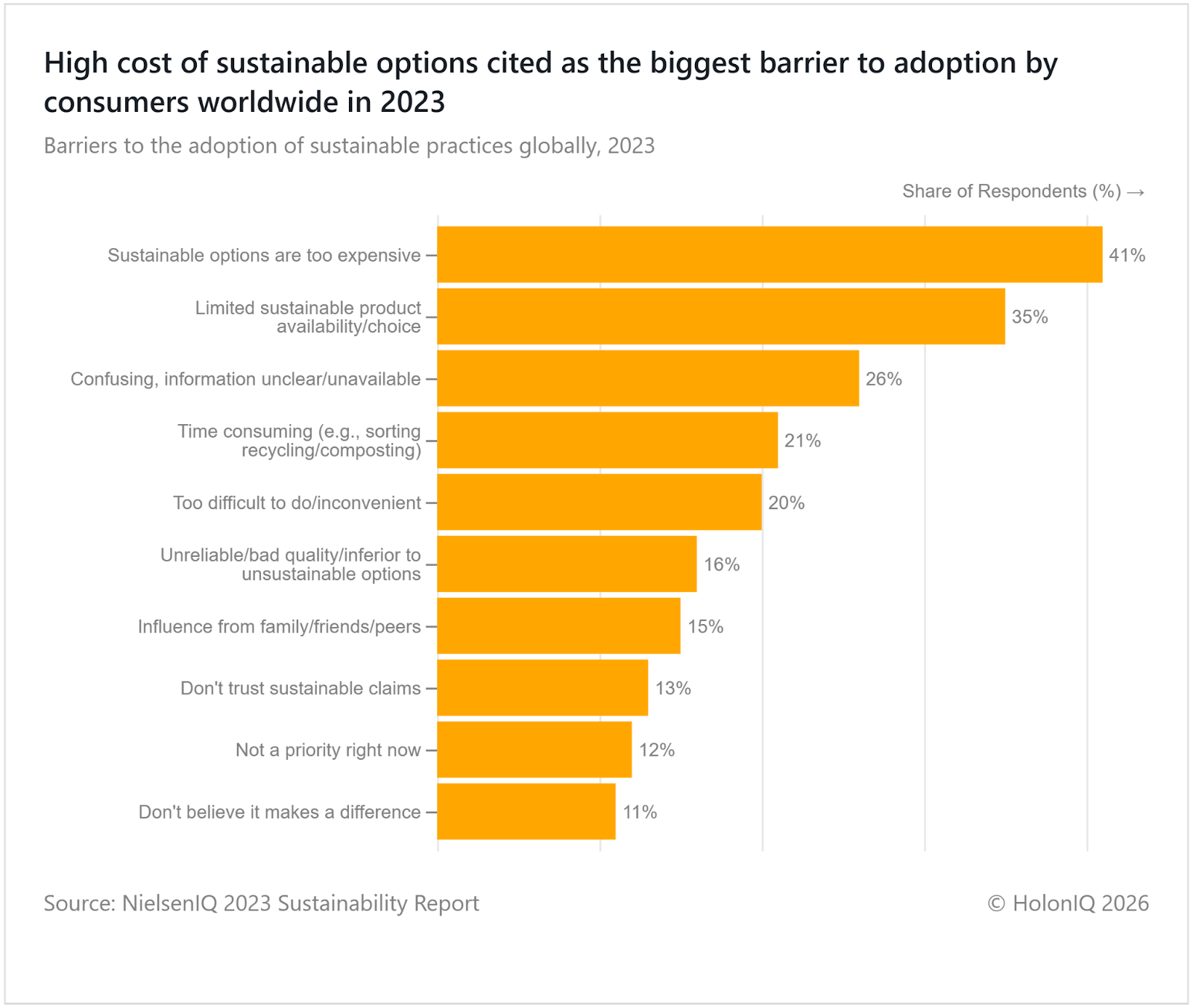
High cost was cited as the biggest barrier to sustainable adoption in 2023, with eco-products costing 75-85% more due to expensive raw materials, small-scale production, renewable energy use, and certification costs. However, improvements emerged as economies of scale expanded and direct-from-source supply chains reduced markups. Despite progress, consumers prioritise price over sustainability when eco-products cost more, while 70% remain sceptical of corporate claims fueled by greenwashing concerns. Greenwashing is also a common issue, as many eco-friendly claims are "unsubstantiated", eroding trust across industries, highlighting persistent scepticism despite growing awareness.
🤖 US AI Funding is Nearly 4x More Than the Rest of the World
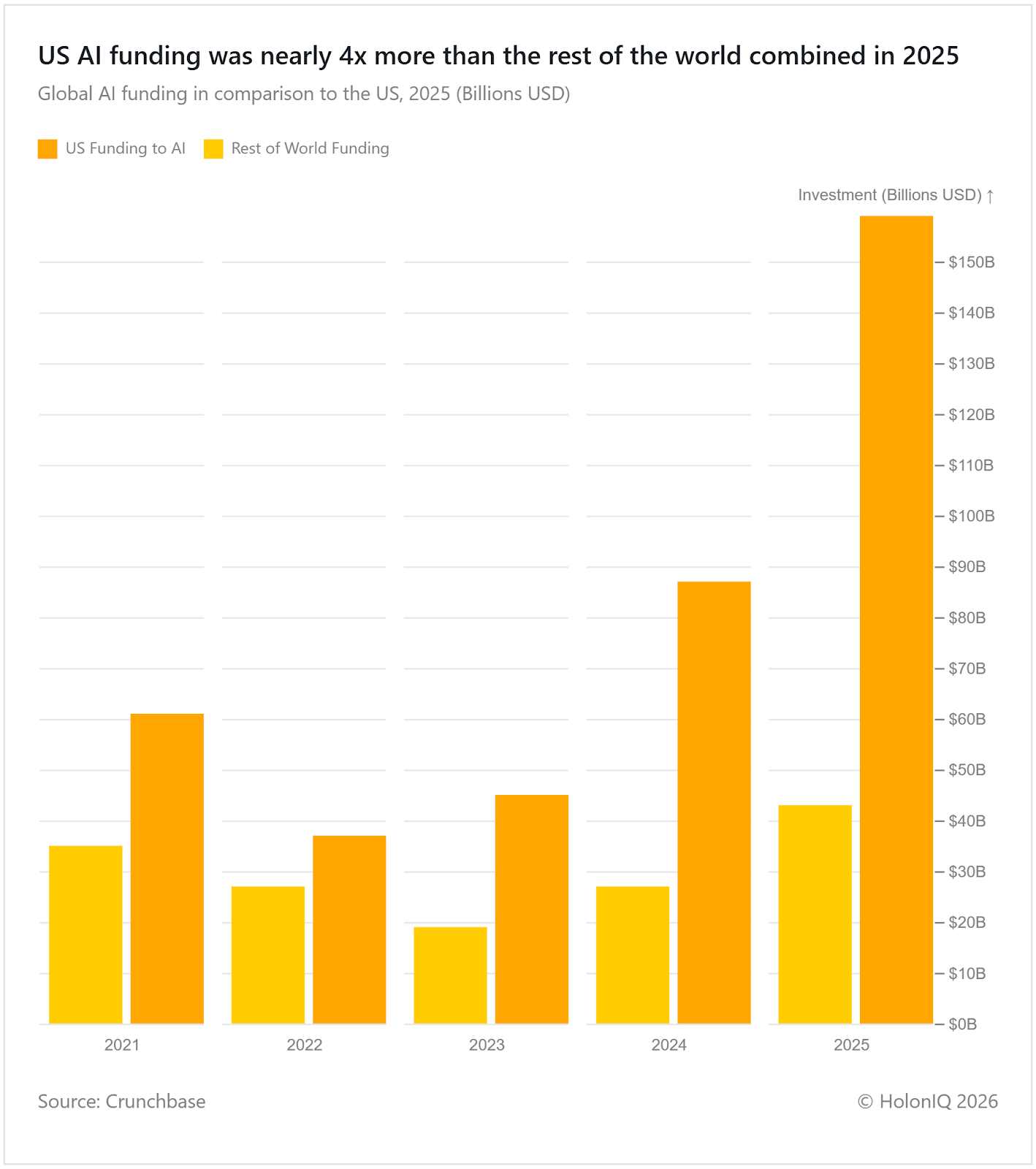
US AI funding reached $160B in 2025, nearly four times the rest of the world combined, capturing 79% of global investment. US dominance stems from deep venture capital ecosystems, corporate mega-investors like Meta, SpaceX, Nvidia and hyperscaler infrastructure commitments. Meanwhile, Europe/Asia face critical limitations with limited equity access for Small and Medium-sized Enterprises, high energy costs and fragmented markets. However, bubble threats intensify as experts warn of market correction risks; circular financing, such as Nvidia-OpenAI's $100B loop, artificially inflated valuations, risking a financial crisis if revenue growth fails to justify unsustainable spending.
Like getting this newsletter? Request a demo for unlimited access to over one million charts
Thank you for reading. Have a great week ahead!
Have some feedback or want to sponsor this newsletter? Let us know at qs.com.