
💼 Female leaders in heavy industries. Water stress peaks in North Africa and Western Asia. Mobile access nears universal.
Chart of the Day #537 Looks at female leadership in industries, water stress level by regions and mobile coverage access.
Hello 👋
Oman's manufacturing workforce to hit 277K by 2030. India to partner with Malaysia in clean energy workforce development. UAE to upskill clinical workforce. UAE to enhance digital workforce in Vietnam.
EU digital skills training in Nigeria. The UAE Ministry and Microsoft partnered to develop AI agents for higher education. India plans an education-focused AI conclave to shape future school curriculum and policy.
Today's Topics
💼 Workforce. One-fourth of global manufacturing leaders are female
🍃 Green Skills. North Africa and Western Asia face high water stress
🏭 Advanced Manufacturing. Mobile connectivity approaches universal access
Thanks for reading!
Not a subscriber yet?
💼 One-fourth of global manufacturing leaders are female
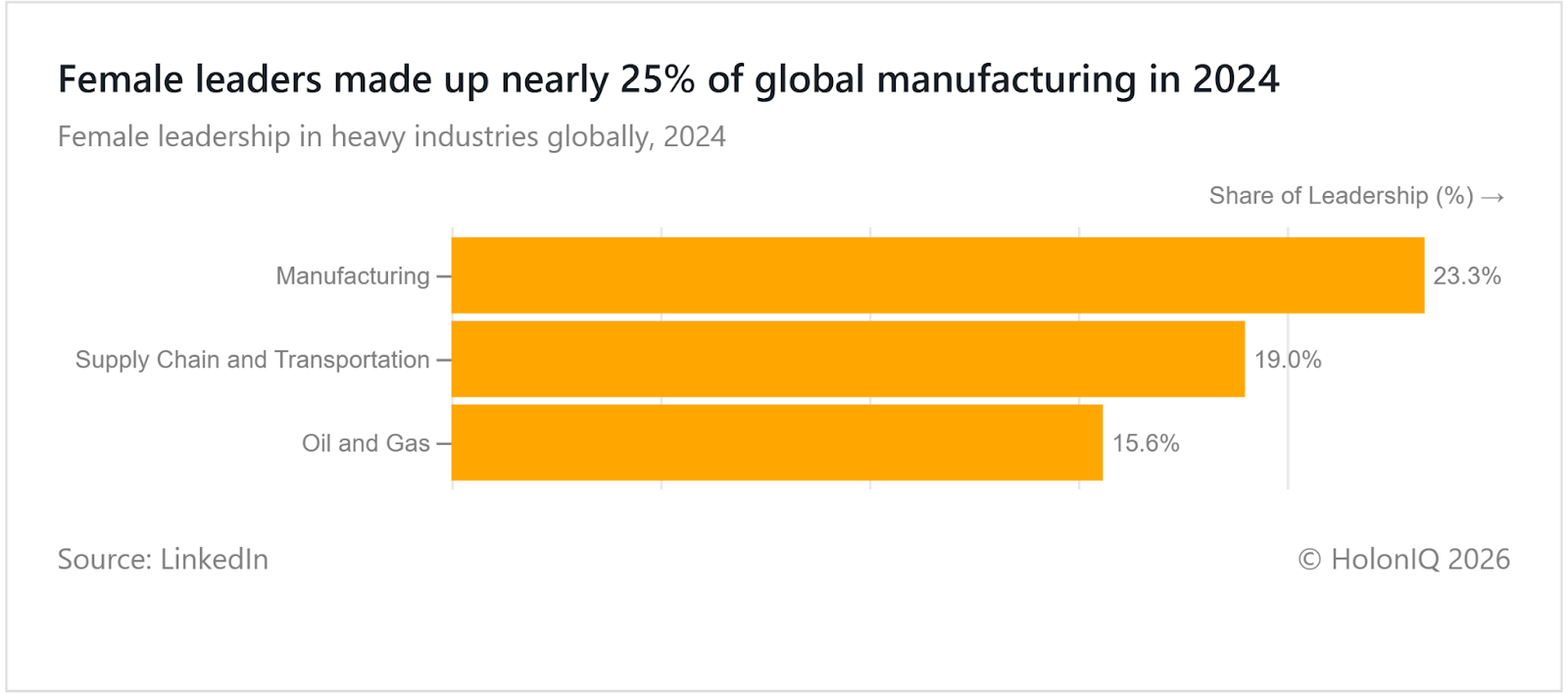
Global female leadership in heavy industries remains limited in 2025, with manufacturing leading at nearly 25%. Manufacturing’s higher representation reflects targeted diversity initiatives and growing recognition of women in operational and technical roles. Expanding mentorship programs, promoting STEM education, and implementing inclusive recruitment strategies can help further increase female leadership across generally male-represented sectors worldwide.
🍃 North Africa and Western Asia face high water stress
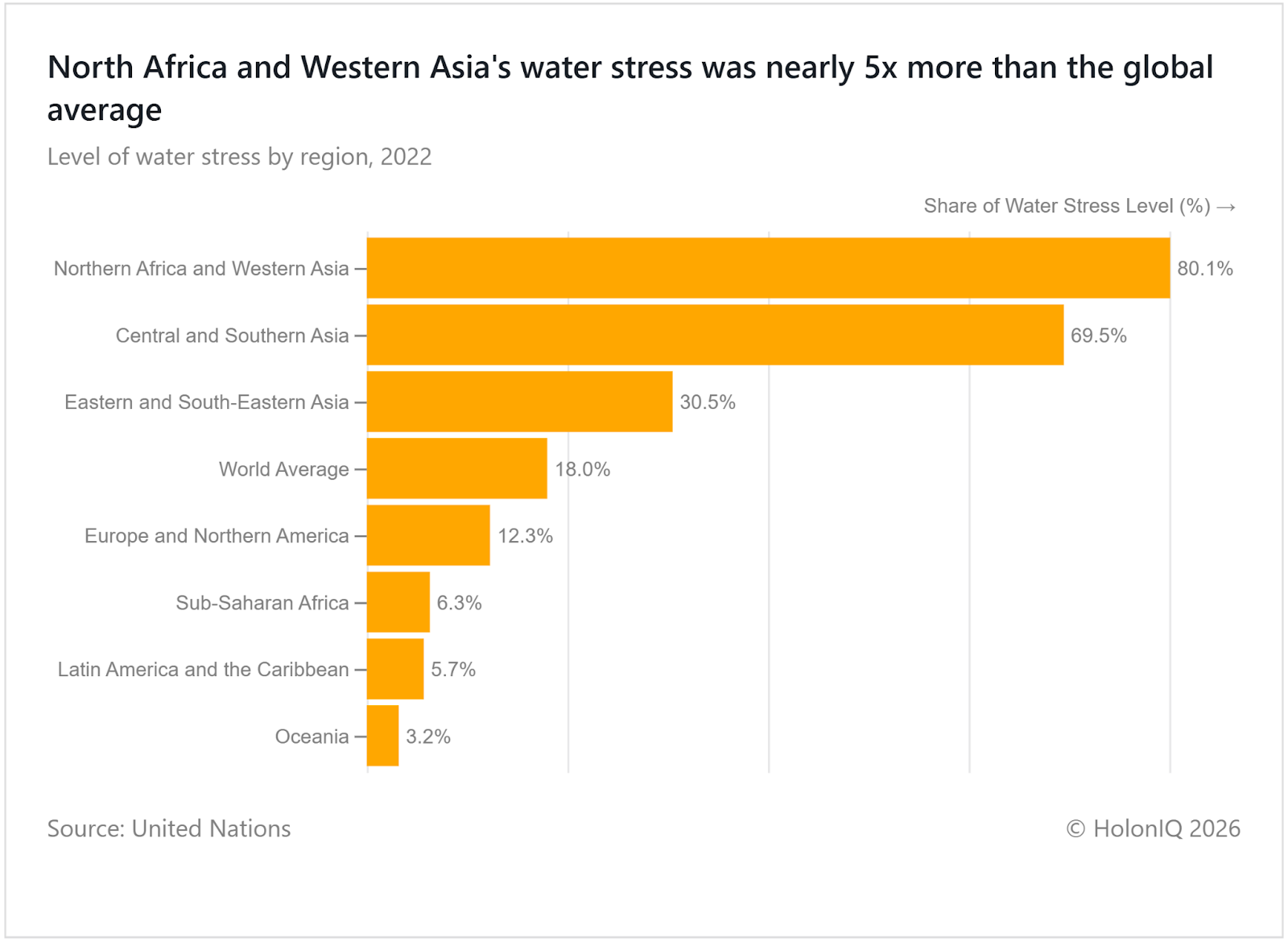
Water stress is highly uneven globally, especially in Northern Africa and Western Asia, particularly in Yemen and Saudi Arabia. Limited freshwater, arid climates, and growing populations drive intense competition for water in agriculture, industry, and households. The United Nations advocates Integrated Water Resources Management to improve efficiency, protect ecosystems, and foster cooperation on shared water sources, providing a framework for sustainable water access and long term resilience in regions facing severe water scarcity.
🏭 Mobile connectivity approaches universal access
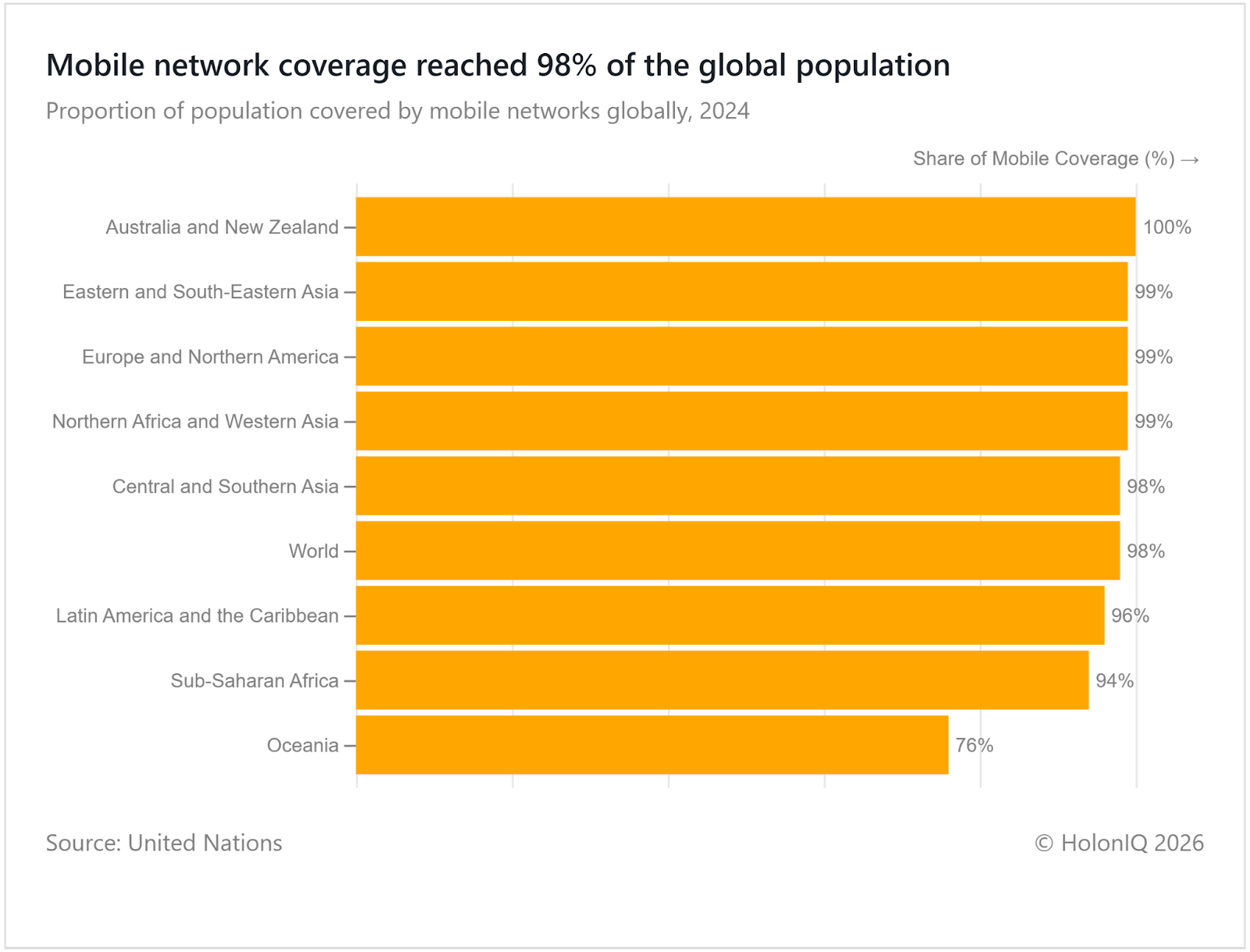
Mobile network coverage approached universality in 2024, with global access near 100% and many regions at or close to full coverage. This reflects how mobile connectivity has become a basic infrastructure rather than a premium service. In lower income countries, affordability has been enabled by low cost mobile technologies, and private sector investment supported by public regulation. Universal access goals under the UN Sustainable Development Goals continue to prioritise mobile networks as a foundation for digital inclusion and service delivery.
Like getting this newsletter? Request a demo for unlimited access to over one million charts
Thank you for reading. Have a great week ahead!
Have some feedback or want to sponsor this newsletter? Let us know at qs.com.