🌍 Global Skills Week: Career Navigation, AI, Critical Industry Skills. Join us in D.C. 🇺🇸 25-26 March.
Global Skills Week. Four themes. Two days. Washington D.C., 25–26 March Join the conversations shaping the skills economy.
Hello 👋
The skills economy is generating plenty of heat right now: policy shifts, AI disruption, employer frustration, learner uncertainty. Global Skills Week 2026 is where the people trying to solve these problems will be in the same room.
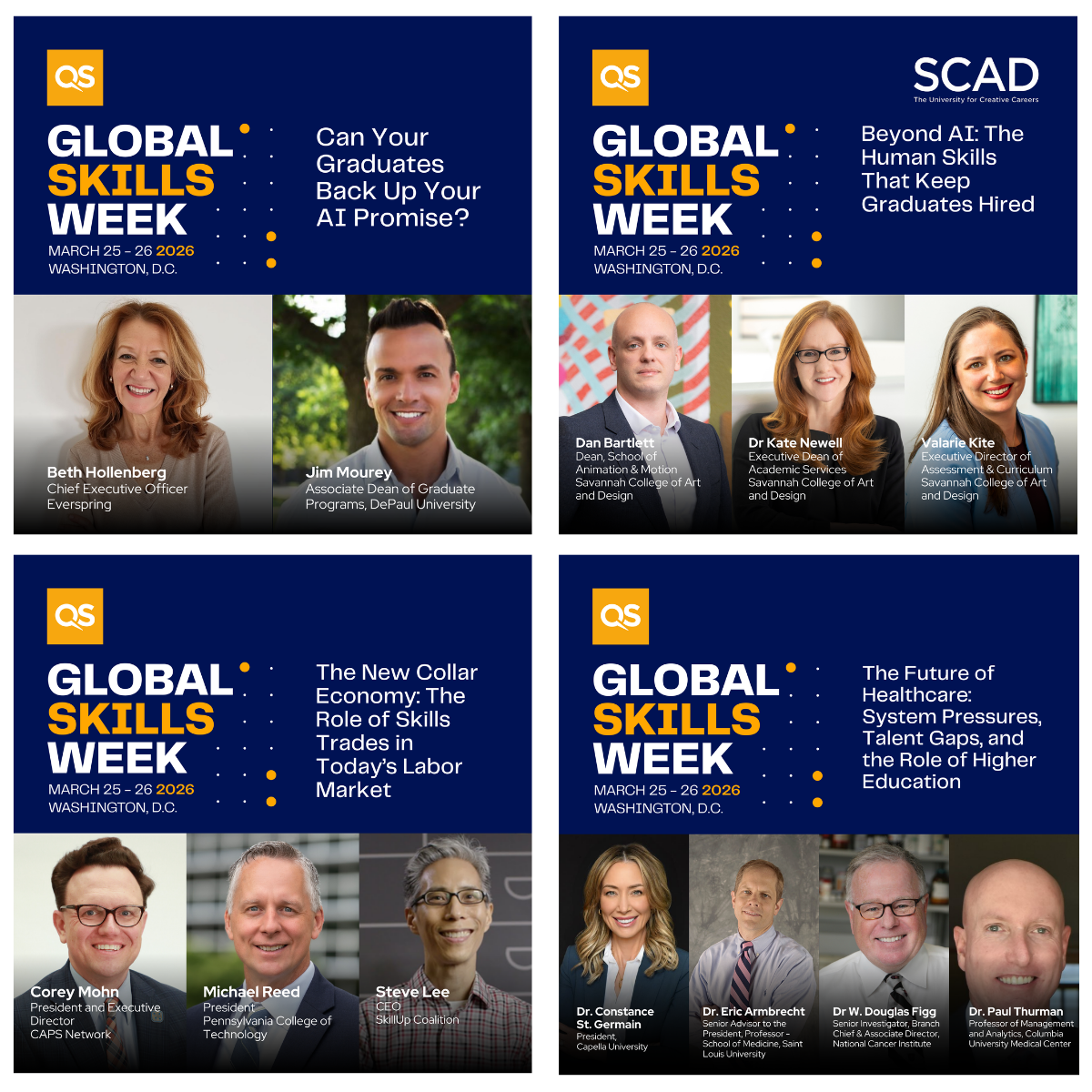
Below are the four themes anchoring this year's agenda (and some highlighted sessions) and why each one deserves serious attention right now.
Labor market data exists in abundance, but the harder problem is making sense of that data and having capacity to do so and with speed. Most curriculum review cycles run on timelines measured in years, while employer skill demands shift in months. The gap between signal and response is at risk of widening.
- Building the Skills Infrastructure: How Technology Connects Learning, Employers, and Workforce Systems
- The Next Era of Navigation: Supporting Career Discovery with Real-World Data
- Career Data in Action: Improving Skills Outcomes
Ideas are easy. Pilots are energetic. Scale and sustainability is hard. Research consistently shows that workforce partnerships delivering measurable outcomes share sustained, contractual commitments between institutions and employers, not only goodwill. Governments are increasingly involved where this is being tested. What are other enablers of success for the education to work pathways?
- The State-Employer Compact: Scaling Internship Pathways Through Partnership
- Capital for Capability: Philanthropy Scaling Skills Pathways
- The Modern Anchor Institution: Bolstering Economic Growth Through Talent, Innovation, and Place Partnerships
Between 70–80% of employers in recent surveys report difficulty finding candidates with the right skills. What's still missing, for most hiring pipelines, is a reliable way to verify capability. Leaders in these sessions will discuss credentials, skills and the ways in which learners articulate those to future employers.
- Fireside Chat: Institutional Strategy and Value Creation in the New Skills Economy
- Validating Workforce Readiness: How an R1 University Uses Hiring Assessments
- What Role Do Standardized Tests Play in a Skills-Based World?
Healthcare systems in the US are projected to continue to face a shortage of over physicians and nurses in the next 10 years. Green economy jobs are growing faster than the talent pipelines designed to fill them. Entry-level roles are fragmenting under AI-driven task redistribution. These workforce trends are putting pressure on specific communities. The institutions and intermediaries paying close attention are the ones designing with that in mind.
- Universities as Catalysts for the Green Skills Transition
- The Future of Healthcare: System Pressures, Talent Gaps, and the Role of Higher Education
- What Does Entry-Level Mean Now? Rethinking Early Career Pathways
🚀 Two weeks to go! Register Today for Global Skills Week.
Global Skills Week March 25-26 Washington, D.C. 🇺🇸
Global Skills Week 2026
Two days of sessions, roundtables, and conversations for the people building the skills economy.
Check out the agenda-to-date.
⭐ AI & Digital Innovation Spotlight
🎓 University of Newcastle became the first institution to adopt UniReady Global’s AI-based admissions verification system, enabling automated validation of international applicant data to support integrity and processing efficiency.
🤖 Google launched free AI training for 6M US teachers, providing foundational AI literacy resources to support classroom integration, instructional planning, and responsible AI use across K–12 education.
🌍 ETS partnered with Kazakhstan’s education authorities to develop an AI-enabled university admissions examination system, applying data analytics and assessment technology to modernize national higher-education entry processes.
🤝 Policy & Partnerships
🎓 Madagascar launched a $3M public virtual university project converting the National Center for Tele‑Education into an online institution, aiming to enroll 49,000 students annually and expand access to higher education via digital platforms and infrastructure.
🧑💻 Algeria unveiled four new digital platforms for higher education aimed at strengthening university operations, student services, innovation networks, psychological support, and campus dining systems as part of its national digital transformation strategy.
🚀 South Korea launched the K‑Moonshot national AI initiative to mobilize science and technology AI resources across industry, academia, and research, targeting 12 core missions across eight strategic fields by 2035.
💪 Power Moves & Funding
🤖 Subject, a US-based AI-powered education platform, raised $28M to accelerate growth, expand its AI-driven platform, and expand accredited course offerings.
📈 Giant, an AI storytelling startup, raised $8M to scale its interactive kids platform, which has seen strong early usage since its launch.
📋 Sofatutor, a German learning platform, acquired French learning platform SchoolMouv, helping Sofatutor expand its presence in the French market.
🎯 CampusWorks, a higher education consulting services provider, has merged with college consulting firm Dynamic Campus to improve organizational effectiveness and enhance the student experience.