
💼 Hamburg and Berlin labour at >60%. US records highest particulate matter pollution. China leads manufacturing.
Chart of the Day #522 looks at labour force in major cities, criteria of air pollutants, and global manufacturing growth.
Hello, welcome to Chart of the Day
Legacy EV to partner with the UN on workforce program. NIELIT partners with Infineon in upskilling semi-conductor workforce in India. CSHS to upskill clinical training for nursing students. Japan to upskill cybersecurity workforce skills.
Canada's immigration department has decided to keep the list of Post-Graduation Work Permit eligible programs unchanged for 2026. UK government launches £200M programme to expand teacher training for special educational needs and disabilities. Wikipedia partners with tech giants for AI training.
Today's Topics
💼 Workforce. Labour force participation exceeds 60% in Hamburg and Berlin🍃 Sustainability. Particulate matter was the highest air pollutant in the US
🏭 Advanced Manufacturing. China outpaced other Asian economies in manufacturing by nearly 1.5%
Thanks for reading!
Not a subscriber yet?
💼 Labour force participation exceeds 60% in Hamburg and Berlin
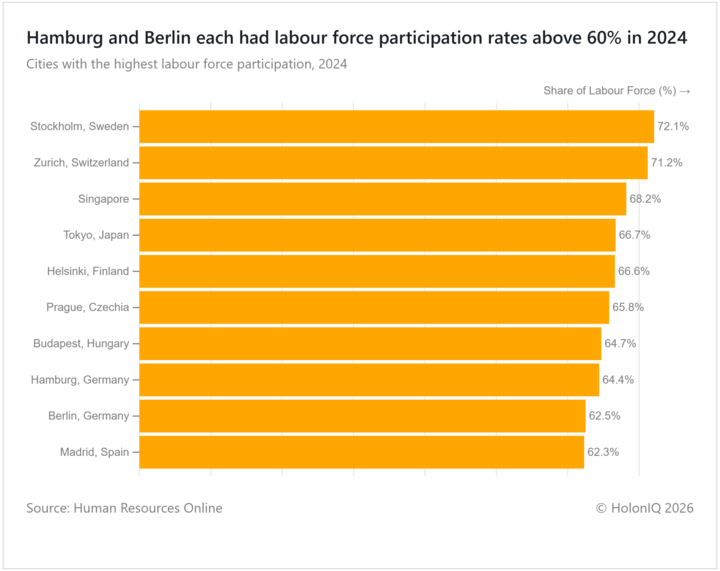
Labour force participation rates in 2024 exceeded 60% in both Hamburg and Berlin. Their relatively high participation reflects Germany’s strong employment base, supported by diversified urban economies, high female workforce participation, and widespread access to vocational training. Hamburg’s manufacturing and port-related industries sustain steady labour demand, while Berlin’s services, public sector, and growing tech ecosystem draw working-age residents. Germany’s labour market policies, including childcare support and flexible work arrangements, continue to underpin urban workforce engagement.
🍃 Particulate matter was the highest air pollutant in the US
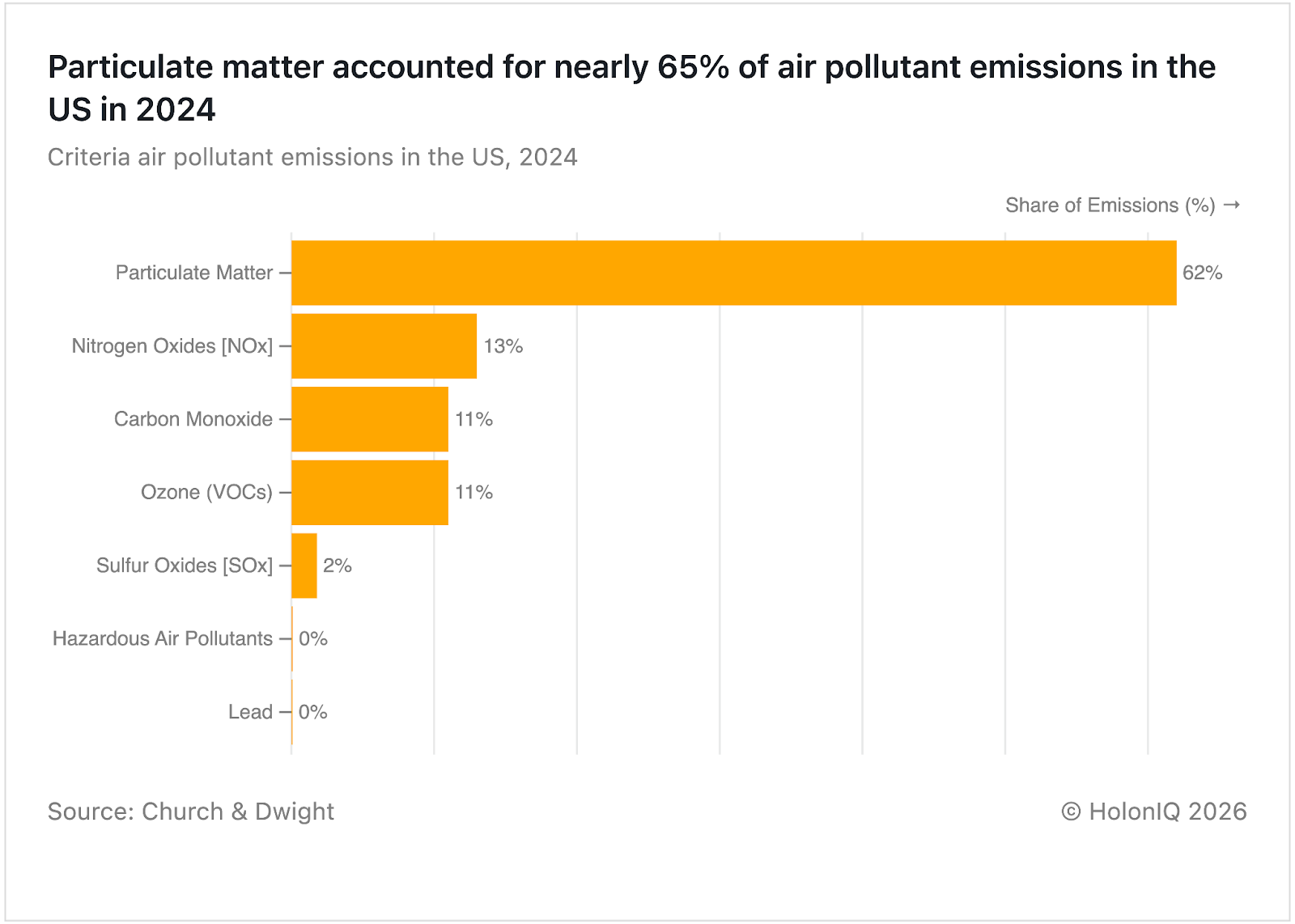
Particulate matter accounted for nearly 65% of total US criteria air pollutant emissions in 2024, far exceeding other pollutants. This reflects the dominance of combustion related sources such as road transport and construction activity, which generate fine particles at scale. Unlike gases, particulate matter is produced across many sectors and is harder to eliminate quickly. Reducing these emissions increasingly depends on cleaner vehicles, tighter industrial standards and expanded use of air quality regulations under the US Clean Air Act.
🏭 China outpaced other Asian economies in manufacturing by nearly 1.5%
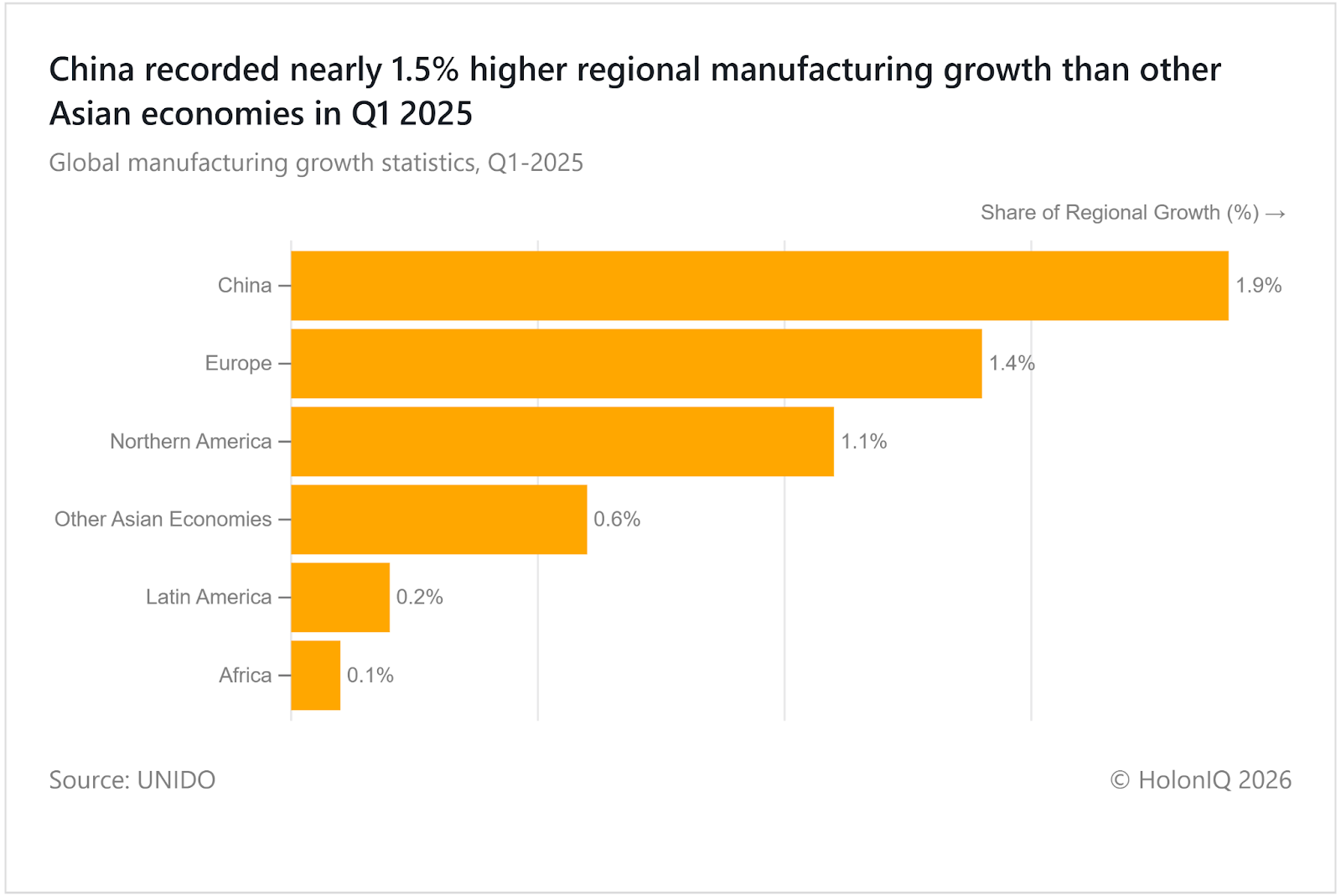
Global manufacturing growth in Q1 2025 ranged from 1.9% in China to 0.1% in Africa, with China growing nearly 1.5 percentage points faster than other Asian economies. This gap reflects China’s scale advantages, deep supplier networks and rapid deployment of advanced manufacturing systems. Heavy investment in automation, digital factories and industrial AI has lifted productivity and resilience. Globally, smart manufacturing is becoming central to competitiveness as firms adopt connected machinery data driven production and real-time monitoring to stabilise output amid volatile demand.
Like getting this newsletter? Request a demo for unlimited access to over one million charts
Thank you for reading. Have a great week ahead!
Have some feedback or want to sponsor this newsletter? Let us know at qs.com.