How can universities make TNE quality last after the launch headlines fade?
QS Midweek Brief - July 22, 2026. With TNE maturing, the next challenge is ensuring academic quality. And see how AU is going beyond the lab.

Welcome! Working out how to do something is usually just one of the first problems to solve. After that’s figured out, there’s the problem of maintenance. New policy environments, changing consumer demands and technological developments all have the potential to change things up dramatically. There are very few set-and-forget models of anything.
TNE has hit varying levels of maturation across locations. So now, the question is less on how to do it — although that is still true for some places — and more how TNE can have a lasting impact. This week, we explore how the challenge of academic quality is being addressed in TNE. We also meet some of Adelaide University’s researchers to see how they are taking their research beyond the lab.
Stay insightful,
Anton John Crace
Editor in Chief, QS Insights Magazine
QS Quacquarelli Symonds
Who teaches the Global University?
By Gauri Kohli

In brief
- Global expansion is surging, yet maintaining consistent academic quality across international branch campuses remains a significant challenge.
- "Flying faculty" models are ending, replaced by local hires who often face unequal pay and limited research opportunities.
- Success requires deep integration, balancing local regulatory mandates with the need to maintain a unified global academic identity.
The scale of the expansion of TNE and international branch campuses is striking.
Today, institutions from nearly 40 home countries export their degrees directly through 384 international branch campuses, spanning 85 host nations, according to data from Cross-Border Education Research Team (C-BERT), a research team tracking cross-border higher education. China alone hosts 51 of these campuses, making it the largest single importer of branch campuses globally.
UNESCO likewise estimates that global higher education enrolment has more than doubled over the past two decades to 269 million students in 2024, increasing demand for internationally recognised qualifications and encouraging universities to expand overseas.
New campuses in India, the Gulf and Southeast Asia make headlines, but they also raise a less visible question: how can universities sustain consistent academic quality when teaching, research and expertise are increasingly distributed across multiple countries?
Historically, many TNE models relied heavily on academics from the home campus to teach, oversee assessment and help maintain academic standards. As branch campuses have matured into permanent institutions with broader research and industry roles, extensive reliance on flying faculty is becoming less sustainable. Staffing is increasingly a question of institutional identity and long-term sustainability rather than simply recruitment.
Rethinking academic staffing
Nigel Healey, Professor of International Higher Education, and a leading authority on TNE, believes the long-established model of banking extensively on academics from the home campus has reached its limits. “The era of seconded staff and flying faculty is largely over,” he says.
Across the Middle East, expanding education hubs increasingly require permanent research-active faculty rather than rotating visiting academics, reflecting broader ambitions to strengthen research and innovation ecosystems.
Universities typically hire academic staff specifically to teach in their TNE operations – either hiring them directly but on specific terms and conditions, or indirectly through the branch campus or joint institutes. “Seconding permanent staff from the home campus is generally not cost effective and is limited to the most senior staff only,” Professor Healey tells QS Insights.
Contrary to concerns that universities face an absolute global shortage of academics, Professor Healey argues that the challenge is more nuanced.
“While there is no shortage of qualified faculty globally, with most estimates suggesting the world’s universities graduate upwards of 250,000 PhDs a year, positions in branch campuses are mostly unattractive to nationals from the exporting university, meaning that the staff base in the branch campus is usually a mix of local and third-country nationals,” he adds.
Researchers suggest many third-country academics are drawn to the Gulf and other TNE hubs simply because opportunities are more limited at home, particularly for those from lower-ranked universities in their own countries.
“As a general rule, there is a direct trade-off between the cost effectiveness or scalability of the staffing model and the exporting university’s ability to maintain the standards and identity of the home institution,” he says.
The evolution is already visible in mature TNE destinations. China’s long-established joint universities and branch campuses have similarly evolved towards mixed staffing models that combine academics from the home institution with internationally and locally recruited faculty.
This reflects the Chinese state’s dual aim of retaining home-institution faculty and importing top resources while building domestic research capacity and soft power.
Malaysia’s mature branch-campus ecosystem, too, illustrates how staffing strategies have evolved. Rather than relying predominantly on expatriate academics, universities increasingly combine local recruitment with international hiring.
David FitzPatrick, Provost and CEO of the University of Nottingham Malaysia, argues that this reflects the development of TNE itself. “TNE has matured considerably over the last decade,” he notes, adding, “The challenge is not simply finding strong disciplinary experts, but academics who can teach across cultures, navigate different regulatory environments, and deliver a consistent student experience across multiple locations.”
That is reflected in Nottingham Malaysia’s own staffing model, where academics from more than 30 countries teach at the campus, and around 90% of academic staff hold doctoral qualifications. Crucially, the university no longer views its campuses in the UK, Malaysia, and China as separate entities. Instead, teaching, curriculum development and research are organised across all three locations, creating an integrated academic community rather than a traditional branch campus supported by its parent institution.
The trade-offs
If universities increasingly agree that locally recruited academics will play a larger role in TNE, the more difficult question is whether they can do so without diluting the academic culture that made overseas campuses attractive in the first place.
The challenge is not that local recruitment inevitably lowers standards, but that it exposes deep structural frictions. Anthony R. Welch, Professor of Education at the University of Sydney in Australia, believes the shift cannot be understood without recognising the wider financial pressures reshaping higher education. As universities contend with tighter budgets and increasing workloads, expecting academics from the home campus to repeatedly undertake short periods of overseas teaching becomes progressively less attractive.
“Hard pressed academic staff from the ‘mother’ university may not be keen to undertake further duties that involve short periods of intensive fly-in, fly-out instruction, while still attempting to keep up with demands from home,” says Professor Welch.
Kevin Kinser, Professor of Education Policy Studies at US-based Pennsylvania State University, and co-founder of C-BERT, points to a related set of obstacles specific to moving staff from the home campus abroad.
“The challenges include providing a viable career path that allows return without loss of seniority or job security at the home campus,” he says, adding that spouses and children relocating add another layer of complexity. He also flags that “different cultural norms and legal issues with respect to academic freedom, as well as rights of women, religious minorities and LGBTQ+ staff would pose specific limitations for some faculty.”
Furthermore, Professor Welch points to an uncomfortable reality within the sector’s business model: local teaching staff are often hired on conditions that differ appreciably from those applicable to overseas staff. They frequently carry heavier teaching responsibilities while receiving lower remuneration and fewer opportunities for professional development.
“Universities are very shy in acknowledging such differences,” Professor Welch notes. He adds that while overseas staff may have little understanding of local educational cultures, locally recruited staff may receive insufficient induction into the academic traditions and expectations of the home university.
Professor Healey says these structural divisions contribute to lower morale and higher turnover, with many overseas academics viewing branch-campus appointments as stepping stones because of limited research support and career progression.
“Because branch campuses are typically wholly funded by student tuition fees, the teaching-heavy nature of the operation leaves local staff with minimal time and limited access to external funding to carry out research, making it incredibly difficult for them to integrate as full, equal members of the wider institution,” says Professor Healey.
Gauri Kohli specialises in writing and reporting on higher education news, including analysis on higher education trends, policies and the edtech sector. Her writing focuses on international education, study abroad, student recruitment trends and policies, with focus on India as a market. She has also covered workplace and hiring trends, corporate practices, work-life features, startup trends and developments, real estate for leading publications and media houses in India and abroad for the last 18 years, including Hindustan Times, a leading national daily newspaper in India.
Adelaide University takes research beyond the lab
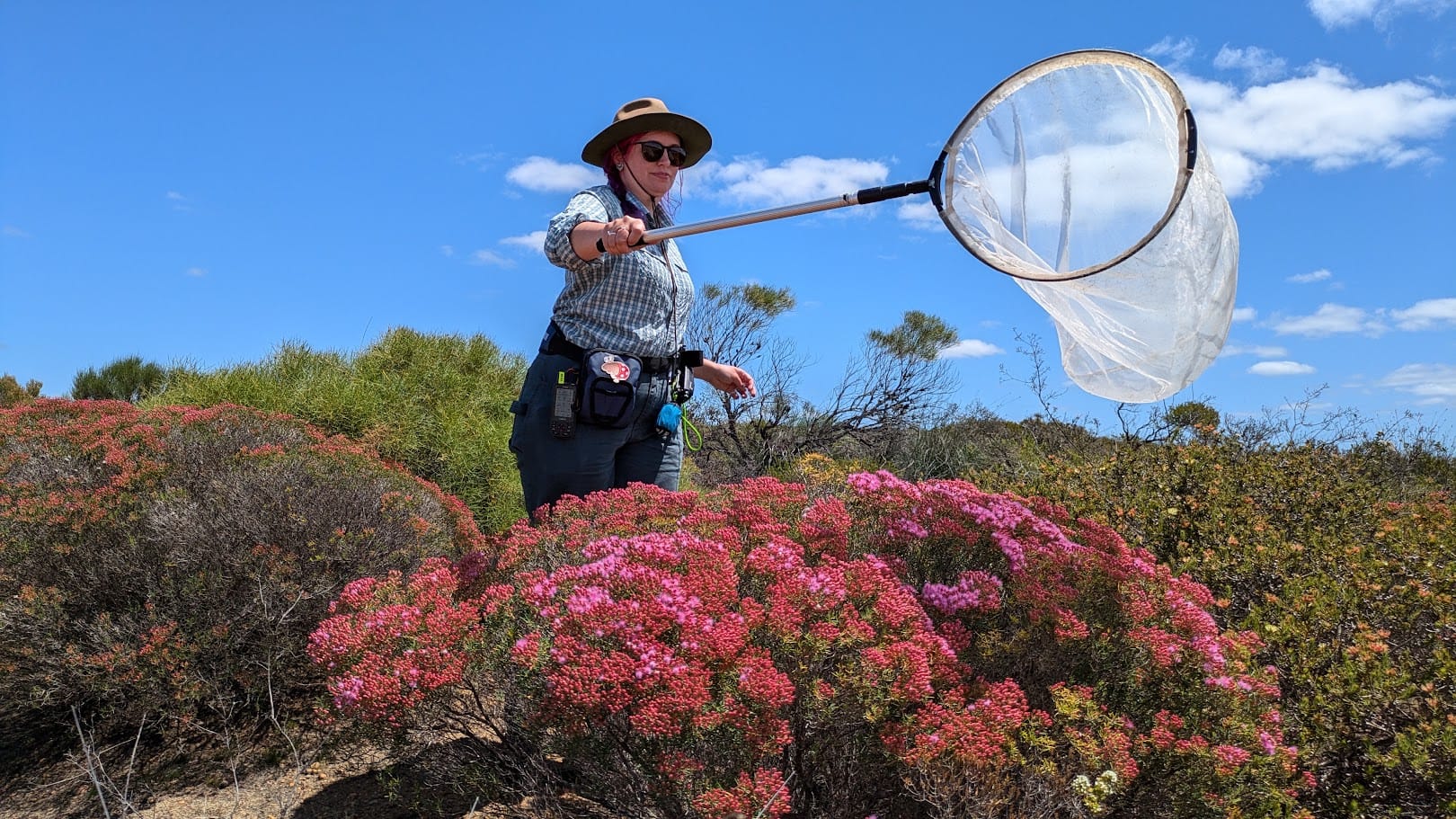
The stereotypical view of university research is that of scientists in white coats working in a secluded lab. But at Adelaide University, discovery extends beyond the lab and into the community.
Adelaide University researchers are in schools teaching entomology, in hospitals helping with preterm birth care, and in regional communities reviving Australia’s Indigenous languages.
These projects benefit the community – and are shaped by it.
With this approach, Adelaide University pushes the bounds of higher education and translates the university's research into tangible real-world impact. QS Insights spoke with some of these academics to learn how their work continues beyond the lab.
Connecting school kids with insect science
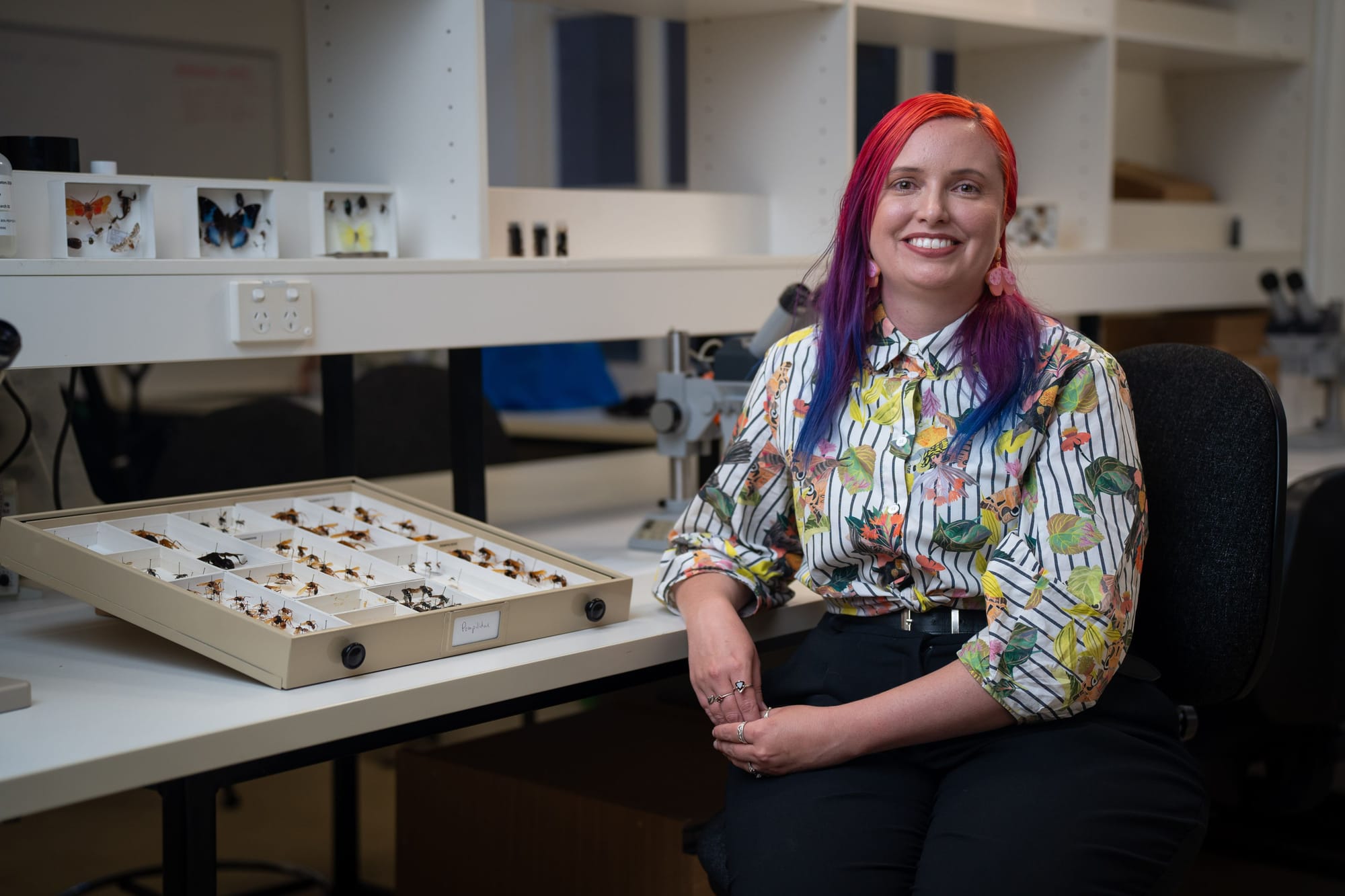
Dr Erinn Fagan-Jeffries is an entomologist and taxonomist who is working with local school children to identify, name, and describe insects in their local areas. Through citizen science project ‘Insect Investigators’, which won Australia’s renowned Eureka Prize in 2024, Dr Fagan-Jeffries has connected dozens of schools with researchers – benefitting both parties.
The project has contributed to science by documenting thousands of insects across the country, particularly in areas that are often difficult to reach. It has also contributed to Australia’s public DNA database of biodiversity, and has named 17 species.
Dr Fagan-Jeffries tells QS Insights that only about a third of Australia’s insects are formally named and described, so this work helps researchers, industry and the general public recognise their importance.
“Knowing how many species are here, where they live, and how to identify them is the first step to being able to conserve and use them effectively,” she says.
The project also helps to engage students with the sciences and broaden their understanding of the field of insects. “We did surveys with teachers and students and found that students expressed intentions to continue to engage in insect-nature activities,” says Dr Fagan-Jeffries.
“Teachers were keen to continue including insect and taxonomy-related topics in their curriculum.”
As the Insect Investigators team works through the data and publishes its findings, Dr Fagan-Jeffries hopes this project inspires similar research that grows the field and inspires young minds to engage in nature.
“I think everyone deserves the opportunity to connect with their local biodiversity, and we need everyone on board to help document it properly,” she says.
“Young people are often really curious and ask the best questions. We need that curiosity and passion to continue into the future.”
Improving preterm infant care through patient-informed research
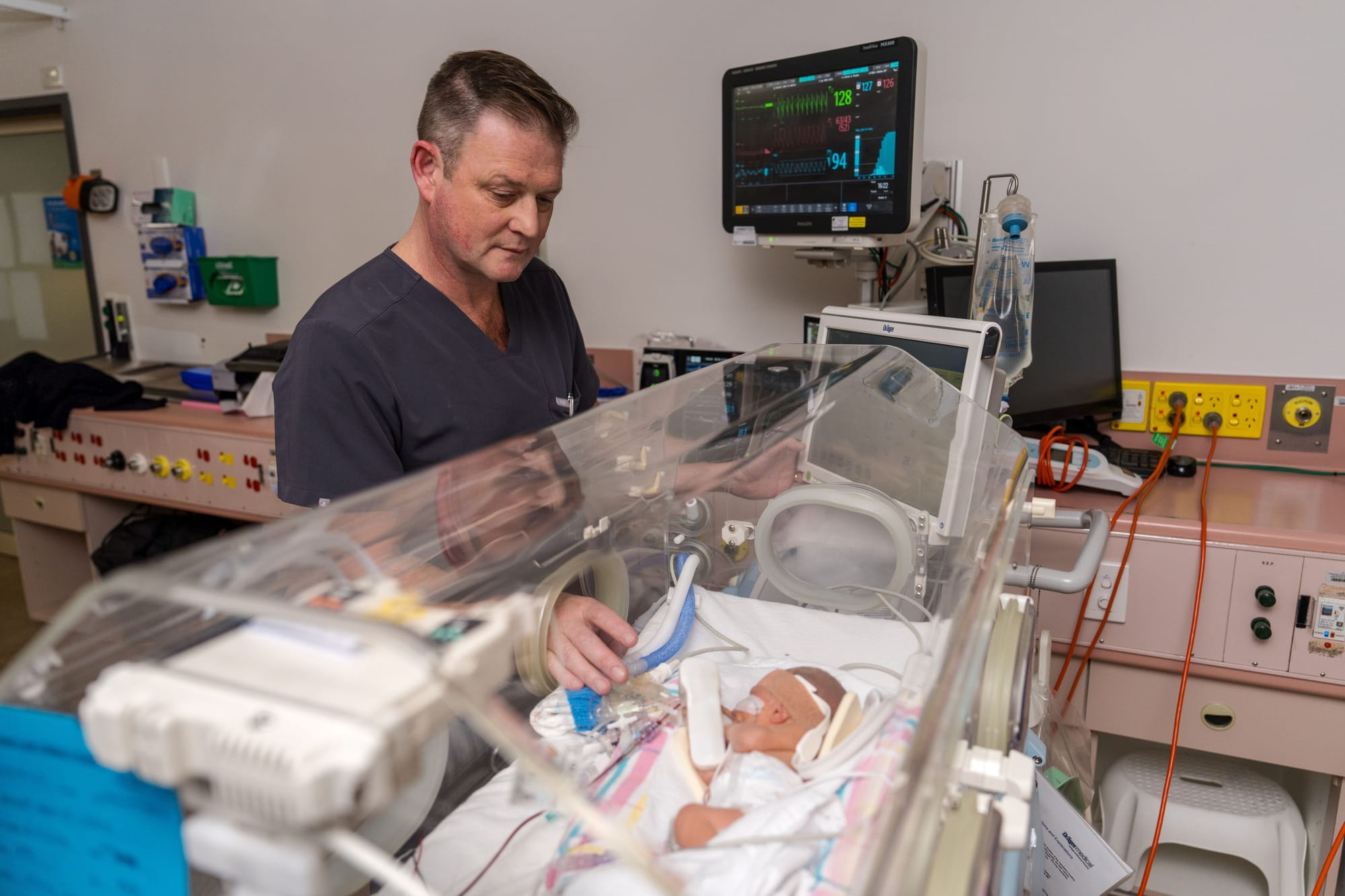
Professor Michael Stark is the Deputy Director of Clinical Research at Adelaide University's Robinson Research Institute (RRI) and leads Neonatal Services at the Women and Children’s Hospital. Through their work at the hospital, Professor Stark and his multi-disciplinary team have one common goal: improving infants’ survival after preterm birth while also reducing their long-term neurodevelopmental complications.
The research team has produced many important findings – and their hospital-based work was crucial to this success.
Professor Stark’s transfusion research has led to an established international collaboration with Australian Red Cross Lifeblood that is informing how and when small babies are transfused. In partnership with the university’s Joanna Briggs Institute, Professor Stark and his team have developed a new way to care for vulnerable preterm babies that led to a 40% reduction in early brain injury. They’re also part of an Australia-wide perinatal research collaborative that has secured large funding toward ongoing research into preterm infant care.
Professor Stark says interacting with patients in the hospital improves research outcomes.
“The most important questions to be answered are defined by those with lived experience of preterm birth,” he says. “Consumer involvement is essential to the process of clinical practice improvement and change, so a large part of a clinical academic’s role now is therefore community engagement.”
Working with patients through clinical care enables the researchers to identify the most pressing questions to investigate in the lab. Professor Stark says this integrated model provides benefits beyond research outcomes, too.
“It is an undisputed fact that research-intensive clinical units, led by university staff and with infrastructure support, result in better outcomes for our patients,” he says. “Engagement with the community also ensures that this message is widely heard and that families want to be involved in research to improve outcomes for future patients.”
In his role at RRI, Professor Stark also works with students as part of RRI’s Future in Focus initiative, an immersive programme for senior school students to engage them in medicine, science, and health. The students have the opportunity to join researchers in the neonatal unit to see first-hand how they work with health practitioners and patients.
In its first year, the work experience programme already received more than 150 applicants.
“Excitingly, the Future Focus Scholarship will run again this year – larger and hopefully even better,” Professor Stark says.
Strengthening Indigenous language in remote communities
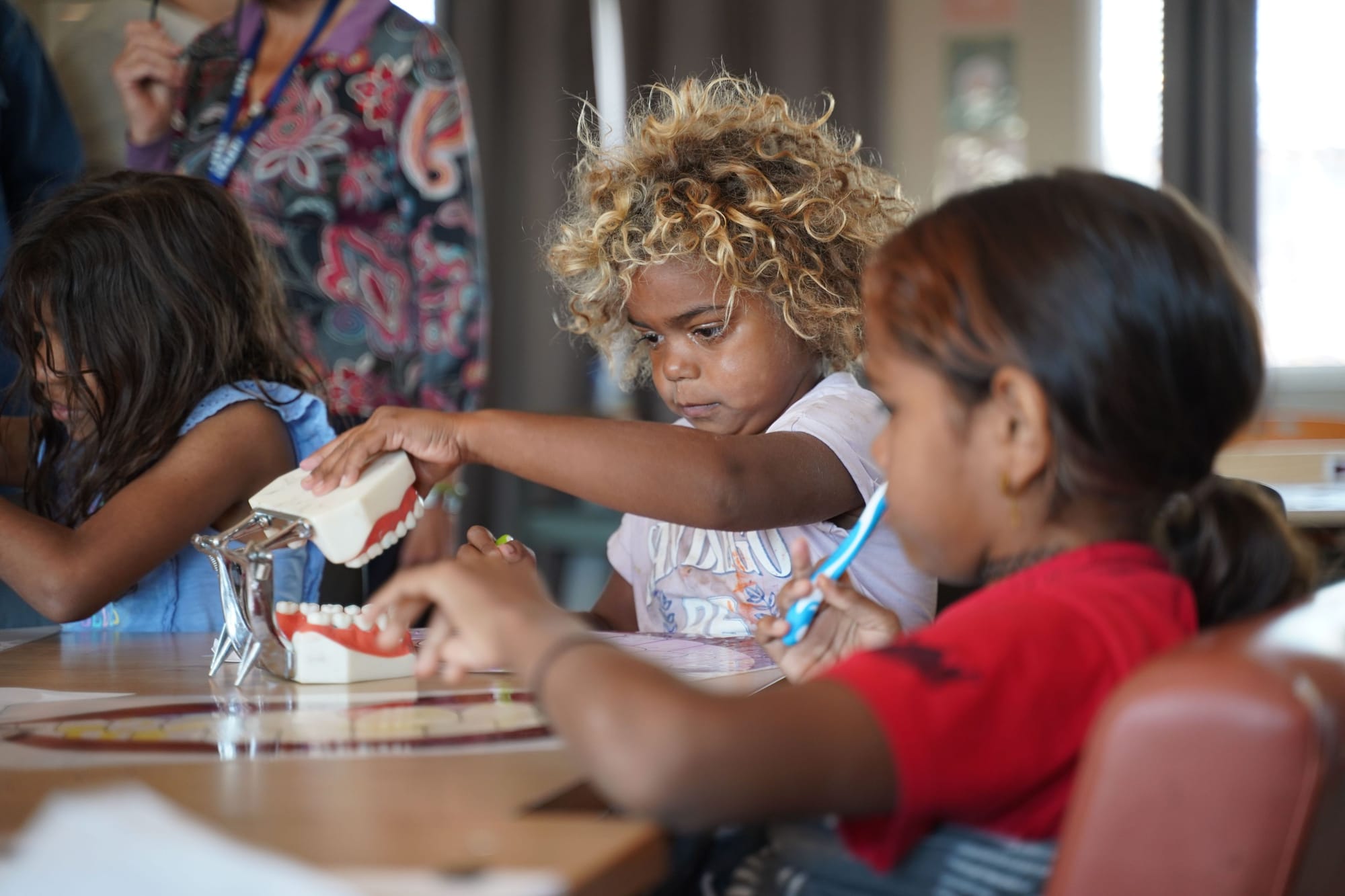
Dr Paul Monaghan and Karina Lester oversee the Mobile Language Team (MLT) at Adelaide University, which assesses, maintains, and strengthens South Australia’s Aboriginal languages. With partners around the country and world, their aim is to increase the use of the state’s 47 Indigenous languages and advocate for stronger language futures.
Dr Monaghan says MLT’s relationships are key to their work beyond the lab. With research spanning nearly two decades, the team has spent years developing “strong and enduring” partnerships with Aboriginal communities, organisations, families and individuals linked to the Aboriginal languages of the state. They work in communities – and importantly, with community members – to access archival records for Aboriginal communities, record speakers, create learning resources and language courses, and train young Aboriginal people in all aspects of language revival.
“As a Mobile Language Team, we are primarily interested in strengthening Indigenous languages – but languages are not used in a social vacuum,” Dr Monaghan says.
“Their use is linked to benefits in a range of health, education, social, environmental and economic domains, so what other important outcomes can be combined with strengthening Indigenous language use?”
In the Katiti Wiru (Healthy Teeth) project, MLT used language to advance the goals of the national Closing the Gap policy framework, which aims to improve health outcomes for Aboriginal and Torres Strait Islander people. The researchers translated oral health education content into the local language of a remote community and delivered it through community-centred workshops, educational resources and partnerships with health service providers.
“Kaṯiṯi Wiṟu takes an innovative approach to improving oral health and strengthening the endangered Yankunytjatjara language in remote South Australian communities,” says Dr Monaghan. “Local content generates a strong sense of identification among participants, builds trust, and strengthens outcomes in oral health and in the health of the language itself.”
MLT’s primary research methodology is what Lester calls “Nyawa, Kulila, Palyala,” meaning “Look, Listen, Make it happen” in the Pitjantjatjara-Yankunytjatjara language. The approach takes the Indigenous practice of having open eyes and open ears through the consultation process and then delivering the community’s desired outcomes.
Dr Monaghan says MLT will continue to “Look, Listen, Make it happen” through their research at Adelaide University.
“Universities have an important role to play in providing opportunities for Indigenous people to undergo meaningful experiences in their heritage languages, to explore employment pathways and to take the lead in creating language futures,” he says.
“For the Mobile Language Team, it’s in partnership with regional and remote communities that our research makes the most difference.”