How can universities rebuild the bridge between education and employment?
QS Midweek Brief - September 16, 2026. How are graduates struggling to find work feeling? And how can universities partner with industry?

Welcome! It’s no secret that finding work after graduation is becoming more difficult. While we work as a sector to rectify that, those affected are feeling the frustration of doing that they felt was “the right thing” only to struggle.
This month, in a new edition of QS Insights, we go straight to those impacted the most in our cover story, “A generation of lost potential”. In our second story, we look at exactly how some institutions are addressing graduate employment through industry partnerships.
Stay insightful,
Anton John Crace
Editor in Chief, QS Insights Magazine
QS Quacquarelli Symonds
A generation of lost potential
By Julie Hoeflinger

In brief
- Highly educated graduates face a global underemployment crisis, with many stuck in low-wage roles unrelated to their degrees.
- Vanishing entry-level roles and soaring tuition fees leave a debt-ridden generation overqualified for a shrinking, AI-driven job market.
- Individual resilience cannot replace systemic reform; institutions must ensure education delivers a stable, meaningful return on investment.
In the past year, I’ve been a server, an assistant at an old family friend’s small insurance company organising folders and a Doordash deliverer.
I am 27 years old with a Bachelor’s in Neuroscience from Ohio State University and a Master’s in Science Communication from Imperial College London.
Moving home from London to Ohio with two degrees and a diversity of experiences not limited to a year and a half as a communications officer for a nonprofit science organisation, I didn’t expect to have much trouble finding a job. Perhaps not my dream job, but certainly a job in my field.
Over 75 applications later, I couldn’t have been more wrong. In the face of diminishing savings and confidence, I picked up part-time work where I could, exploring other avenues like fellowships, writing prizes and even internships that I’m far overqualified for — all of which ended up equally futile.
Inevitably, I moved back in with my parents at this time. While I didn’t completely mind doing this because it meant spending more time with my family, it also came with a quiet level of shame. Yet more and more recent graduates are beginning to talk about this shame openly and realising that it is not theirs to carry. Rather, it reflects a large-scale systemic failure, one born from encouraging a generation of people to pursue higher education without ensuring that they would receive a return on their investment.
A generation educated for a future that isn’t arriving
It became very clear to me just how many other people my age were in the exact same boat. A survey published by the US Federal Reserve in July found that 49 percent of adults under 30 are currently living with their parents.
Just as shockingly, more than 41 percent of recent graduates are currently working jobs that do not require a college degree. Entry-level roles are rapidly vanishing, with further data from Cadient discovering a 73 percent drop in entry-level salaried openings over four years — just one in 50 jobs.
The problem extends beyond undergraduate employment. In my first month back home, I joined a gym and met another 27-year-old working there. As she was showing me around, she told me that working there was never part of her plan. She was meant to start a PhD in Environmental Sciences later that year, but funding for the program was cut by the current administration.
Her experience reflects a much broader trend: fewer people are enrolling in PhD programmes. The Association of American Universities found that major research universities across the US admitted 15 percent% fewer students this past year, and international student applications fell by 21 percent, largely due to federal funding cuts. This substantial decline in PhD admissions could “imperil a generation of new talent”, reads a recent New York Times article, while another article published in Chemistry World warns that we’re “losing an entire generation of scientific talent”.
While I felt some comfort knowing I wasn’t the only one in their late 20s with a science degree living with their parents, I began to feel more and more anger towards a system that was rendering us powerless.
Then, when I started working at the restaurant — I’d end up working there for seven months — I was shocked to learn that nearly every single one of my coworkers, from the kitchen to the front of house, held college degrees.
Julie Hoeflinger is a freelance journalist currently based in her hometown of Toledo, Ohio. She covers science, higher education, social justice, and local news. With a bachelor’s degree in neuroscience and a master’s degree in science communications from Imperial College London, her work is as gripping as it is accurate. Her work has been featured in QS Insights, New Scientist, Toledo Parent, ZME Science, Action for Conservation, I,Science Magazine, and Imperial College Radio.
The integration of heart, mind and hand
By Prisha Dandwani
In brief
- Institutions are merging hands-on industry experience with academic study to ensure degrees remain both meaningful and career-relevant.
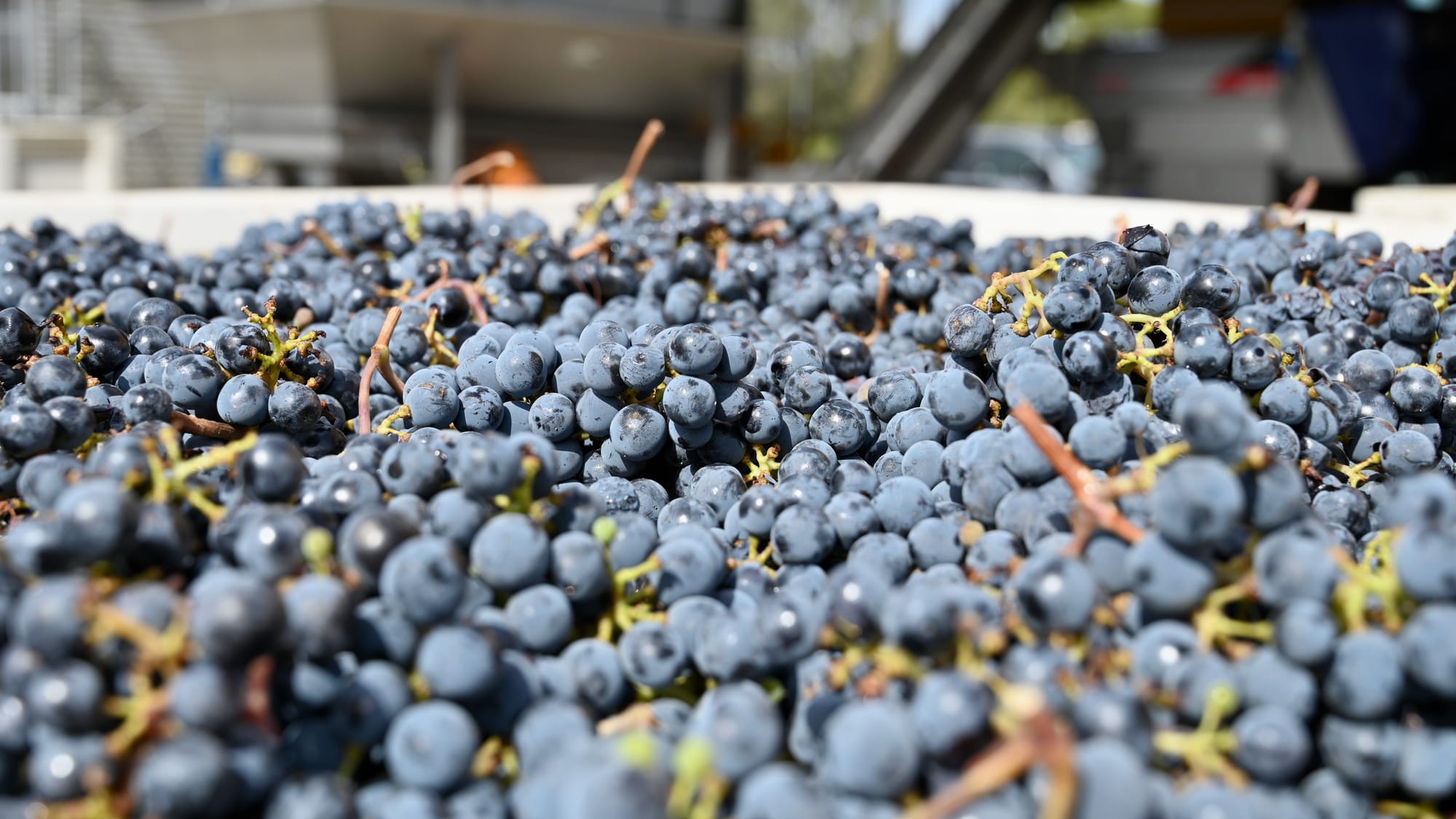
- Partnerships in luxury fashion, winemaking and gaming provide students with immersive, professional skill-building and mentorship opportunities.
- Deep industry integration creates a "clear pipeline" to employment, successfully bridging the gap between passion and practicality.
At the Louis Vuitton atelier in Asnières-sur-Seine, just outside Paris, around 250 artisans make some of the design house’s products on site. This romanticised scene offers reassurance amid growing anxiety over artificial intelligence and its impact on creative work.
“You see these people making the handbags and recognise the incredible value of something handmade,” says Caroline Collet, Director of Maison/0, the regenerative luxury platform established by both Central Saint Martins UAL (CSM) and Moët Hennessy Louis Vuitton (LVMH).
There are some forms of creativity, she suggests, that technology cannot replicate: the skill of a craftsperson, the act of designing and the cultural value they accumulate. For universities, this poses a broader question: how can education preserve what is meaningful about learning while also giving students the practical experience they need beyond graduation.
Increasingly, the answer is being found in partnerships with industry.
Reconciling creativity and sustainability
As Professor of Design for Sustainable Futures at CSM, Collet explains how the relationship with LVMH came to fruition.
The partnership was established in 2017 and has since grown stronger, with a recent renewal extending it to 2031.
“I think it’s because it’s a natural fit — we work well together, we learn from each other, and I think that’s really important. We are not servicing an industry — it’s a collaboration,” Professor Collet says.
In 2021, the partnership shifted beyond sustainability towards regenerative luxury, centred on a question: how can creative practice help regenerate ecosystems and communities? The ‘0’ in its name, Maison/0, signals that reset through five pillars: LVMH scholarships, R&D for Life, a challenge fund, a disruptive curriculum and student awards.
Prisha Dandwani contributes to QS as a communications and research specialist with over 10 years experience working with companies in Hong Kong and London. As a previous contract Deputy Editor at QS, she feels strongly about developments in the higher education sector that indicate how academic priorities and incoming graduates can shape the global landscape in the years to come.