
💼 Nigeria ranks third in female labour participation. Southern Asia leads in wasting prevalence. Pharmacies adopt AI slowly.
Chart of the Day #528 Looks at female labour force participation, wasting prevalence of children Under 5, and AI usage among the healthcare segment.
Hello 👋
Rockford Agency receives $400K in state funding. Zero avia cuts half its workforce. University of Maryland to boost pharmaceuticals workforce. AWS launches $1.1M cloud skills initiative.
JobSquad secured US Department of Labor registration, enabling nationwide employer-led paid apprenticeships. Kenya abolishes early childhood diploma, raising minimum teacher training qualifications nationwide. Tech with no limits CIC launches AI-supported beginners course.
In today's newsletter:
💼 Workforce. Nigeria’s female labour force ranks third globally
⚕️ Health Skills. Wasting prevalence in Southern Asia reached nearly 15%
🤖 Artificial Intelligence. AI adoption in pharmacies lags other health sectors
Thanks for reading!
Not a subscriber yet?
💼 Nigeria’s female labour force ranks third globally
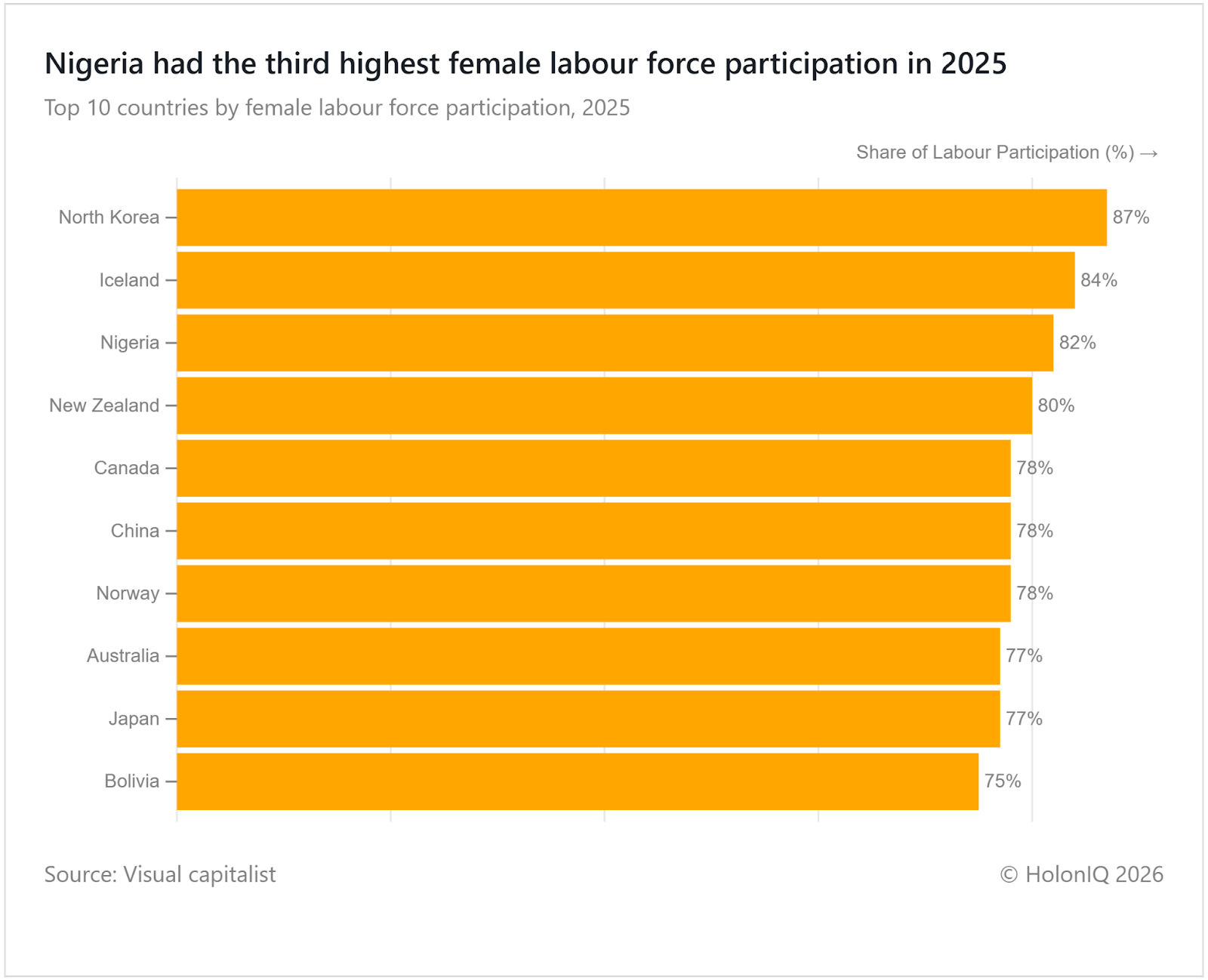
Globally, female labor force participation varies widely, shaped by cultural norms, economic opportunities, and government policies supporting education and workplace equality. Nigeria ranks among the top three countries for female labour force participation reaching over 80%. Government initiatives such as the National Gender Policy and targeted microfinance programmes have encouraged women’s entry into formal employment. High participation is concentrated in sectors such as agriculture, trade, education, and healthcare, where flexible and informal work structures enable broader involvement. Continued efforts to expand vocational training and women led entrepreneurship support further workforce integration.
⚕️ Wasting prevalence in Southern Asia reached nearly 15%
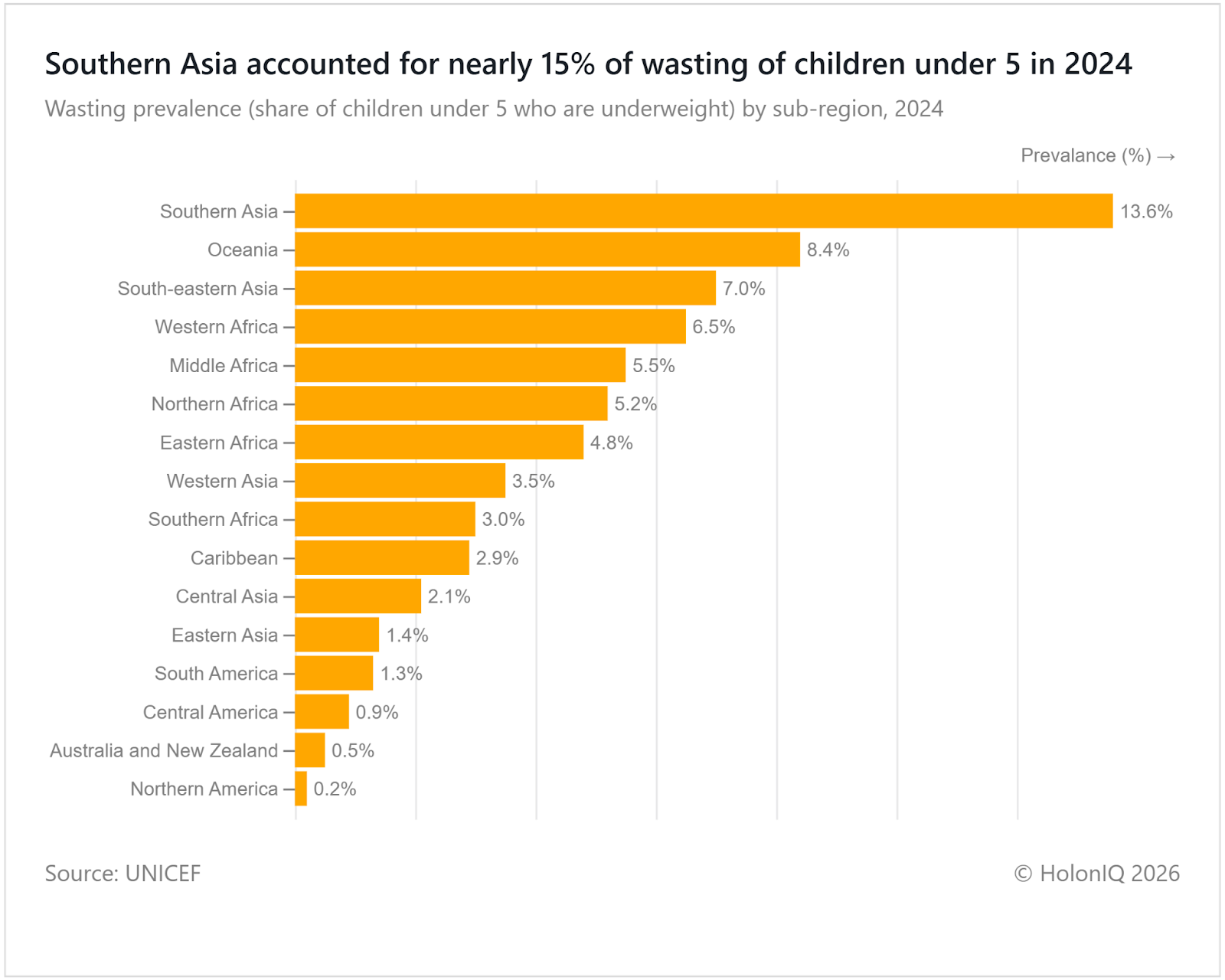
Southern Asia records the highest child wasting prevalence, reflecting acute undernutrition. Wasting refers to low weight for height and signals recent, severe weight loss caused by inadequate food intake or frequent illness. In South Asia, it is driven by maternal malnutrition, poor infant feeding practices, and recurrent infections. Food insecurity and weak health services further compound these risks. UNICEF nutrition and maternal health programmes target early feeding, sanitation, and emergency nutrition support to strengthen child health.
🤖 AI adoption in pharmacies lags other health sectors
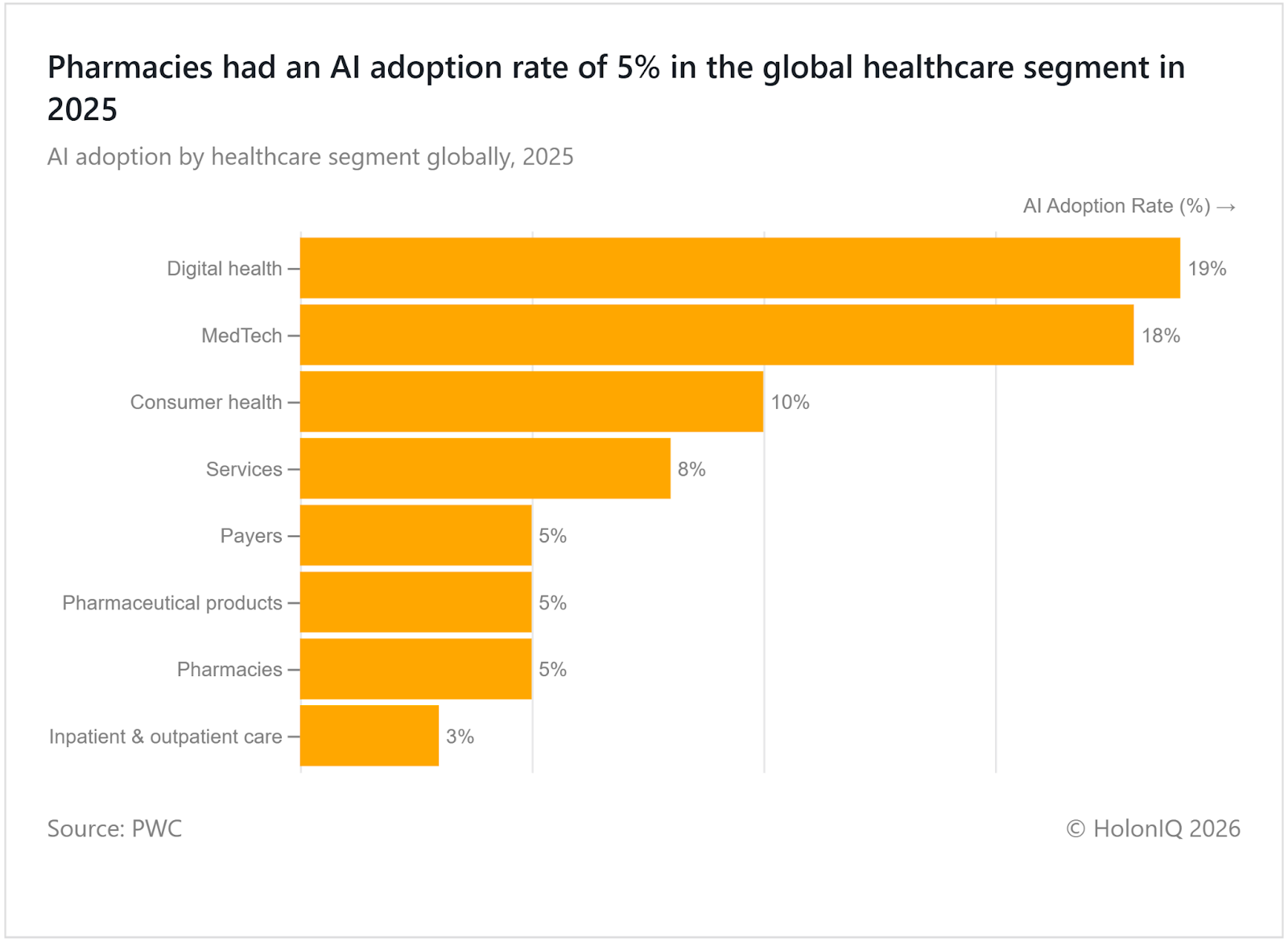
Global AI adoption in pharmacies reached 5% in 2025, reflecting growing interest in improving medication management, and increasing efficiency. Pharmacies tend to integrate AI more cautiously due to regulatory constraints and the necessity for human intervention in the dispensation of medication. In comparison, MedTech and digital health lead adoption as AI enhances diagnostics and is now able to provide personalised health solutions with AI which is a rising trend.
Like getting this newsletter? Request a demo for unlimited access to over one million charts
Thank you for reading. Have a great week ahead!
Have some feedback or want to sponsor this newsletter? Let us know at qs.com.