Pioneering educational reforms in Saudi Arabia and Bahrain
QS Midweek Brief - November 11, 2026. How are Bahrain and Saudi Arabia reforming their education systems?

Welcome! The team and I are back from Bali after the 2026 QS Higher Ed Summit: Asia Pacific. For those who were with us in-person, thank you for joining and saying hello! We always appreciate meeting readers and welcome to all the new subscribers who joined us after picking up a magazine.
This week, we turn our attention away from the Asia Pacific and towards the Arab region in preparation for the QS Higher Ed Summit: Middle East later this month.
Stay insightful,
Anton John Crace
Editor in Chief, QS Insights Magazine
QS Quacquarelli Symonds
Saudi Arabia: Higher education in transition
By Francesca Di Meglio
In brief
- Saudi Arabia is overhauling higher education under Vision 2030 to diversify its economy and boost global competitiveness.
- Reforms focus on AI curricula, foreign university branch campuses and significantly expanding women's workforce participation.
- Long-term success requires converting rapid expansion into higher academic quality and improved graduate employability outcomes.
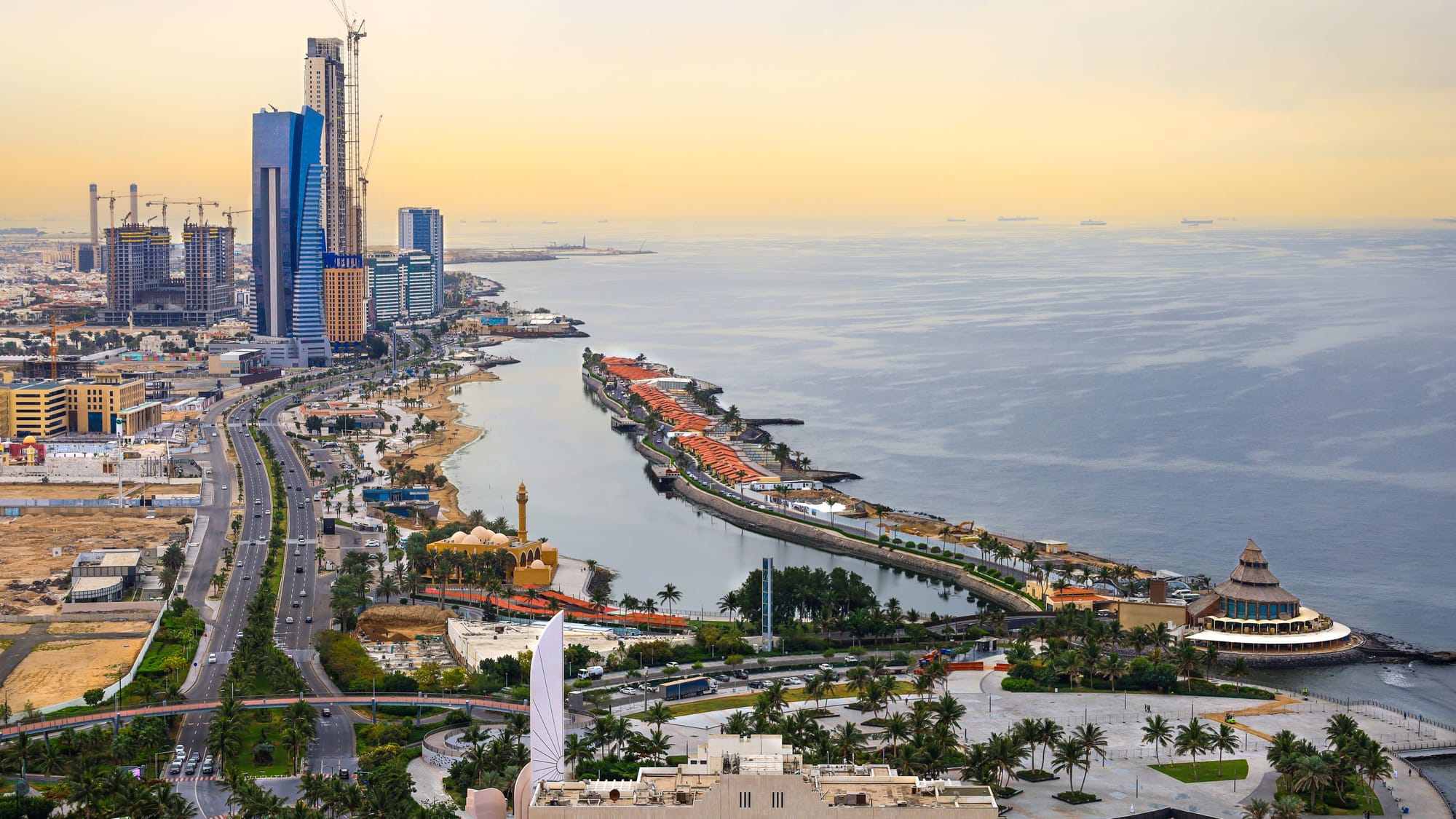
Saudi Arabia is undergoing a transformation that extends well beyond its universities. Since 2018, women have gained the right to drive, their participation in the workforce has increased, and the Ministry of Education has launched Study in Saudi, a platform to attract international applicants and simplify the admissions process. Changes in visa programmes have also opened new opportunities for international students.
At the centre of this shift is Vision 2030, a strategic framework launched in 2016 and aimed at diversifying the nation’s economy beyond oil. Through initiatives such as the Human Capability Development Programme, launched in 2021, Saudi Arabia is investing in education and workforce development to prepare its population for emerging industries, expand research capacity and strengthen its position in global higher education.
The quest for a stronger economy
Saudi Arabia remains the country with the highest number of highly ranked institutions in the Middle East and North Africa (MENA) region, according to the QS World University Rankings 2027. Ranked 63 globally, King Fahd University of Petroleum and Minerals (KFUPM) leads the group of 23 Saudi institutions featured in the rankings.
According to a recent QS report, demographic changes and the expansion of higher education will shape the country's future workforce. By 2100, more than 27.5 million people in Saudi Arabia are projected to hold a degree, which will catapult the country’s economy to match its regional partners and cement its place among the 20 largest world economies.
“Our real wealth lies in the ambition of our people and the potential of our younger generation,” said His Royal Highness Prince Mohammed bin Salman bin Abdulaziz al Saud, chairman of the Human Capability Development Programme Committee.
Vision 2030 is a reinvention of the country’s economy, with education at its core, from elementary studies through higher education and workforce training. The goal is to create reforms that support lifelong learning, enabling the workforce to adapt as industries evolve, particularly as advanced technologies such as artificial intelligence (AI) reshape the workplace.
Learning for work
One of the most significant changes is the growing emphasis on connecting university education with the needs of the labour market. The country's strategy prioritises curricula that develop skills for emerging industries, while encouraging research and closer collaboration between universities and businesses.
As the country invests in AI, technology, energy, sustainability and biotechnology, universities are placing greater emphasis on related disciplines. Researchers are also increasingly expected to have practical applications, translating academic knowledge into solutions for industry and society.
Nearly 80 percent of Saudi universities have adopted curricula that incorporate technology and AI, with more than 30 institutions integrating AI as a compulsory course, according to the 2025 Human Capability Development annual report. The country also has established strengths in life and natural sciences, including medicine and pharmacy, as well as computer engineering and mathematics, which offer a foundation for its ambitions in research and innovation.
Another key to this revolution in Saudi Arabian higher education is developing international partnerships and gaining prominence on the global stage. QS reports that Saudi Arabia is becoming a destination for international students, with a decline in outbound Saudi Arabian students occurring alongside an increase in international enrolments.
“Historically, KSA’s higher education system focused primarily on domestic needs and religious studies,” writes Devanjali Dutt, Education Lead, Consulting – MENA, and Harshit Magon, Senior Director, consulting MENA at JLL. “However, the twenty-first century saw a shift towards a more global approach, with increased international collaborators, announcements of international branch campuses and new regulations to support this expansion.”
Francesca Di Meglio is an award-winning journalist and producer of digital events with more than 20 years of experience covering higher education, business schools, human resources, process excellence, and customer experience. She is the founder of the Still Team Human podcast and blog found on YouTube and Substack respectively
Bahrain's research moment
By Jocelyn Suarez

In brief:
- Bahrain is expanding its research capacity as universities take on a bigger role in national innovation and economic development.
- New applied doctorates, stronger quality standards and industry-linked AI research are helping build that capacity.
- Long-term success depends on focused research strengths, clear career pathways for researchers and meaningful international collaboration.
Bahrain is entering a new phase in its higher education story. Its universities are being asked to do more than educate the next generation of graduates: they are increasingly expected to contribute to research, innovation and the country's wider economic ambitions.
In August 2026, that direction was given a new framework with the launch of Bahrain's national strategy for higher education and scientific research, which lays out 26 initiatives and 37 performance indicators across five objectives. These include building a leading education system, advancing scientific research and innovation, expanding global academic partnerships, strengthening governance and digital transformation, and preparing institutions for future skills.
The strategy is explicitly ambitious. At its launch, Education Minister Dr Mohammed bin Mubarak Juma described it as a roadmap for advancing Bahrain's higher education and scientific research system and enhancing its global competitiveness.
Dr Diana Abdulkarim Al Jahromi, Secretary-General of the Higher Education Council (HEC), said the initiatives are intended to strengthen institutional and academic performance, promote research and innovation, align education outcomes with the needs of the national economy and strengthen universities' role in knowledge creation.
That ambition is accompanied by a stronger emphasis on measurement, with indicators covering institutional and programme quality, scientific research and innovation, and internationalisation and academic mobility. These include accredited institutions, global ranking placements, growth in Scopus-indexed research publications, the share of STEM students, foreign academic programmes hosted in Bahrain and the proportion of international students.
The quality push is also showing up in regulation. HEC now links university and programme licensing directly to performance reviews carried out with the Education & Training Quality Authority and the National Qualifications Framework, a mechanism that Dr Juma says exists so that "no institution or programme operates without meeting internationally benchmarked standards".
The August launch event itself doubled as an accreditation ceremony: 11 higher education institutions received institutional accreditation, and 10 institutions picked up academic accreditation for 93 programmes that met HEC standards.
It is also the next chapter in a much longer national project.
Bahrain's Economic Vision 2030, launched in 2008, set out an ambition for a more productive, globally competitive and knowledge-based economy, with greater emphasis on innovation, entrepreneurship and high-value sectors. To achieve this, the policy envisaged government and the private sector working together to create the conditions for new ideas and technologies to move towards market readiness.
Nearly two decades later, higher education is being asked to play a larger role in delivering that vision.
For Bahrain, the next phase moves beyond producing more graduates to building the research capacity, talent, partnerships and innovation infrastructure that can help turn knowledge into wider economic and social value.
A new research chapter
Some of that transition is already visible.
In July, Bahrain Polytechnic announced its first-ever applied PhD programmes: a PhD in Engineering and a PhD in Computer Science, alongside research-based master's programmes in mechanical engineering, electronics engineering and computer science. The programmes entered their pilot phase in September.
The move marks a significant change for an institution built around applied, workforce-focused education.
Professor Ciarán Ó Catháin, CEO of Bahrain Polytechnic, described the launch as a significant strategic milestone for the institution and said the programmes had been developed in partnership with industry and aligned with national priorities and the needs of a knowledge- and innovation-based economy.
The model is deliberately practical. Research projects must be approved by the institution's Scientific Research Committee and supported by industry partners, with access to data, equipment and technical supervision. The polytechnic has also allocated 18 fully funded research scholarships — 12 for MSc by Research candidates and six for PhD candidates.
The projects themselves give a sense of what that applied model looks like. They include machine-learning applications for manufacturing processes, sustainable materials, robotics for inspecting oil storage infrastructure and an AI-driven digital twin project for smart parking in Bahrain.
Rather than treating research as a separate academic exercise, the model ties it directly to the country's industrial and technological priorities.
It is also part of a wider expansion of postgraduate and research capacity.
At the University of Bahrain, the College of Information Technology offers postgraduate programmes in applied artificial intelligence, cybersecurity, machine learning and computational intelligence, software engineering, big data science and analytics, as well as a PhD in Computing and Information Sciences.
The university's research infrastructure is beginning to show what it can produce. Its BENEFIT Advanced AI & Computing Lab, for example, reported 53 research papers and 269 citations over four years, reflecting a growing concentration of work around AI and computing.
UoB's own description of its research ambitions is revealing: "Research is not a peripheral academic exercise here; it is a national responsibility." Research is increasingly being positioned not as something that sits alongside teaching, but as part of the country's development infrastructure. The question is where Bahrain can build enough depth to make that ambition distinctive.
Jocelyn Suarez is Deputy Editor of QS Insights, where she covers ideas, trends and challenges shaping the future of higher education. She is an editor and writer with a decade of experience across digital media, content strategy and journalism. She is closely involved with Singapore's literary and arts scene, including through SingLit Station and the Singapore Writers Festival, and has a longstanding interest in the role of arts and culture in society.