US higher ed is changing. These three numbers show how
This week, we're looking at the state of US higher education.
Hello,
To mark the QS Back to School Summit, we are examining the state of US higher education.
US higher education remains deeply connected to the country’s economic and workforce advantage. But universities are operating in an environment where global student mobility is shifting, employers are placing greater emphasis on skills, and AI is changing what students expect from their education.
Here’s what the data tells us.
Miss out on Back to School? Join us in Washington, D.C. for Global Skills Week
The US remains one of the strongest countries for matching education with employer needs
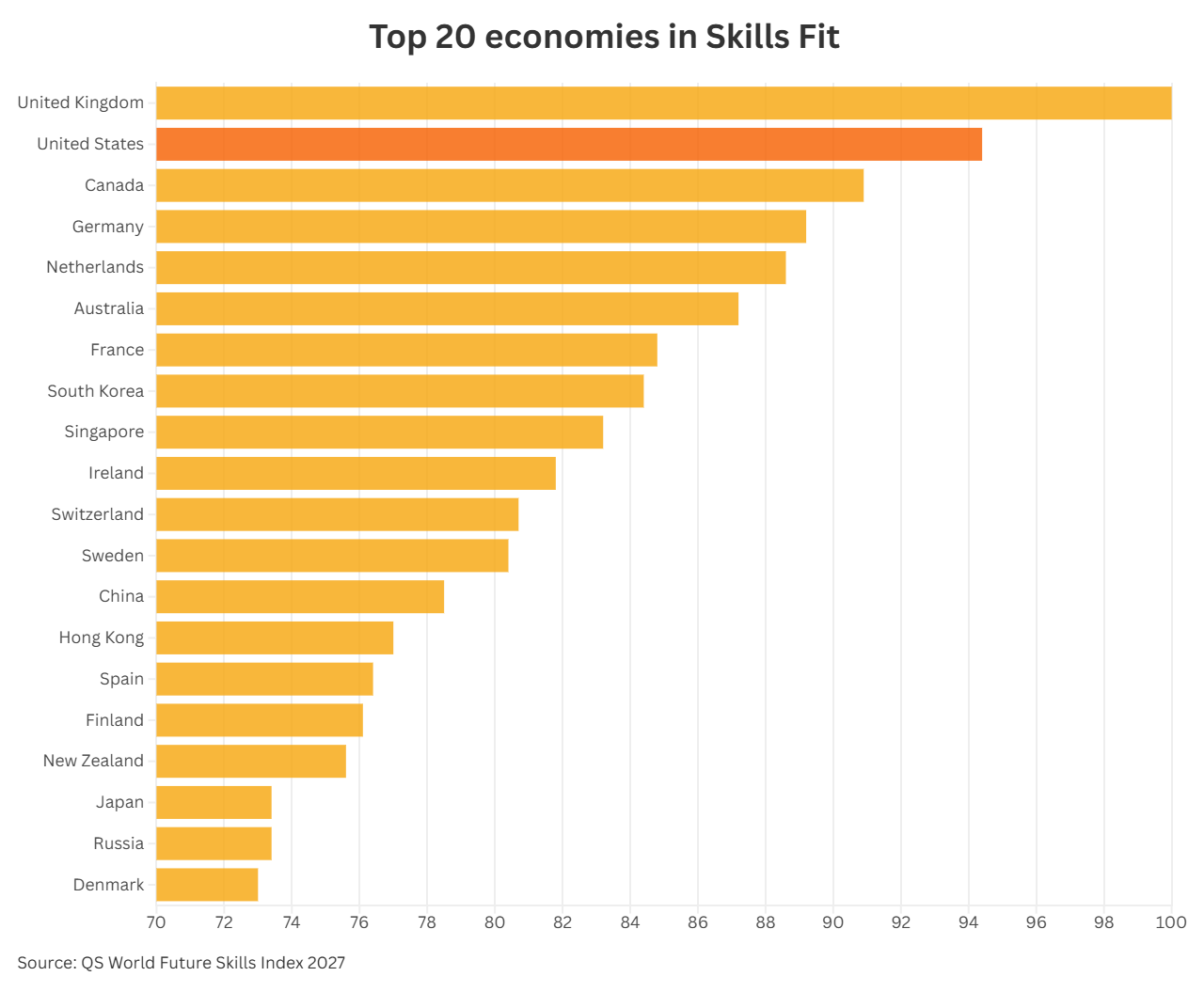
In the QS World Future Skills Index 2027, the US records a Skills Fit score of 94.4, second only to the UK. It also scores 98.2 for Academic Readiness, reflecting the strength of its higher education system in areas important to future industries, including AI, digital and green skills.
But its position in the global competition for students is under pressure
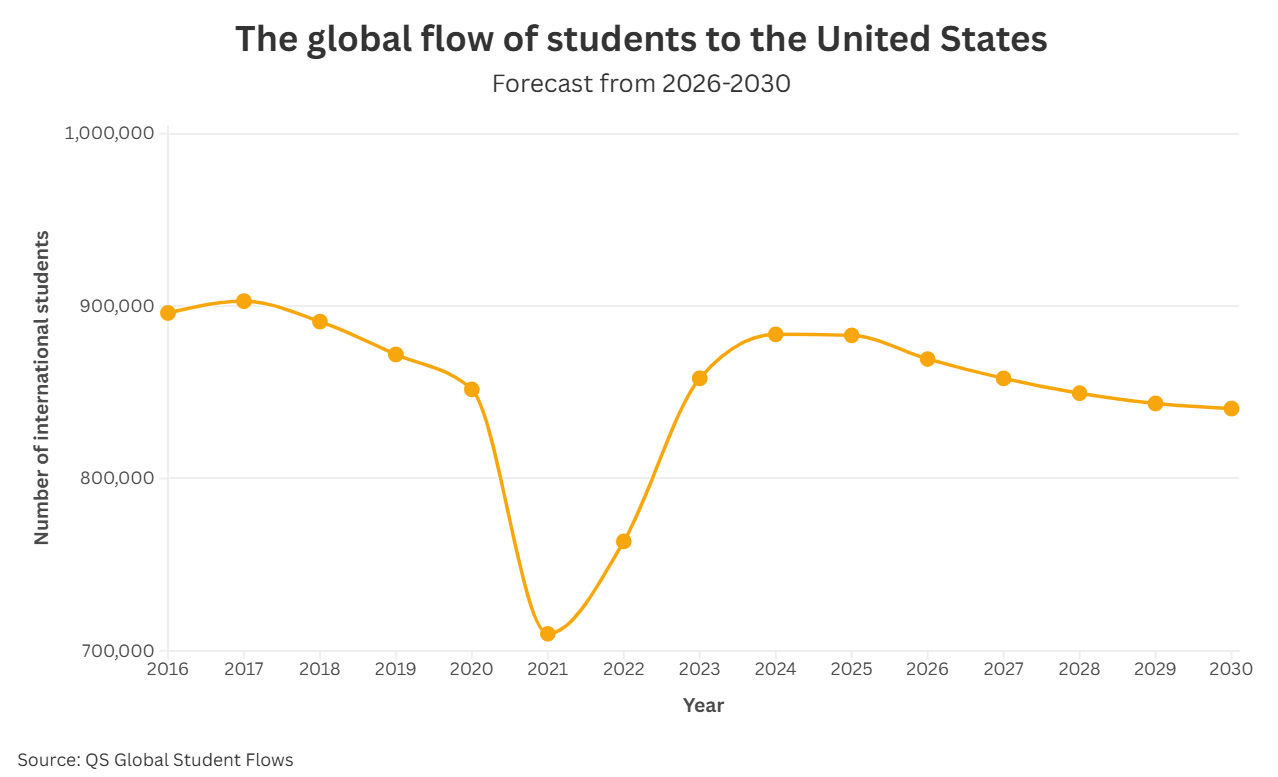
The QS Global Student Flows model projects international student numbers in the US to decline by around 2% by 2030. The same modelling suggests the UK could overtake the US as the largest of the four major international study destinations.
Employers are signalling that human skills matter as much as technical skills
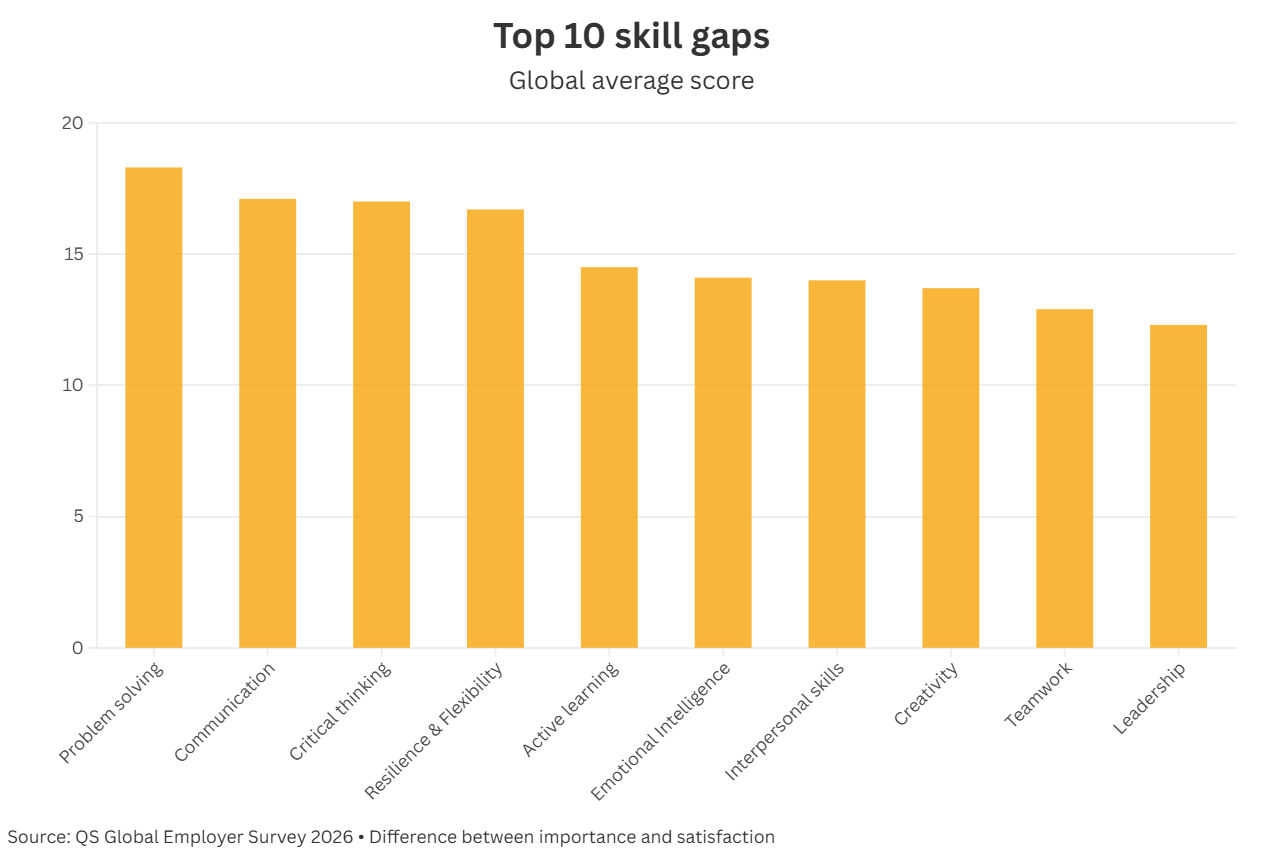
The QS Global Employer Survey 2026 identifies problem solving as the largest global skills gap, with a score of 18.3, followed by communication at 17.1 and critical thinking at 17. Employers are looking for graduates who can use technology while still solving problems, collaborating and communicating effectively.
And students appear to recognise that shift. The QS International Student Survey 2026 finds that 64% identify problem solving as a skill employers value most, followed by communication at 62% and teamwork at 58%.
What comes next for US higher education?
The US starts from a position of strength, with a higher education system that remains closely connected to skills, innovation and economic growth.
But maintaining that advantage will require more than academic excellence alone. Universities will need to respond faster to changing employer demand, embed AI and human skills more effectively, and compete for talent in a more fragmented global market.
Your next read:
- Explore more insights from the QS Back to School Summit 2026 Insights Pack
- What do US-bound students expect from colleges? Get insights from the QS International Student Survey
- What skills will graduates need in the AI-augmented workforce?