What does educating future problem-solvers really require in 2026?
QS Midweek Brief - January 7, 2026. The rise of the "Plus" programme. And meet the Paris Climate School's inaugural Dean,
Welcome to the first QS Midweek Brief for 2026! And what better way to start a new year than to bring up a milestone, with our 100th edition of the weekly newsletter. Here’s to many more! We hope you are as excited for the new year as we are to share higher education insights with you throughout it.
This week, we look at the growing trend of “STEM-plus” programmes, which seek to address graduate employment needs. We also speak to an architect of the Paris Agreement, Laurence Tubiana, about her career and new role as the Dean of the Paris Climate School.
Stay insightful,
Anton John Crace
Editor in Chief, QS Insights Magazine
QS Quacquarelli Symonds
The “Plus” factor
By Gauri Kohli

In Brief
- Universities globally are shifting to "STEM-plus" programmes, merging core technical training with vital business, ethical and policy skills to meet evolving workplace demands.
- AI integration, complex global problems, and the convergence of technology and business mean graduates must function across fields, not just in technical silos.
- Universities must overhaul traditional faculty silos through flexible curricula and strong industry collaboration to equip graduates with leadership and adaptive problem-solving skills.
Across continents - from Australia’s Group of Eight (Go8) to US research universities and European initiatives - traditional Science, Technology, Engineering and Mathematics (STEM) degrees are evolving into “STEM-plus” programmes that blend technical training with business, design, policy and ethical skills.
This shift reflects the changing expectations of employers, governments and increasingly, students themselves.
Why interdisciplinarity matters
According to Martin Buist, Associate Professor and Deputy Dean (Education) at the College of Design and Engineering, National University of Singapore (NUS), major problems are “inherently interdisciplinary in nature”.
“We need STEM to tackle them, but STEM graduates cannot solve these challenges in isolation. In the workplace they will work in multi-disciplinary teams, and we must prepare our graduates for this reality,” he says.
AI is also a major accelerant for institutions to introduce STEM-plus programmes. A report released last month by the Global Consortium on Artificial Intelligence and Higher Education for Workforce Development, comprising the US’ Institute of International Education (IIE) and the Doha-based World Innovation Summit for Education (WISE), urges universities to review policies and governance to integrate AI in teaching and learning. The report presents a comparative analysis of seven global case studies examining AI integration in higher education.
Dr Mirka Martel, Head of Research, Evaluation, and Learning at IIE, notes, “Our report showed that AI is raising all types of questions across STEM and the humanities, increasing expectations among employers that recent graduates are not only well-versed in the technical components of using AI, but also the ethical quandaries it raises related to bias, authenticity, validation, privacy and more. All fields utilising AI will have to grapple with these issues, increasing the value of a STEM education that also incorporates lessons from business, policy, humanities, and ethics.” This shift is also driven by strategic governmental interest.
Professor Bashir M Al-Hashimi, Vice President (Research and Innovation) at King’s College London, explains that governments and businesses “are looking for more innovation across more of the economy with more graduates well-equipped with the additional social, economic or business skills, recognising a crucial need for more technological expertise in high-level public and private sector decision making, investment and communications, which also calls for breadth”.
In parallel, student interest is just as important. “The changes here can’t be viewed merely as responding to what employers seem to be looking for. As a bigger cross-section of our school-leavers enter into STEM topics, they bring a wider range of preferences for specialisation and universities need to respond to this. Students are not motivated just by the job market,” he points out.
In Australia, Vicki Thomson, Chief Executive of the Group of Eight (Go8), highlights the great value of the wide range of skills, noting “a growing appreciation of applying STEM skills in traditionally non-STEM occupations and industries and applying non-STEM skills in traditionally STEM occupations and industries.”
In the UK, this mix of skills can directly address some of the workforce challenges. As per the UK Parliament’s STEM Skills Pipeline report 2025, skills shortages across different sub-sectors of STEM and at various levels of education are estimated to cost the UK economy £1.5 billion a year. As many as 49 percent of engineering and technology businesses report difficulties with recruitment because of skills shortages.
As industry expectations shift, business and technology are converging. The most powerful driver for the integration of cross-disciplinary skills with STEM subjects is the changing nature of work itself. As James Bullard, Dr Samuel R Allen Dean of the Mitch Daniels School of Business at Purdue University, emphatically says, “Every business today is a technology company and almost every business function includes a technology component.”
He argues that success is no longer about technical execution alone: “It’s imperative for students to elevate their thought process from just implementing technological solutions to understanding technology’s business and ethical implications.”
Defining the “plus” skills
STEM-plus refers to programmes that retain a technical core while embedding business, design, policy, ethics or communication components.
Technical expertise may be the starting point, now rapidly expanding to include AI, as Buist observes, but what truly defines the new STEM-plus professional is the ability to function across fields. “Whether they need to interface with business, design, policy or investment, we let students choose their own add-ons to shape the careers they want,” he adds.
Bullard details the need for commercial and leadership acumen. Graduates must gain the ability to “evaluate current business models, design new ones, and focus on viability, feasibility and impact.”
Alongside technical expertise, they need to develop “leadership, change management and project management,” and, critically, “possess the communication and persuasive skills to translate difficult concepts into understandable language that employees and stakeholders can understand and support”.
Professor Al-Hashimi says the generic competencies that we can help develop with broader disciplinary education focus on three crucial areas: Perspective - recognising disciplinary strengths and limitations; synthesis - combining insights from different areas to solve novel problems; and adaptability - learning how to learn and explore efficiently in new areas.
For the Go8, these competencies are defined through strong industry collaboration. Thomson highlights attributes like critical thinking, communication, information and digital literacy, inventiveness, cultural competence and blended effectiveness.
The institutional overhaul
Implementing the “plus” factor demands fundamental institutional restructuring, often challenging decades of traditional faculty silos.
These include cross-faculty governance, industry partnerships, flexible curriculum and student support measures. This commitment to collaboration requires hard structural changes. A notable example is at NUS, where Buist recounts the merger of two faculties: “Our Faculty of Engineering and our School of Design and Environment merged in January 2022 to form the College of Design and Engineering, bringing architects, designers and engineers under the same umbrella to boost collaboration across domains.”
This structural shift is often paired with curriculum flexibility. NUS restructured its curriculum to create a “substantial white-space component” for students to select any course on campus. However, this flexibility presents a major challenge: “The flexible curriculum needs to be university-wide. Partner faculties must be willing to offer courses to our students as we offer our courses to theirs,” says Buist.
Further, looking beyond the design and delivery of the “STEM-plus” programme, alignment with broader university strategy can make a huge contribution. “For a multi-faculty university like at our university, widening STEM education at the undergraduate and postgraduate levels gets extra strategic impetus because it fits into a long-term vision for building interdisciplinarity across much more of our teaching, our research, and the innovations we support,” says Professor Al-Hashimi.
However, he refutes the notion that STEM-plus programmes can only be offered in a multi-faculty university. “There are excellent programmes in technical universities in Germany and Singapore providing socio-economic and business education, for example,” he says.
Gauri Kohli specialises in writing and reporting on higher education news, including analysis on higher education trends, policies and the edtech sector. Her writing focuses on international education, study abroad, student recruitment trends and policies, with focus on India as a market. She has also covered workplace and hiring trends, corporate practices, work-life features, startup trends and developments, real estate for leading publications and media houses in India and abroad for the last 18 years, including Hindustan Times, a leading national daily newspaper in India.
A school of complexity and diplomacy
An interview with Laurence Tubiana
By Anton John Crace
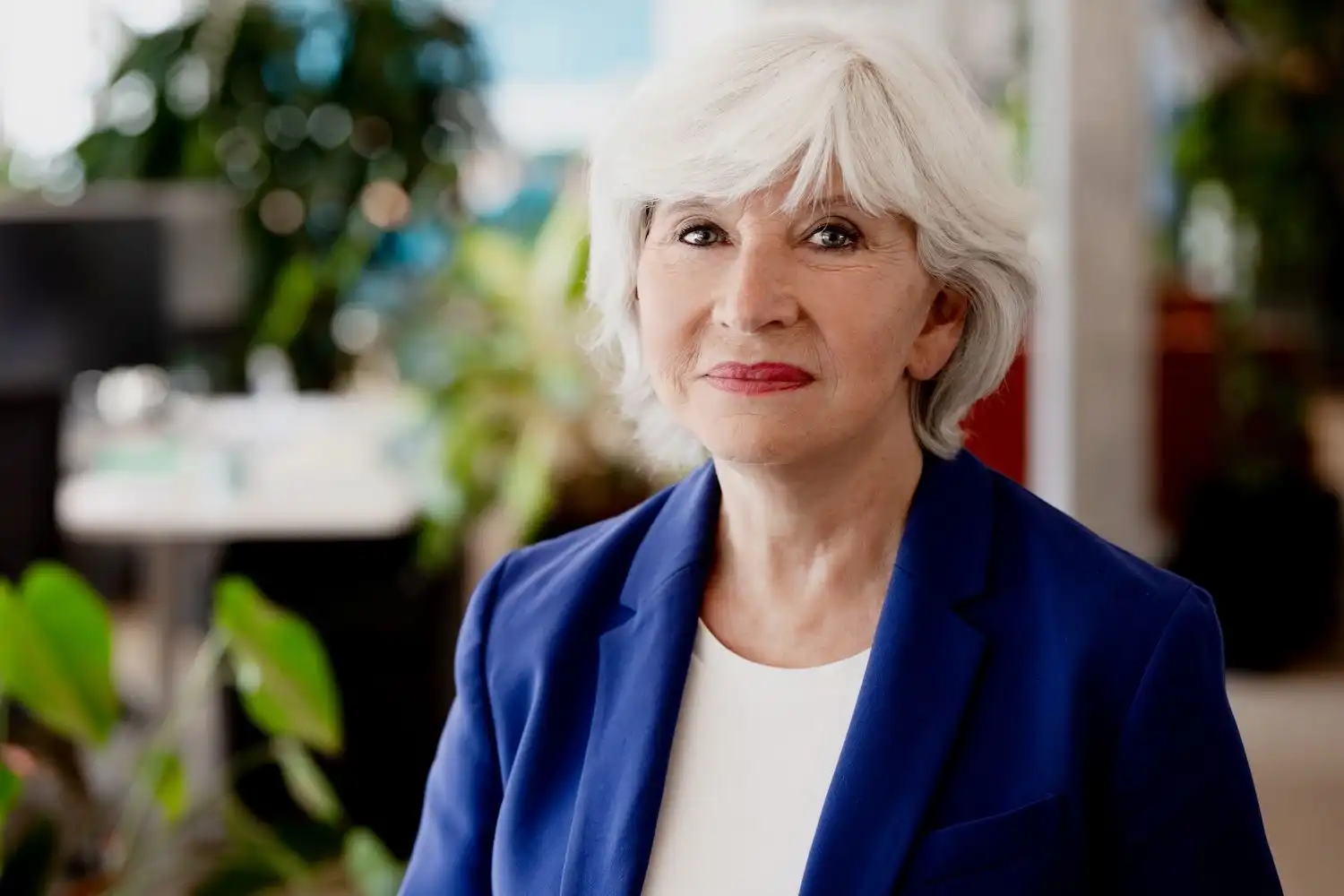
Laurence Tubiana has spent a lifetime moving between academia, government and the private sector, as well as her own institute. Passionate about the environment and climate action from early in her career, the French economist, diplomat and professor’s ability to bring the right people together culminated in her being selected as one of the architects of the 2015 Paris Agreement at COP21.
Announced as the inaugural Dean of the Paris Climate School, established by Sciences Po and the first of its kind in Europe, she sits down with QS Insights to discuss her ambitions for the school, her career, and the importance of diplomacy between science and politics.
QS: Why was the Paris Climate School established?
Laurence Tubiana: It has happened through a positive alignment of the stars. We saw that some other climate schools had been created in several parts of the world, in particular in the United States but there was no equivalent in Europe.
When the new Director of Sciences Po presented his project as a candidate to be elected, this was a flagship of his project. And why? Because he felt that these are the new issues that the next generation of leaders and people who enter into business, finance and politics will have to face.
It's a momentous statement to create this school at this particular moment. We have been rushing the creation; all the scientific bodies of Sciences Po voted for it in less than eight months, which is a record in any university. It was really a feeling that in this particular moment in history where we have leaders in the world that say that climate change doesn't exist, that science should not be supported, that are dismantling big databases and big institutions that can provide the evidence, it was really important to say we don't believe this trend is useful. We have to prepare for better times, but at least to maintain the idea that science is a base of any rational decision, whether in politics, in economics and elsewhere.
QS: You’ve touched on two interesting points. The first is the professionalisation of climate action, and also the philosophy around how do you engage within that? It's not simply just sciences, but it's also politics, and it's also community, and a number of other things that really don't have much to do with the science. Did you have to find people or did they come to you?
LT: We have to resist proposals from the students we have already just a lot of proposals from faculty, from practitioners that have good ideas that they would want to share. So, we are just starting and putting the curriculum in place. There is a lot of enthusiasm. I think people are looking for a place where you can discuss calmly, fact-based solutions.
We prepared this through quite a careful exercise associating the business people, the finance sector and the faculty of Sciences Po to try to define what kind of jobs the students can find. The response was, we need people that understand complexity, that are not specialists who know how to do geothermal engineering – there are very good engineering schools that do that – but who understand that it's not simple
QS: You famously served as the French climate ambassador and Special Representative for COP21 and were one of the architects of the Paris Agreement. Your role as the dean of the Paris Climate School sees you return to academia. What are your aspirations in this position?
LT: I have been in academia many years, and I was teaching at Columbia University when the French government asked me to come. I followed that, because I do think that the academic discipline, in which you really think about your concept, is essential for diplomacy. If not, you try to look for compromise, and you don't have the sense of the direction you want.
Second is we are at a difficult moment for climate action, clearly. Confrontational. Doubts. It’s a moment where, we made enormous progress in Paris – that's for sure, but we have to do much more in a now very limited number of years. We are at a relatively difficult moment, at a crucial moment.
We have seen over the past 30 years many cycles, ups and downs. After the meeting in Copenhagen in 2009 there was a big depression of what we could not do, we could not agree, etcetera. Then you see how you build the next cycle. And that way I see this, for me, the importance of doing this job now is to prepare the next cycle. The next cycle will be a new generation of people that will be in power, that will work in companies, that will make financial decisions and, combined, do something solidly-grounded on being really committed to find solutions. I think, for me, it’s more important than [for me] to do things directly.
QS: To sort of synthesise your observations, there’s a need for perseverance and also an ability to just continue. It's a lesson for your students.
LT: Yes, they ask me all of the time: ‘Why do you continue? How do you find the energy?’ When you look back, you see how much has been achieved. There are now initiatives, societal involvement, societal awareness that didn't exist 10 years, 15 years, 20 years before. It was a niche discussion in 1997.
When you begin to study and act on climate change or all these global issues, it's something you don't stop. I don't see anybody stopping to do that when they have begun. So, it's probably somehow an addiction. But most seriously, I think you get energy because of the students and they give it to you. That's why it's so important to continue teaching and organising the school.
QS: I want to talk about you specifically now, and we'll go back to earlier in your career. What really sparked your interest in action for climate change?
LT: In a way, sort of opportunities, but I started taking care of the environment when I was a researcher in the National Institute of Agronomic Research and a professor in an agronomic school. I'm not an agronomist, I'm an economist by training, but I was very interested in the impact on trade, on societies, on global elements. That's the first entry point. The second was how much these new issues of biodiversity was important for the political global discussion.
I've been quite active on this issue of biodiversity, entering into the government as an advisor to the French Prime Minister [Lionel Jospin] in 1997. I stayed five years with him, and I discovered the diplomacy of it, which I didn't know. I began to engage with that and saw that academia is important, research is important, civil society activities are important, but diplomacy is important as well, because you need the government to act.
I began to be really captured by that diplomatic element. I proposed reforms on the foreign affairs ministry, which were conducted that finally to create a global, global public goods department like you have in US or in Japan or many others countries. We had a more classical diplomacy at that time, which was very much bilateral or economic.
After we lost the election, I created an institute on international relations and sustainability, and then I went back and forth from government to academia and my institute. So that was a life of changing scenes with a view when I could be useful and have an influence
I was back totally in academia at that time when the French president [François Hollande] and the French Minister of Foreign Affairs [Laurent Fabius] told me to help for the climate COP. They didn't know exactly how to organise it. And they didn't have a clear view, because, again, the diplomacy of France is not like the British, which has experience and knowledge from now a number of years.
Anton is Editor in Chief of QS Insights. He has been writing on the international higher ed sector for over a decade. His recognitions include the Universities Australia Higher Education Journalist of the Year at the National Press Club of Australia, and the International Education Association of Australia award for Excellence in Professional Commentary.