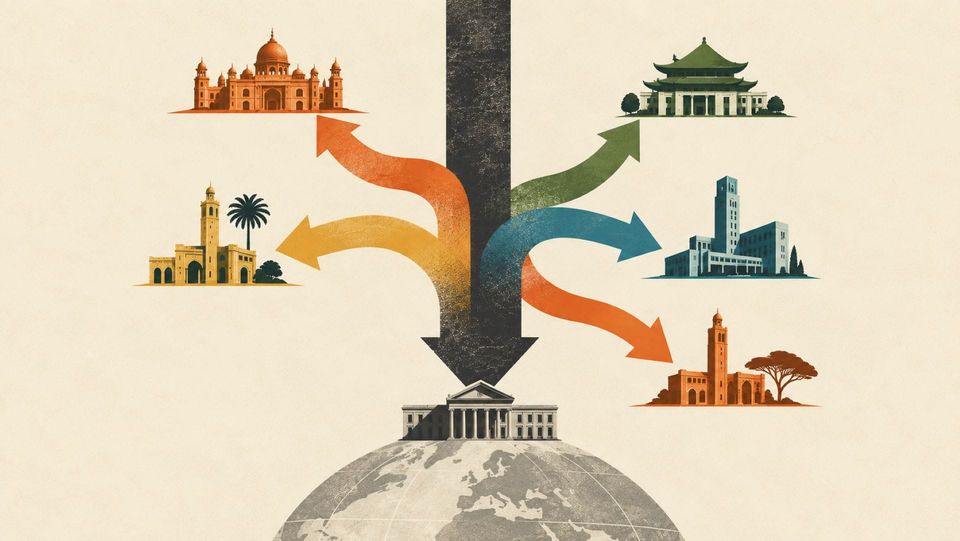
What happens to learning when students carry a war in their pocket every day?
QS Midweek Brief - April 29, 2026. What are the hidden costs of war for students studying abroad? And are language degrees still worth it now that AI can create instant translation?

Welcome! AI offers a tantalising future where language barriers are almost all broken down. Or does it? This week, we ask if translation is instantaneous, are language degrees and language learning still relevant. Of course, the answer is nuanced.
In our top article, however, we explore the more hidden mental health consequences of war on international students. Studies indicate that high level of stress and conflict can reduce cognitive function and recovery can take years if not decades.
Stay insightful,
Anton John Crace
Editor in Chief, QS Insights Magazine
QS Quacquarelli Symonds
The quiet toll of war on campuses from afar
By Michelle Zhu

In brief
- International students from conflict zones endure a "quiet toll" of emotional distress, survivor's guilt, and academic impairment while witnessing violence in their homelands from afar.
- Communication blackouts and chronic stress physically impair cognitive functions, yet these students often lack the targeted mental health support granted during previous global crises.
- Universities must prioritise sustained counseling and flexible academic arrangements, recognising that recovery from the long-term psychological impacts of war is rarely a straight line.
As the rest of us follow news about missile strikes, ceasefires and peace talks, international students from conflict zones are dealing with something quieter and often overlooked – but perhaps just as damaging. There is the guilt and worry towards family members located thousands of miles away in bombing zones. There is the constant, nagging question about whether to stay or leave. And then there is the fear of facing an increasingly hostile environment in a host country.
That's the reality for thousands of students from Iran, Lebanon, and other parts of the Middle East right now. While the world watches diplomatic manoeuvres, these students are living through a different kind of battle on campus.
The helplessness of distance
Repeated internet blackouts across Iran, which began before the war but have intensified throughout the conflict, mean that students abroad can go days without contact with their families. Without reliable communication, they are left to rely on second-hand reports, social media and news footage to piece together what is happening in their hometowns.
Situations like this harm academic performance in tangible ways, as was the case for a public oral health sciences student in Canada who told CTV News it was "difficult to even do the simplest tasks sometimes" while thinking about the ongoing war back home in Iran.
This kind of prolonged uncertainty has a measurable impact on mental health, especially when there is no clear endpoint to a war. The only thing students can do is to remain alert, waiting for the next piece of bad news.
To stay, or go?
As the war continues, students face a difficult decision: return home or remain abroad. Returning means entering a conflict zone. It may also mean abandoning a degree, losing tuition fees, and disappointing family members who invested in that education from half a world away.
Jacob Blasius is Executive Director of the Global Student Forum, an umbrella organisation bringing together student representative groups around the world. He says his organisation has received reports of international students in affected regions who are unsure whether they should leave, give up, break their current study progression, or wait it out. This is particularly so for students from less affluent backgrounds, he says, adding that they face pressure to stay and continue an education they or their family is paying for.
“There is a significant number of students who are Iranian studying outside of Iran. Not all have lived in Iran but still feel a strong connection to the country and the family they have there,” he notes.
Staying abroad means continuing one’s studies in safety, but it often comes with feelings of guilt. This is so widespread among the Iranian diaspora in Canada that it was cited in an official petition to the House of Commons, which noted that Iranians in the country were "experiencing profound vicarious trauma, grief, anxiety, and survivor's guilt" as they witnessed events back home.
In another account, a student in the United States described to the Boston Globe a mix of relief and horror after the killing of Iran's supreme leader: relief that a dictator was gone, but horror that the bombs might be falling near her own parents' home.
And for some students, staying gets harder when they start to feel less welcome, or even threatened, in their host country.
In late March, students at American-linked universities in Iraqi Kurdistan suddenly found themselves confronted with the threat of their campuses becoming direct targets. That came as the US Embassy in Baghdad issued a security alert warning that "Iran and its aligned terrorist militias may intend to target the American Universities in Baghdad, Sulaymaniyah, and Dohuk, along with other universities perceived to be associated with the United States". The alert added that Iran had "specifically threatened American universities across the Middle East".
What students need
Most universities have been quicker to offer deadline extensions than targeted emotional support. But what students really appear to need most immediately is someone to talk to. In a February 2026 statement, the European Students' Union noted that Iranian students "continue their studies under psychological stress, grief, and constant insecurity".
Data from the region underscores the scale of this cognitive load. Some 82 percent of Israeli students polled by the Israel Student Union reported they were struggling to study amid the war, mainly citing difficulty concentrating, exhaustion, and stress and anxiety. The survey also found that 41 percent feared a mental struggle in transitioning back to full-time academic routines after the conflict.
However, not every university is well equipped to respond promptly. At Langara College in Vancouver, the Persian Club tried to arrange a group counselling session for Iranian students, but was told that the counselling department was "short-staffed" and could not provide it, according to the Langara Voice. The Link reported another Iranian student at Concordia University in Montreal noted that requests for mental health support were met with long wait times.
Blasius of the Global Student Forum points to a contrast with previous conflicts.
"With the war in Ukraine, we saw universities, primarily in Europe, offering support mechanisms to Ukrainian students," he says. "We have not seen the same kind of support offered to Iranian students."
Blasius notes that the same support mechanisms, namely psychosocial support and options for postponed exam deadlines, can and should be deployed for students with ties to Iran, and not only those who have recently arrived from the country.
The longer-term effects
Research from other conflicts suggests that the psychological effects of war do not disappear quickly, and there is little reason to think the current crisis will be different.
A 25-year Oxford study on young people affected by war found that the impact can last for decades, affecting mental health, education, employment and even the next generation. In Ethiopia's conflict-affected Tigray region, for instance, 41 percent of young people reported anxiety and 32 percent depression. Similar patterns have been observed in Sudan, where conflict has inflicted severe psychological distress on the country's youth, leading to increased cases of depression, anxiety and PTSD.
The reason students struggle to concentrate in these situations is not lack of effort: science has shown that chronic stress directly impairs the brain's cognitive functions that are needed for studying. According to a 2006 paper by American psychiatrist Bruce D. Perry, high levels of stress and trauma negatively affect critical thinking ability by putting learners in a more reactive and reflexive state, rather than a reflective one.
For students from Iran and other conflict zones, the outcomes may be similar, extending even to the point of abandoning their academic dreams. Research on Ukrainian students showed that an estimated 41,500 abandoned the traditional pathway to higher education following the Russian invasion, with a 21 percent decline in students taking the standardised university entrance exam in 2022 compared to 2021.
What comes next
Past global conflicts already give some indication of what lies ahead for students from the Middle East. The patterns are not unique to any one war. They are predictable responses to prolonged stress and uncertainty.
For students from affected regions, the coming months and years are likely to follow similar trajectories. Some will recover in time and with support. Others will struggle longer.
Blasius also raises a longer-term concern about international education itself, as the Global Student Forum’s preliminary findings have indicated that geographical tension leads to lower mobility in general.
“Students choose mobility closer to home or in places that are less different from their home. I am concerned that this will mean that fewer students will become international students or that the type of mobility will be more limited, meaning a loss in international outlook and the potential for international cooperation. In times like these, we need international cooperation and understanding more than ever."
Students who have lived through this crisis from a distance may continue to battle its effects long after a ceasefire. How long that recovery might take will be different for everyone.
For now, universities can still make interventions to make a real difference to those who are struggling: providing sustained access to counselling, flexible academic arrangements, and most importantly, recognition that recovery does not follow a straight line.
Michelle Zhu is a former correspondent at breaking news desk at The Business Times in Singapore, where she mainly covered corporate announcements including financial earnings, mergers & acquisitions, and board changes. Prior to that, she was part of the editorial team at the Singapore arm of The Edge, a Malaysia-headquartered financial weekly. She holds a Bachelor of Arts in communications and new media from the National University of Singapore.
When translation is instant, does language learning still matter?
By Gauri Kohli
In brief
- AI’s instant translation is challenging the future of language degrees, forcing universities to redefine the value of linguistic study in an increasingly automated world.
- Beyond basic translation, AI often misses cultural nuance and accuracy, risking a more English-centric world where deep intercultural understanding and critical thinking are eroded.
- Universities must prioritise intercultural competence over mere translation, investing in language programmes that develop the nuanced human understanding necessary for diplomacy, business, and global citizenship.
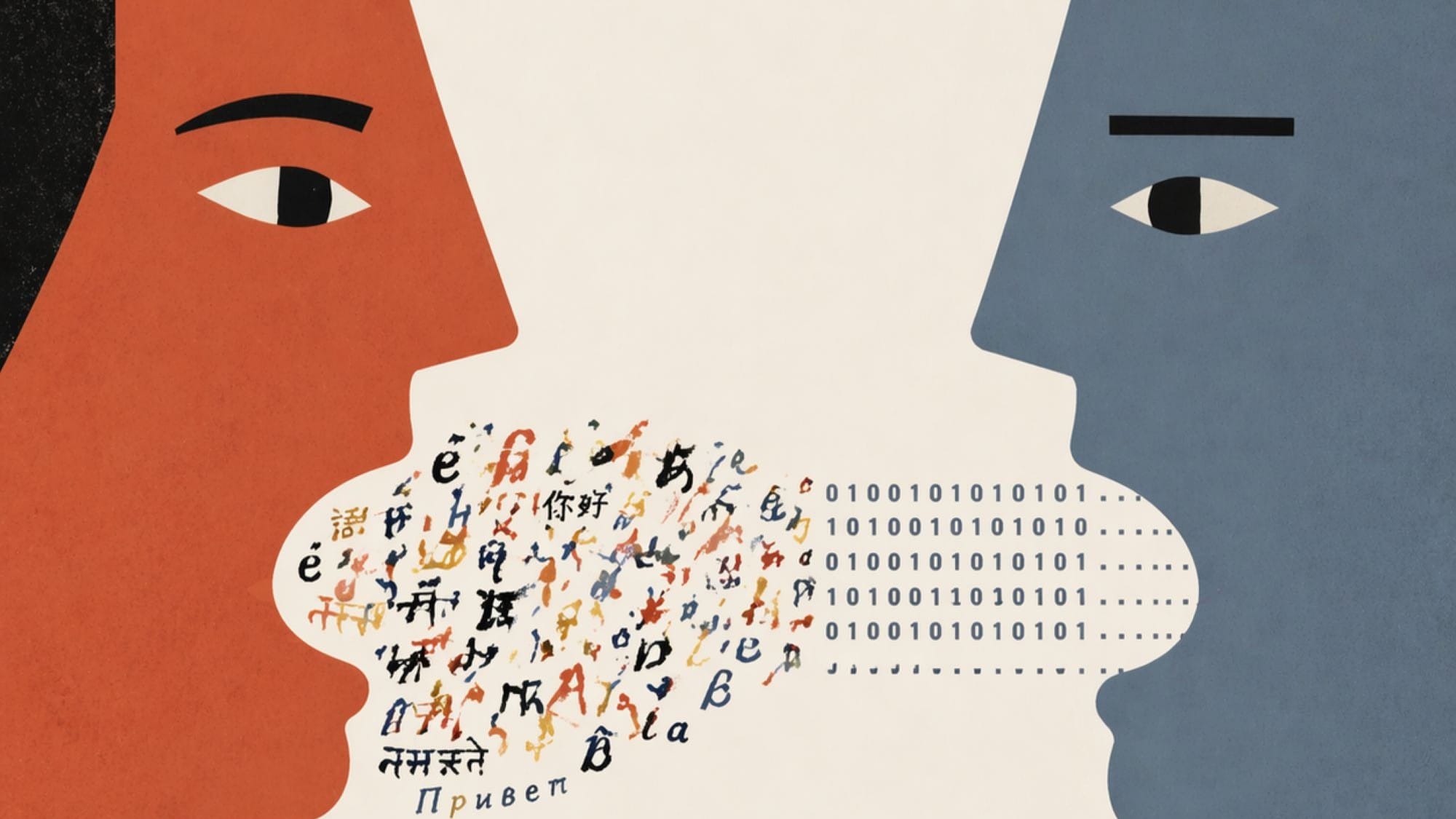
Across universities and workplaces, language barriers are dissolving rapidly. Generative AI tools can now produce fluent multilingual text and near-instant translation, enabling communication across unfamiliar languages.
This shift is raising fresh questions about the future of modern language degrees: if AI can translate, do universities still need to teach languages?
But this is not just about AI. The pressures on language learning in universities existed long before it — though patterns vary across institutions and systems — and may not be driven by AI alone, say global experts.
A decline before disruption
Across many higher education systems, language enrolments have been under pressure for some time. As Jen William, Professor of German at Purdue University and Co-Chair of the Modern Language Association’s Task Force on World Languages and Generative AI, points out, this is often linked to structural factors within education systems.
In the US, declining enrolments are linked to cuts in school-level language provision, leaving students less prepared to pursue languages at university. “Students are generally entering university with less language experience and thus there are fewer who are able, or who feel they would be able, to study a language as their major field of study,” she says.
In this context, AI may be less a cause than a convenient justification. William suggests it can be used “shortsightedly as an excuse or rationale” for cutting language programmes as a budget-saving measure, particularly in systems increasingly prioritising STEM disciplines. She adds that such decisions risk coming “to the detriment of developing well-rounded students with broad cultural understanding”.
These trends are shaped by broader system dynamics. Joseph Lo Bianco, Professor Emeritus, Language and Literacy, University of Melbourne in Australia, points to funding and policy settings as key drivers, particularly where humanities are deprioritised in favour of STEM and business programmes.
Even so, the picture is not uniform. Lo Bianco notes that while traditional degree pathways may be under pressure, there is also resilience in high-demand languages and in combined or non-degree forms of study.
Crucially, he emphasises that the overall decline in enrolments predates AI by many years. “The crisis in funding and system design still looks more powerful than AI in explaining the overall trend,” he tells QS Insights.
This suggests AI is entering an already shifting landscape shaped by policy and funding and institutional priorities as much as by technological change.
These trends are particularly visible in some English-speaking settings. In the US, Modern Language Association data shows enrolments in languages other than English fell 16.6 percent between 2016 and 2021, and have dropped 29.3 percent since their 2009 peak. In the UK, single-subject language degrees have declined most sharply, while combined and joint degrees have been more stable, according to British Academy analysis.
Australia presents a more mixed picture. A 2025 mapping study found modern language teaching remains “relatively vigorous” overall, but provision is concentrated in a small group of languages, with evidence that some universities have dropped particular languages or no longer offer full degree pathways.
However, these trends are not uniform, and some institutions and language programmes continue to show resilience.
The AI paradox: enabling and eroding
For Philipp Koehn, Professor at the US’ Johns Hopkins University whose work currently focuses on machine translation, AI’s impact is inherently dual.
Translation tools are now powerful enough to facilitate communication across languages, but they also introduce what he describes as “friction” and remain “limited to a cooperative environment”.
“As an optimistic take on language learning, such tools will provide an entry to communication among people who do not speak the same language, and the friction provides enough of an incentive to learn foreign languages,” he says.
He adds that these tools can also support language learning, alongside other digital tools that have recently become more prominent, such as spaced repetition apps.
However, Koehn cautions that “the technology also allows an easy way out: if relying on it is good enough, the effort involved in learning foreign languages may be seen as a much greater challenge without as clear benefits as before.”
This tension lies at the heart of the debate: AI can both expand access to communication and reduce the incentive to develop deeper linguistic skills.
What AI cannot replace
Despite rapid advances, experts emphasise that translation is not equivalent to language mastery.
Ana Niño, Senior Lecturer in Spanish at the University of Manchester in the UK, argues that language learning extends far beyond translation, fostering intercultural competence, critical thinking and a deeper understanding of societies.
“While generative AI can now translate text instantly and produce fluent writing across languages, universities still need robust language degrees and accessible language-learning opportunities,” she says.
The limitations of AI tools — such as missing nuance, emotion and cultural context — reinforce the continued importance of genuine language learning for authentic communication.
William echoes this shift in purpose. Language degrees today are less about producing translators and more about developing communicative and intercultural competence. “Someone with a language degree is able to identify bias and correct cultural stereotypes that are often an unfortunate feature of text generated by Large Language Models,” she notes.
These are the types of communication skills and cultural knowledge needed for an informed global citizenry, and that employers increasingly seek alongside technical expertise.
The idea that AI could replace language learning assumes translation is its primary purpose. But this overlooks how languages function in practice.
“Life doesn’t come with subtitles,” William says, pointing to the limits of relying on technology in high-stakes situations such as business negotiations or diplomacy.
AI systems also perform unevenly across languages, with lower accuracy for less widely used or digitally represented languages. “Languages that are less commonly spoken or not used as much on the internet have a much lower accuracy rate when translated by generative AI,” she adds.
Gauri Kohli specialises in writing and reporting on higher education news, including analysis on higher education trends, policies and the edtech sector. Her writing focuses on international education, study abroad, student recruitment trends and policies, with focus on India as a market. She has also covered workplace and hiring trends, corporate practices, work-life features, startup trends and developments, real estate for leading publications and media houses in India and abroad for the last 18 years, including Hindustan Times, a leading national daily newspaper in India.