
What will it take to close Asia Pacific’s future skills gap?
Are Asia Pacific’s graduates ready for the future of work?
The QS World Future Skills Index 2027 reveals an uneven skills landscape across Southeast Asia.
Singapore sets the regional benchmark, with its education system, labour market and economic growth broadly aligned. Elsewhere, different skills challenges are emerging. Indonesia – our host country for QS Higher Ed Summit: Asia Pacific 2026 – and Vietnam are seeing economic progress outpace the development of future-ready talent.
Across the region, different challenges are emerging: Singapore shows strong alignment between education, the labour market and economic growth, while Malaysia has a strong supply of skilled graduates but weaker employer demand. The Philippines faces the opposite challenge, with demand for skilled talent exceeding domestic supply.
The findings point to a wider question for the region: How can universities, employers and policymakers work together to ensure graduates have the skills economies actually need?
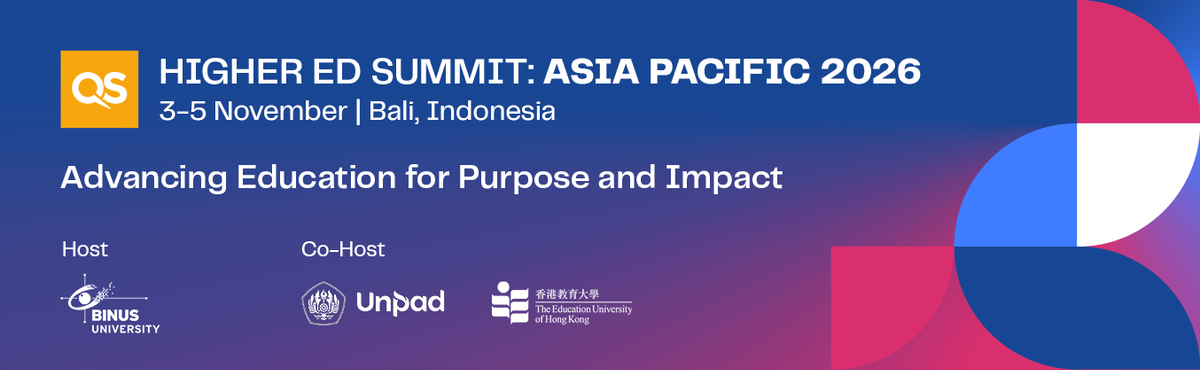
Join university leaders, policymakers and industry representatives to explore how higher education can respond, at the QS Higher Ed Summit: Asia Pacific 2026 in Bali, 3-5 November.
Explore the skills conversation in Bali
- Skills as Recruitment Currency
Explore how universities can use labour market intelligence and skills data to demonstrate career value to prospective students and build strategies that respond to the future world of work. - The ROI Challenge: Branding the University for an Investment-Conscious Generation
Examine how changing student expectations around career outcomes, skills and return on investment are reshaping how institutions communicate their value. - Empowering Researchers in the AI Era: From Excellence to Impact
Explore how universities and industry can work together to develop future-ready talent with the skills, adaptability and mindset needed to contribute to economic and societal progress.
The QS World Future Skills Index shows that strong higher education systems do not automatically translate into aligned employer demand, and economic growth alone does not guarantee a future-ready workforce.
Be part of the conversation.
We look forward to seeing you in Bali, along with our host, BINUS University, and co-hosts Universitas Padjadjaran and The Education University of Hong Kong.
Best wishes,
QS Team