💡 Young learners in an AI-first world: what policy is needed?
As governments scale AI upskilling, a new report points to areas where child-centred AI policies are still developing.
Hello 👋
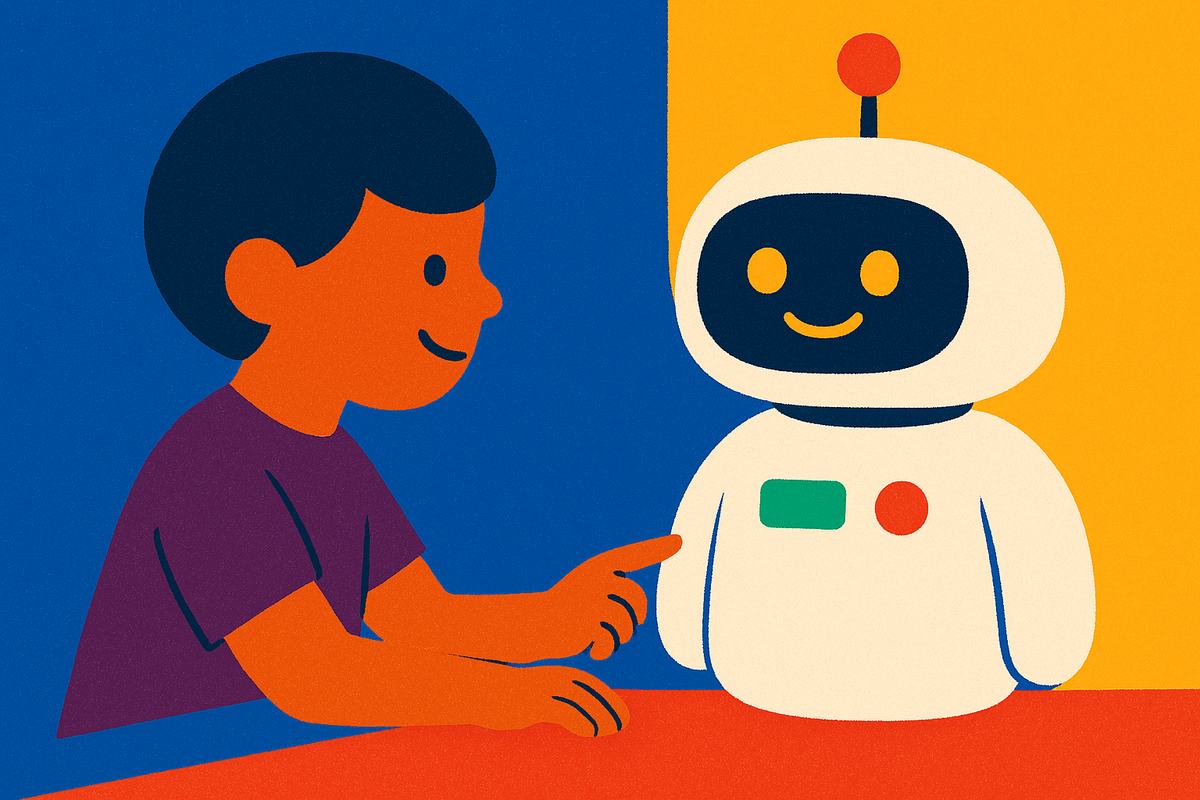
Governments and companies are racing to build national AI talent pipelines, but few are accounting for the group already using AI the most: children. UNICEF’s updated guidance makes it clear the world is scaling AI skills for adults while leaving minors to navigate powerful systems with minimal guardrails.
UNICEF’s AI for Children recent guidance outlines 10 requirements for child-centred AI, including safety, privacy, fairness, explainability, inclusion, and future skills preparation, and adds new focus areas such as AI companions, environmental impact, and dataset toxicity.
Meanwhile, global upskilling initiatives are accelerating:
- Microsoft’s $17.5B India investment aims to expand national AI infrastructure and skills.
- OpenAI launched an initiative to train 10M Americans in AI foundations.
- China and Nigeria’s NAISCA initiative will train youth and build national AI capability.
- Australia plans to provide free AI training to over one million citizens.
- FedEx is rolling out a global AI education program for its workforce.
- Universities, including Pace, are adding dedicated AI degree pathways.
As young people begin using generative AI in more settings, questions remain about how national strategies will address age-appropriate literacy, safety, and rights-aligned design for younger users. Expect ministries of education and policy makers to begin aligning AI-literacy standards, edtech procurement rules, and data-protection frameworks with UNICEF’s child-centred AI requirements or other respected guidelines, closing the widening gap between national AI-skills strategies and child safety standards.
Insights turn into action. Explore the latest AI in Education Intelligence. See our latest AI in Education Digest on the HolonIQ Analytics Platform or request a demo.
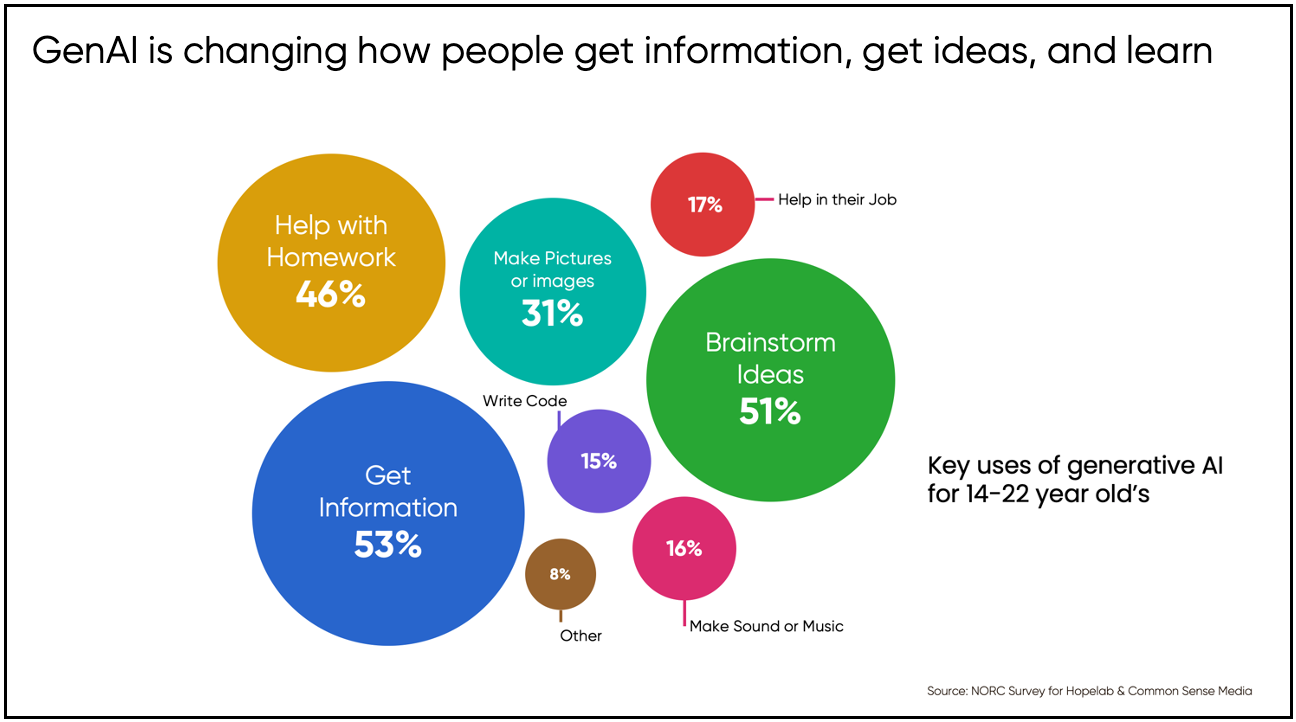
Key Uses of Generative AI for 14-22 Year Old's
⭐ AI & Digital Innovation Spotlight
✈️ AXIS Flight Simulation unveiled the AXIS AI Debriefing Station, an AI-powered platform that monitors pilot simulator sessions, evaluates flight performance in real time, and delivers data-driven debrief reports to improve training consistency and support competency-based assessment.
📝 2gnoMe introduced a responsible AI feedback feature for educators, generating draft evaluation narratives from anonymized data (each editable by human principals), earning The Danielson Group’s “AI Validation Badge.”
📘 McGraw Hill expanded its generative-AI tools for K-12 and higher-ed: its “Writing Assistant” supports student writing assignments, and “Teacher Assistant” helps educators plan units, adjust pacing, and tailor course resources aiming for broader rollout in 2026.
🤝 Policy & Partnerships
🧩 Sovereign Australia AI announced partnerships with UNSW and Deakin University to build, train and host foundation-models entirely onshore and co-develop benchmarks, tools, and research including PhD sponsorships to embed Australian linguistic, legal and cultural context into AI systems.
🏛️ University of Kentucky launched CATS AI, a statewide program covering all 17 colleges, libraries, research/health-care entities, and rural services to expand AI adoption for teaching, learning, research, health care, and operational efficiency across the state.
🌐 Uzbekistan committed to train five million AI-specialists by 2030, including students, teachers and public servants via investments in super-computing infrastructure, AI-centered curricula, and startup support, backed by nearly US$2 billion in AI and digital investment announced by the government.
💪 Power Moves & Funding
🏫 Perry Township Schools has received a US$40M grant from Lilly Endowment Inc. to expand educational programs and student support initiatives.
🤖 Microsoft announced a $17.5B investment in India to boost the country's artificial intelligence infrastructure and provide AI skills training.
🚀 Luca, a student-experience platform, has raised US$8M in a Series A to scale its digital learning tools and enhance engagement and career-preparation features.
🧪 University of Innsbruck has secured US$4.6M in funding for two new research networks from the Austrian Science Fund FWF, focusing on the Dark Universe and quantum systems of neutral atoms.
🎓 Kent and Greenwich Super University has been formed through a merger of two universities to create a larger institution with expanded academic offerings and research capabilities.