
Chinese students are rethinking study abroad. Are institutions keeping up?
QS International Student Survey data highlights new insights into Chinese student perspectives.
Chinese outbound mobility continues to grow, but student decision-making is changing. While traditional destinations still attract the largest share of students, demand is becoming more diversified, and students are placing greater emphasis on practical outcomes, affordability and post-study opportunities.
New QS research suggests that Chinese students are becoming more selective about what they expect from international education, how they evaluate destinations and where they seek information. Reputation still matters, but it is no longer enough on its own.
Outcomes are becoming more important than reputation
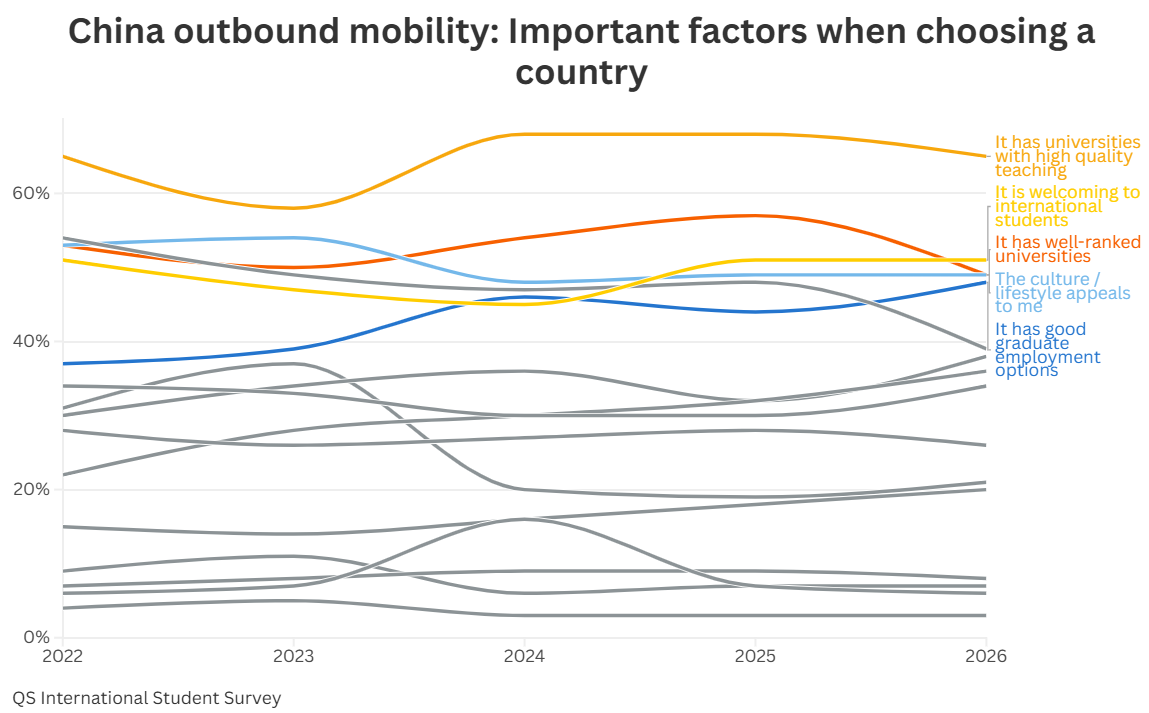
High-quality teaching remains the most important factor when Chinese students choose a study destination. However, some of the fastest-growing decision drivers are linked directly to return on investment. Graduate employment opportunities, post-study work visas and affordability have all become more important since 2022.
At the same time, broader reputation-led factors are becoming less influential. The importance of a country's reputation as a place to study has declined, suggesting students are looking beyond prestige and focusing on the outcomes an international education can deliver.
The 'Big Four' no longer dominate the way they once did
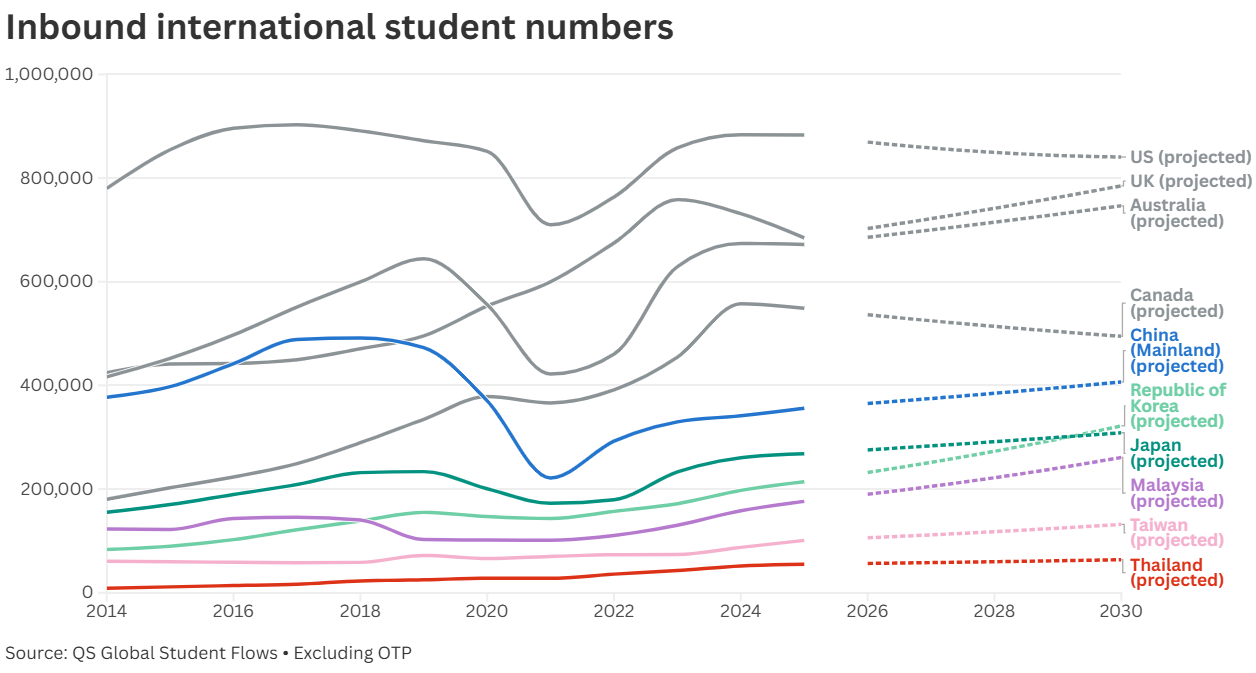
For decades, outbound mobility from China was heavily concentrated in the US, UK, Australia and Canada. That is beginning to change. Between 2019 and 2024, the share of Chinese enrolments in these four destinations fell from 64% to 56%. Future growth is expected to be more widely distributed across emerging destinations.
Countries including South Korea, Malaysia, Vietnam and New Zealand are projected to see particularly strong growth in Chinese student demand, while growth is also expected across parts of Europe.
Students are relying on trusted voices
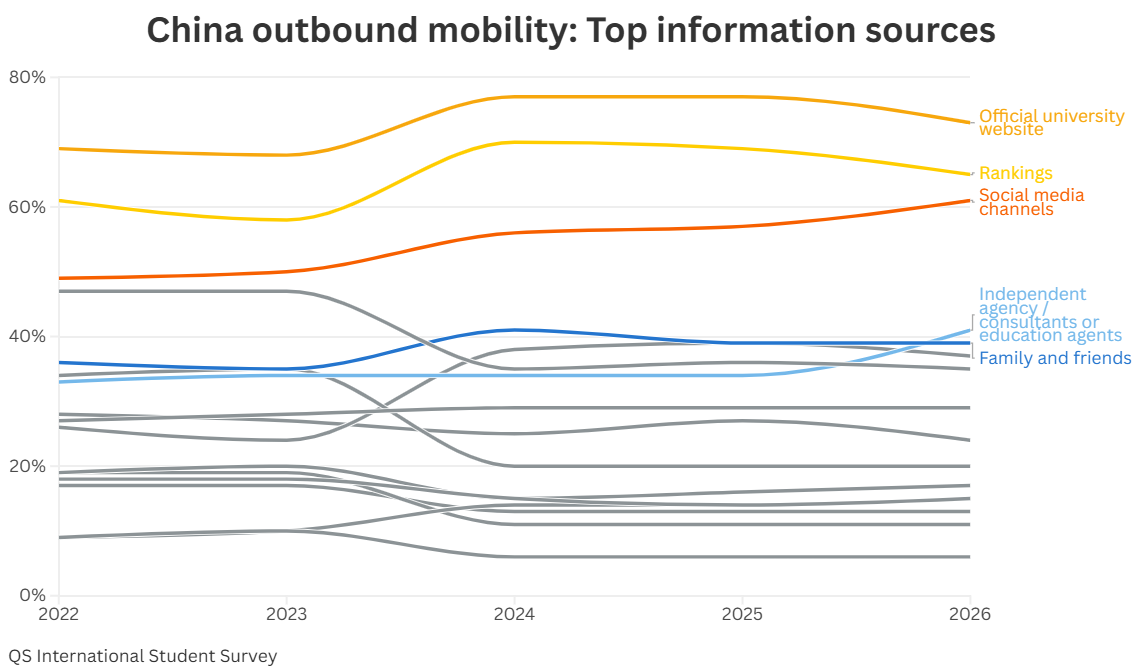
University websites remain the most important source of information for Chinese students, but the way students research institutions is changing. Social media has become significantly more influential, while alumni, rankings and education agents have all gained importance.
The trend points to a student audience that wants both official information and third-party validation. Institutions need strong owned channels, but they also need trusted advocates and authentic peer voices.
Speed matters more than ever
Chinese students are evaluating more options than before. Only 16% are considering a single university, while 44% are considering five or more institutions.
At the same time, expectations around communication are rising. More students expect responses within 24 hours, and tolerance for longer waits continues to decline.
Responsiveness is evidently a competitive advantage. When students are actively comparing multiple institutions, delayed communication can mean losing momentum at critical points in the recruitment journey.
What should universities prioritise?
Chinese students are still looking for high-quality education, but they increasingly want evidence of outcomes, affordability and career value. They rely on a wider mix of information sources than before and expect institutions to communicate quickly and clearly.
As Chinese outbound mobility evolves, the institutions most likely to succeed will be those that can clearly demonstrate return on investment, activate trusted voices across digital channels and respond faster to student demand.