
🏭 EU led in download speeds. Increased student flows from Vietnam into Japan. US cities experience more snowfall.
Chart of the Day #546 looks at Vietnamese student enrolments in Japan, internet download speeds in countries, and snowfall in the US.
Hello 👋
South Korea to upskill renewable workforce. India to expand battery workforce. Kenya to advance health workforce education. Ireland to upskill digital workforce.
Andhra Pradesh plans to introduce AI tutors in government schools to support classroom learning. Udemy partners with Google to offer AI training courses. The UK opened an Education Hub in Delhi, India to strengthen academic ties between the two countries.
Today's Topics
✈️ Flows. Japan became a popular destination for Vietnamese university students
🏭 Advanced Manufacturing. EU countries led in download speeds
🍃 Green Skills. US cities to experience increased snowfall this winter
Thanks for reading!
Not a subscriber yet?
✈️ Japan became a popular destination for Vietnamese university students
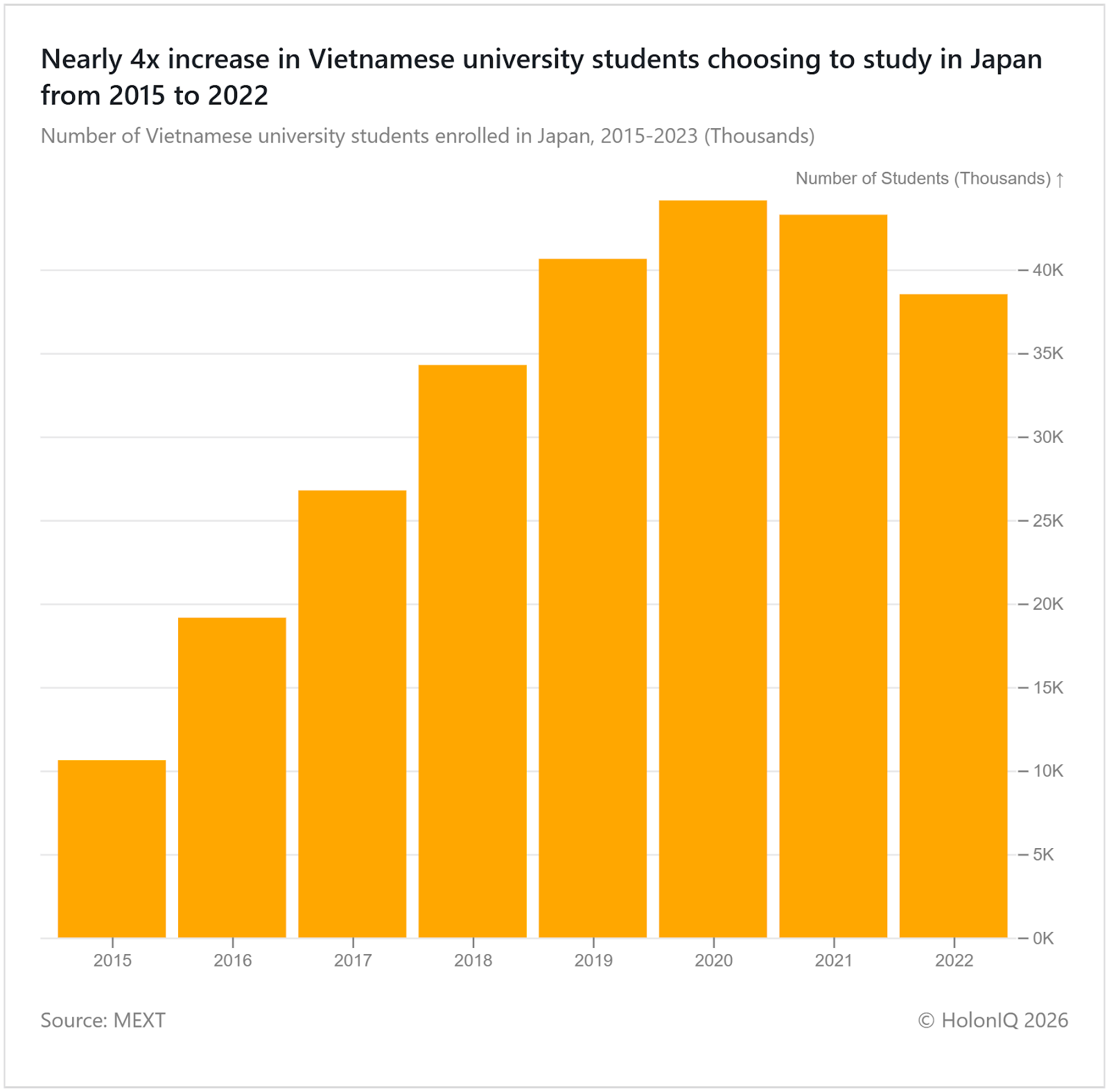
Vietnamese students in Japan nearly quadrupled from 2015-2022, driven by Vietnam-Japan strategic partnerships, labour demand, and ODA-funded institutions like Vietnam-Japan University. Popular fields include engineering, IT, and business, with Japanese corporations upscaling overall recruitments. Japan offers unique vocational pathways, enabling faster employment. This affirms the growing popularity of East Asian universities within the student population of the same region, as they prefer proximity to home and culture paired with affordability.
🏭 EU countries led in download speeds
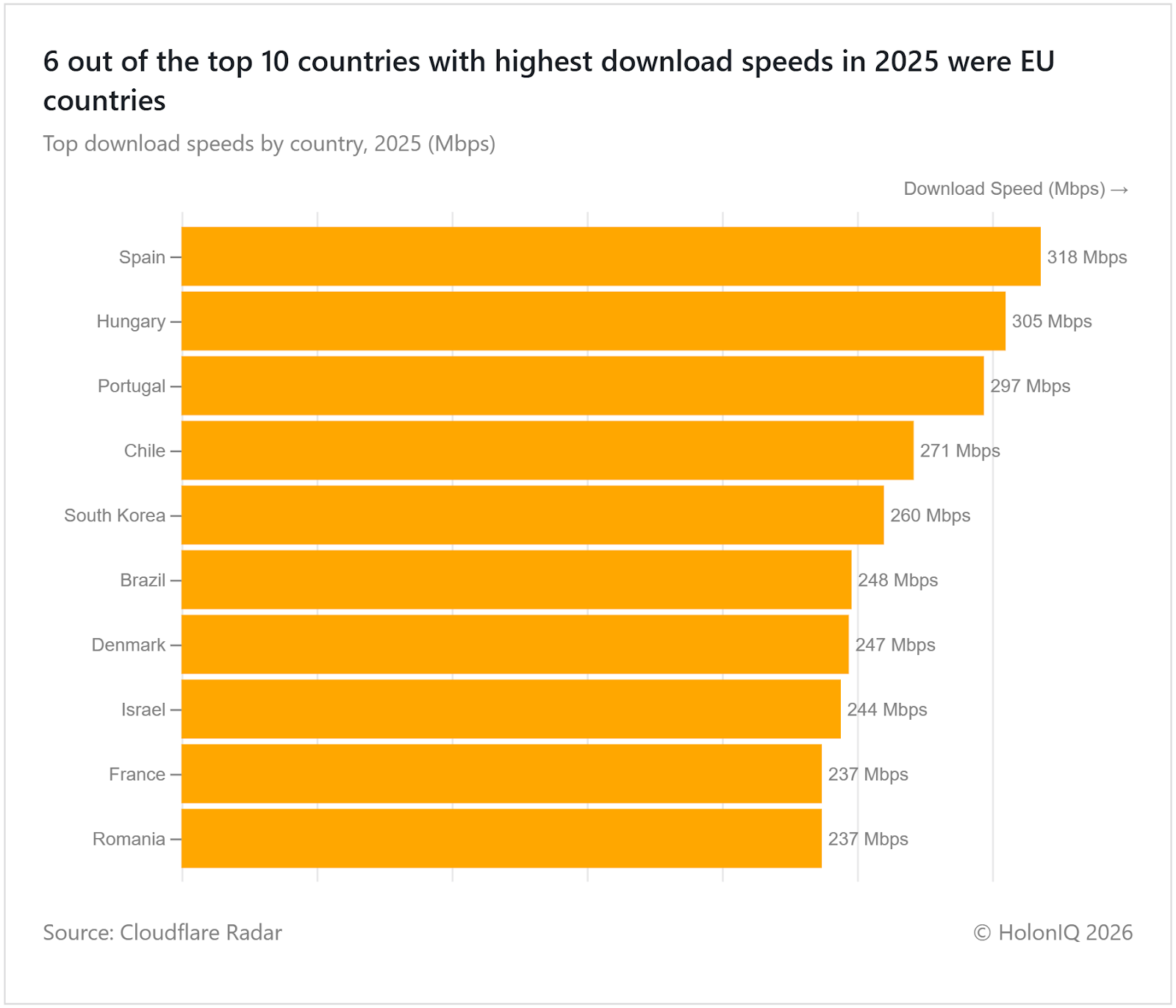
Six EU countries led global download speeds by October 2025, with Spain leading at 308 Mbps. The Gigabit Infrastructure Act streamlines deployment, targeting 80% fiber migration by 2028, which currently stands at around 64%. 5G household coverage improved as well, creating faster internet accessibility. Pricing varies across the region, with Romania offering one of the cheapest rates at $0.01/Mbps, while the region saw an overall decline in internet prices.
🍃 US cities to experience increased snowfall this winter
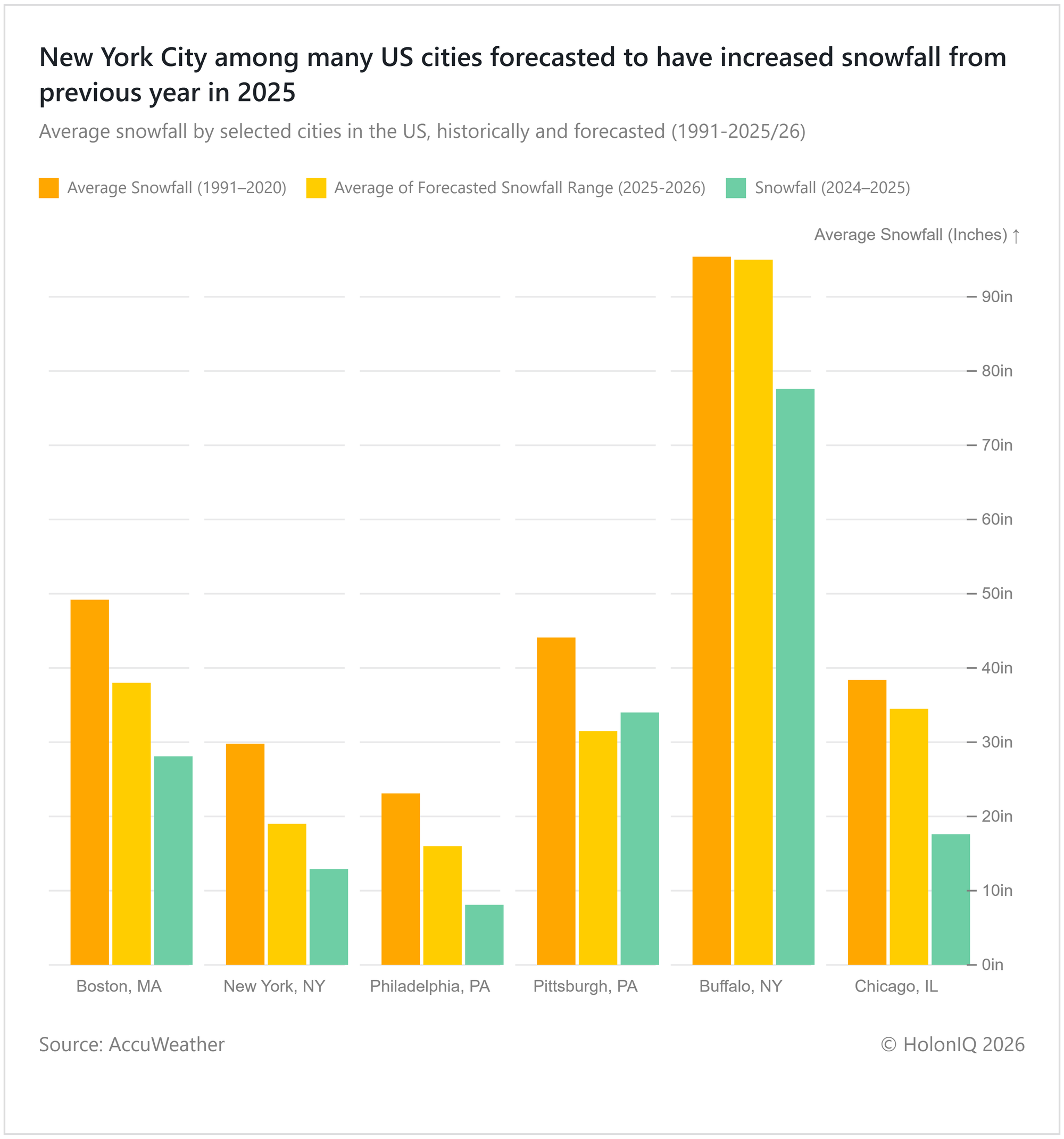
New York City forecasted 17-21 inches of snow in the 2025-26 winter season, while Buffalo expects 90-100 inches, both above recent years. However, winter temperatures have risen in parallel as well. Climate change enables this scenario as warmer air holds 7% more moisture per 1°C warming, producing heavier snow when temperatures remain below freezing. Polar vortex disruptions from Arctic warming bring extreme cold snaps southward. This indicates the growing effects of climate change, creating adverse climate conditions across all seasons, affecting many countries globally.
Like getting this newsletter? Request a demo for unlimited access to over one million charts
Thank you for reading. Have a great week ahead!
Have some feedback or want to sponsor this newsletter? Let us know at qs.com.