
💼 Green employment expands in India. The Gulf region's rising temperatures. Defense electronics led by Europe.
Chart of the Day #596 looks at green jobs in India, the hottest countries in the world and defense electronic component manufacturing.
Hello 👋
Malaysia launches PACE plan to upskill workers and reduce job losses from economic changes. India and New Zealand discuss dual degree programmes to improve student mobility and academic exchange. Japan to restrict digital textbook use by grade and subject.
Today's Topics
💼 Workforce. Indian green jobs on the rise
🍃 Green Skills. The Gulf region faces extreme heat conditions
🏭 Advanced Manufacturing. Europe led defense electronic component manufacturing
Thanks for reading!
Not a subscriber yet?
💼 Indian green jobs on the rise
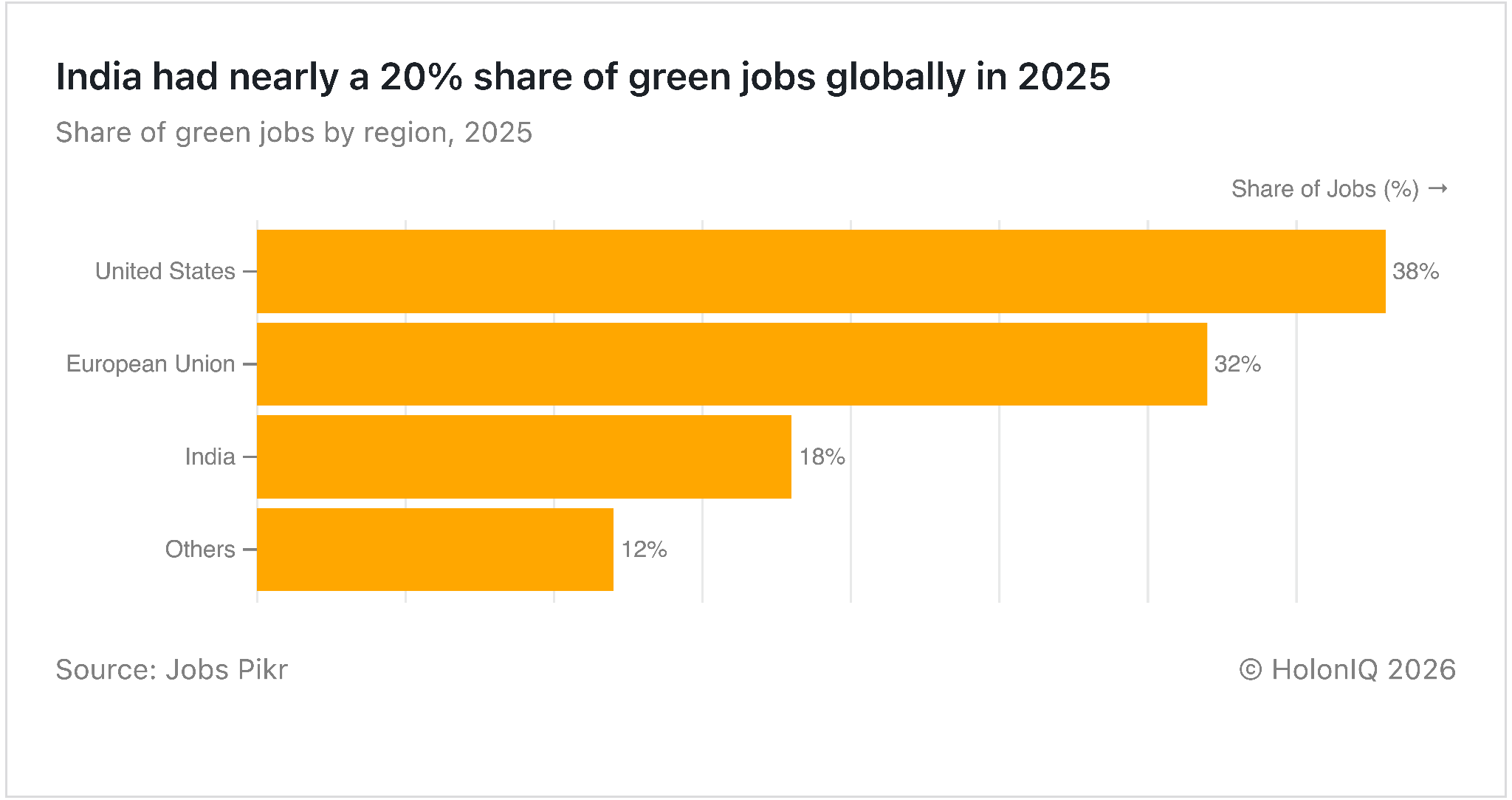
India held nearly one-fifth of green jobs globally in 2025, reflecting steady growth in sustainability-focused employment. The rising share is driven by expansion in renewable energy and climate related infrastructure. India’s transition toward clean energy is creating new roles across solar, wind, and environmental services. As demand for sustainable development increases, green employment is expected to grow further. The National Green Hydrogen Mission implemented by the Government of India supports green industry and job creation.
🍃 The Gulf region faces extreme heat conditions
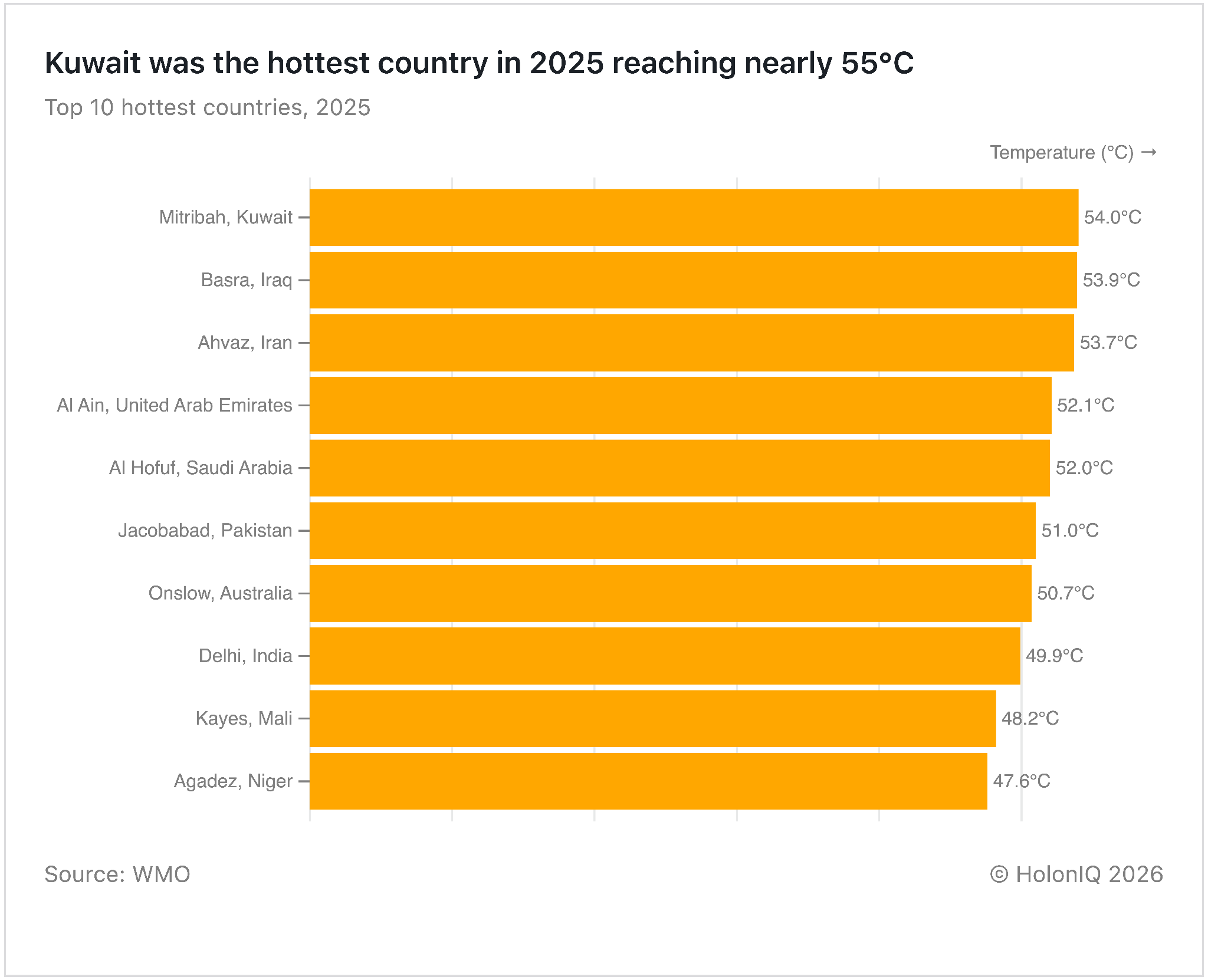
Kuwait records the highest temperature at 54°C in 2025, with several Gulf locations also ranking among the hottest globally. The concentration reflects extreme desert climates, low rainfall, and intensifying heatwaves across the region. Rising temperatures are predominantly due to climate change, which increases pressure on infrastructure and energy demand. Gulf countries are investing in cooling technologies and climate adaptation measures. The Net Zero 2060 Strategy led by the Government of Saudi Arabia supports regional climate resilience efforts.
🏭 Europe led defense electronic component manufacturing
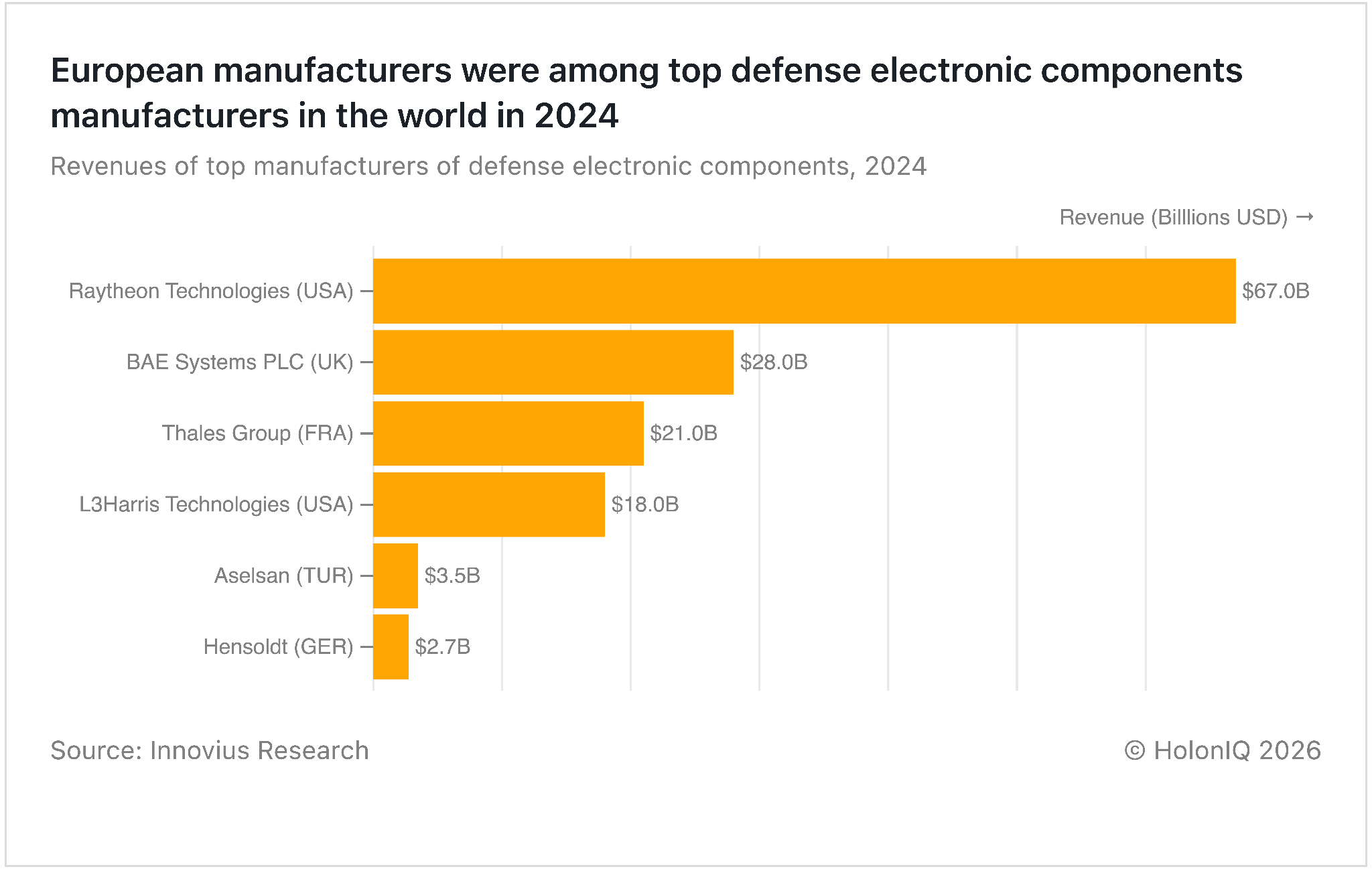
While US firms lead the private defense electronics manufacturing market, non-US firms like BAE Systems and Thales are capitalizing on a $25B market rise driven by European rearmament. Emerging markets in the Middle East and Indo-Pacific increasingly demand autonomous sensors from private giants like Turkey’s Aselsan. However, severe supply bottlenecks, including tungsten deficits, semiconductor chokepoints, and skilled labor shortages in the region, threaten to delay the delivery of massive backlogs for these high-tech military systems.
Like getting this newsletter? Request a demo for unlimited access to over one million charts
Thank you for reading. Have a great week ahead!
Have some feedback or want to sponsor this newsletter? Let us know at qs.com.