
How does the US still lead higher education? What challenges are on the horizon?
The US still leads global higher education, but QS data shows maintaining that position will require continued innovation.
Hello,
For decades, the US has set the global benchmark for higher education. The QS World University Rankings 2027 and the QS World Future Skills Index 2027 show that's still true today, but they also reveal challenges - maintaining its top spot will require continuous adaptation.
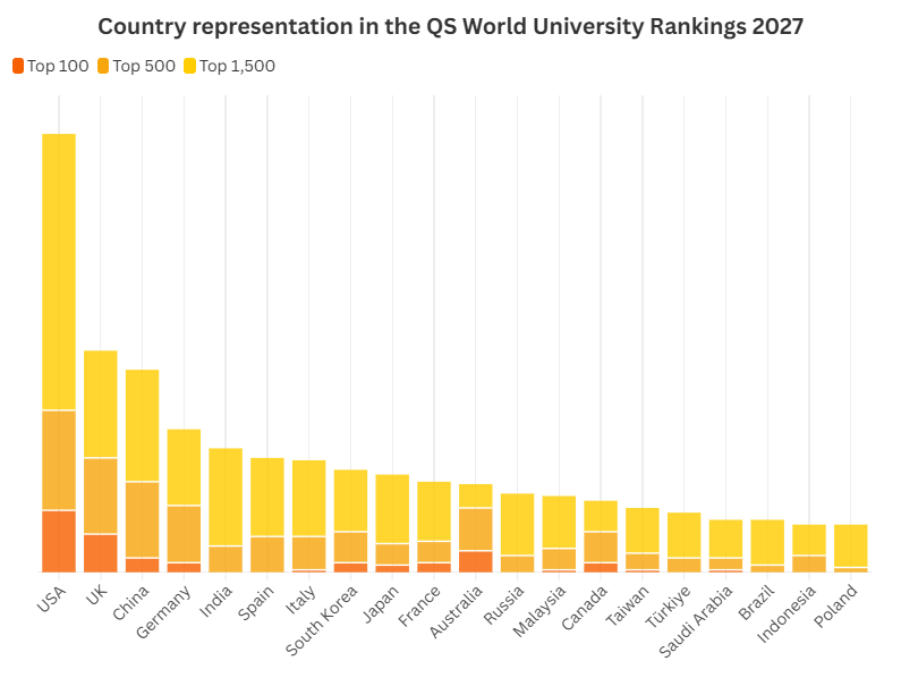
The US remains home to more world-ranked universities than any other country, with MIT retaining the #1 position globally for the 14th consecutive year. At the same time, it ranks first in the world for future skills readiness, reflecting a strong alignment between higher education, employers, and the changing demands of the labour market.
Join 500+ leaders from higher education, business, government, investment, and technology to explore the forces reshaping learning, work, and society.
The next 25 years start here.
Don't miss out.
US performance by the numbers
- 184 ranked universities in the QS World University Rankings 2027
- Nine universities in the global top 20
- MIT ranked #1 globally
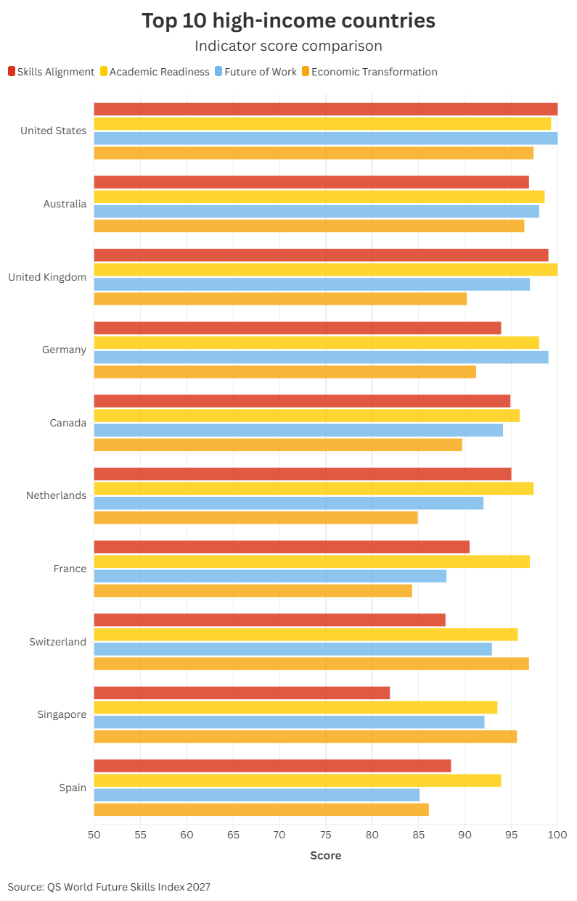
- #1 in the QS World Future Skills Index
- #1 for Skills Alignment
- #1 for Future of Work
- #2 for Academic Readiness
Rankings success tells only part of the story
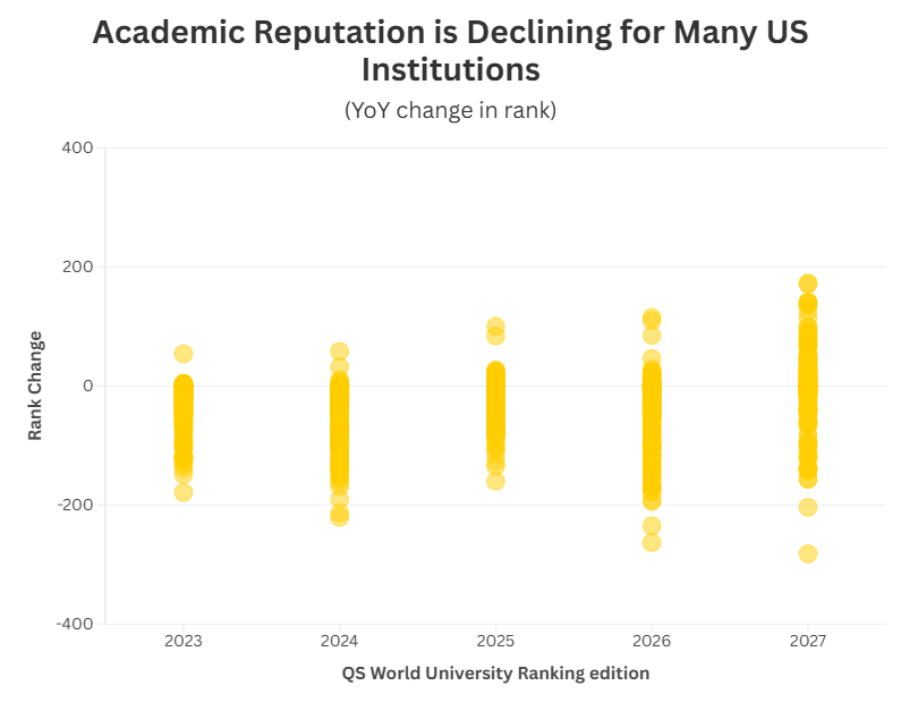
While the US continues to dominate global rankings, the data also highlights growing competitive pressure.
Many US institutions experienced declines in Academic Reputation, while international student numbers are under pressure amid increased global competition. Meanwhile, countries across Asia and the Middle East continue to strengthen their performance, narrowing the gap with traditional higher education powerhouses.
The future skills advantage
The QS World Future Skills Index paints a similarly encouraging, but nuanced, picture. The US leads the world because its universities produce graduates with skills employers value, while its economy is well positioned to capitalise on AI and technological change. It ranks first globally for Skills Alignment and Future of Work, with particularly strong performance in AI-ready occupations.
However, the report also identifies persistent shortages in leadership, problem solving, and other uniquely human capabilities. As AI automates routine work, these skills are becoming even more valuable.
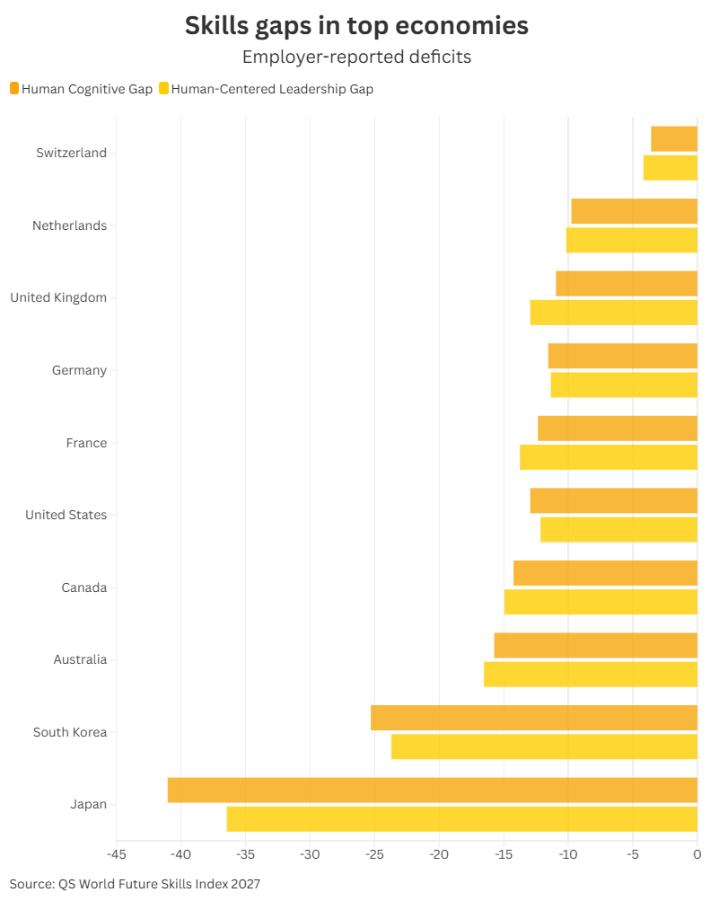
Maintaining top spot is not a simple task
The US continues to lead global higher education because it combines world-class universities with a labour market that rewards advanced skills. But leading in the future will depend less on historic reputation and more on continued investment in innovation, employability, and graduate outcomes.
In a more competitive global landscape, maintaining first place may prove harder than reaching it.