
Generative AI is now mainstream in higher education – but governance is lagging
Two-thirds of academics and students now use Generative AI weekly. As adoption accelerates, universities face growing pressure to provide clearer guidance, stronger governance and AI literacy training.
Generative AI has moved beyond experimentation in higher education. New QS research, based on surveys of more than 1,200 academics and students worldwide, shows AI is now a routine part of teaching, research and study.
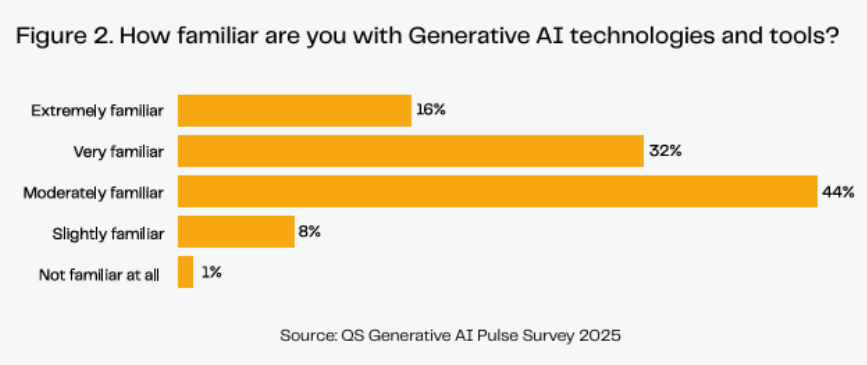
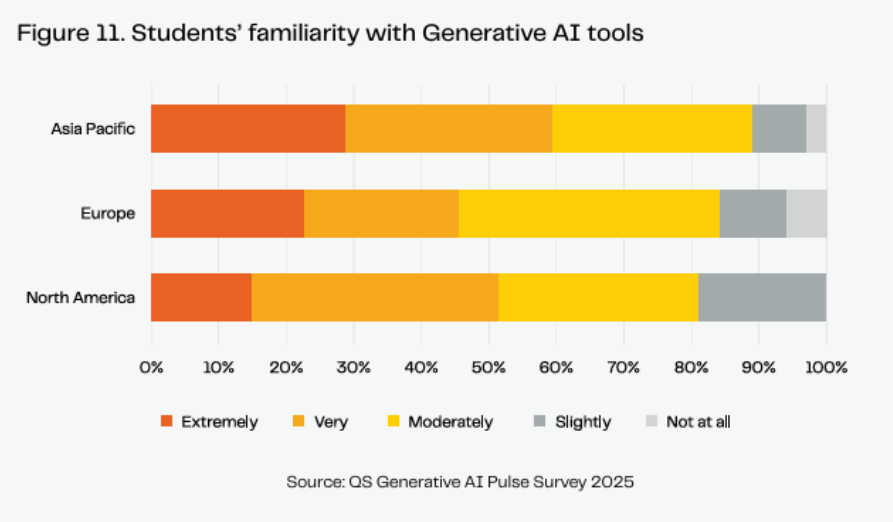
Nearly half of academics (48%) and more than half of students (53%) now describe themselves as very or extremely familiar with Generative AI, reflecting a sharp increase from 2023. At the same time, attitudes remain largely positive, with 74% of academics and 68% of students viewing AI's role in society favourably.
AI adoption has become the norm
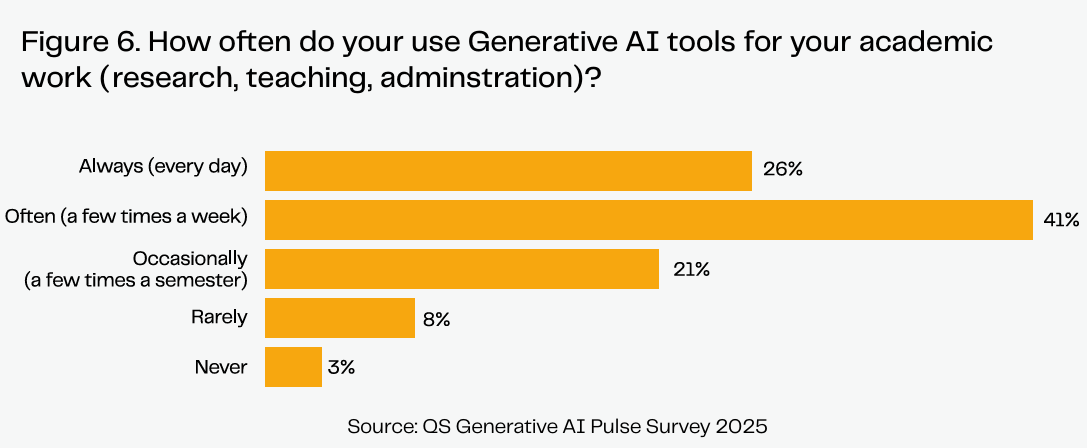
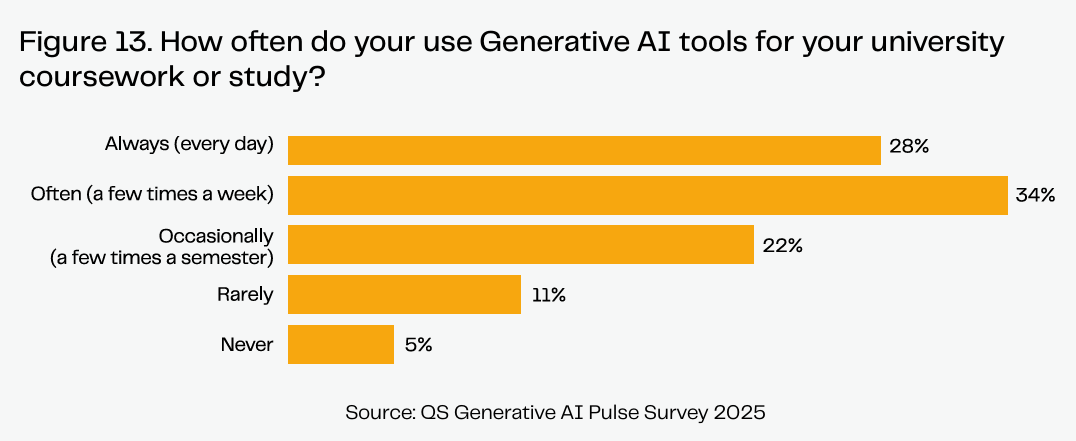
Usage rates suggest AI has become embedded across higher education. Two-thirds of academics (67%) and 62% of students report using Generative AI at least weekly.
For academics, AI is increasingly supporting writing, editing, literature reviews and teaching preparation. Almost half say they frequently use AI to help teach students how to use these tools ethically and critically, highlighting the growing importance of AI literacy within curricula.
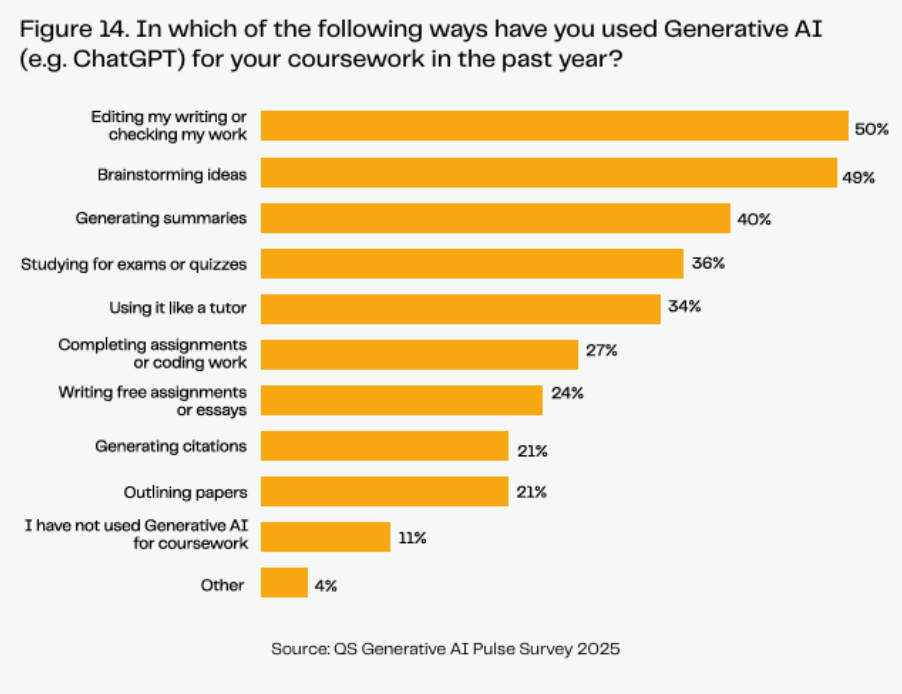
Students are also integrating AI directly into their learning workflows. Research support, idea generation and content creation are among the most common use cases.
Governance and ethics remain the biggest challenge
Despite widespread adoption, concerns about implementation persist.
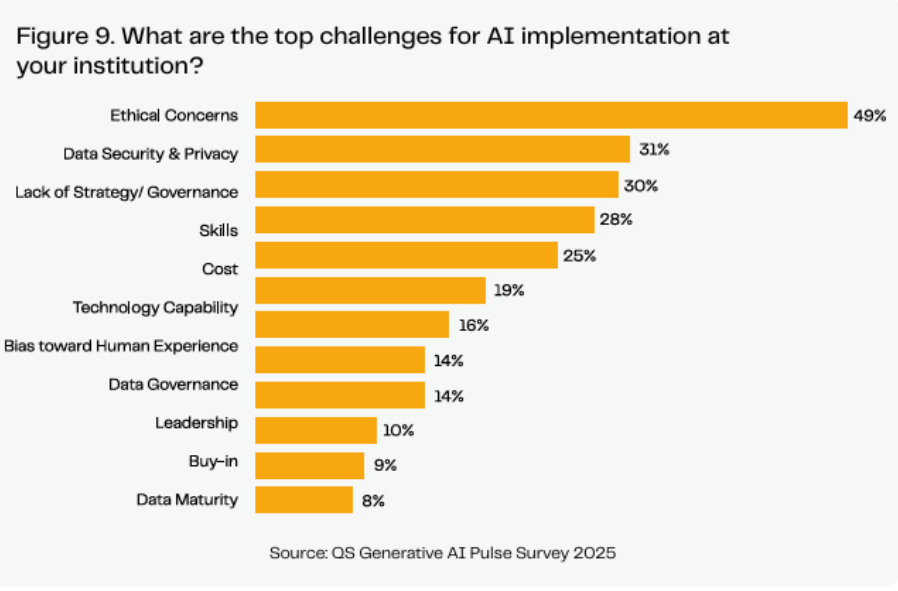
Academics identify ethical concerns, data security and a lack of institutional strategy as the biggest barriers to AI adoption. More than a quarter also point to limited skills and expertise within institutions.
The message from both students and academics is remarkably consistent: universities need clear policies, practical guidance and transparent frameworks that explain how AI should be used.
Assessment is entering a new era
One of the clearest signals from the research is the growing pressure on traditional assessment models.
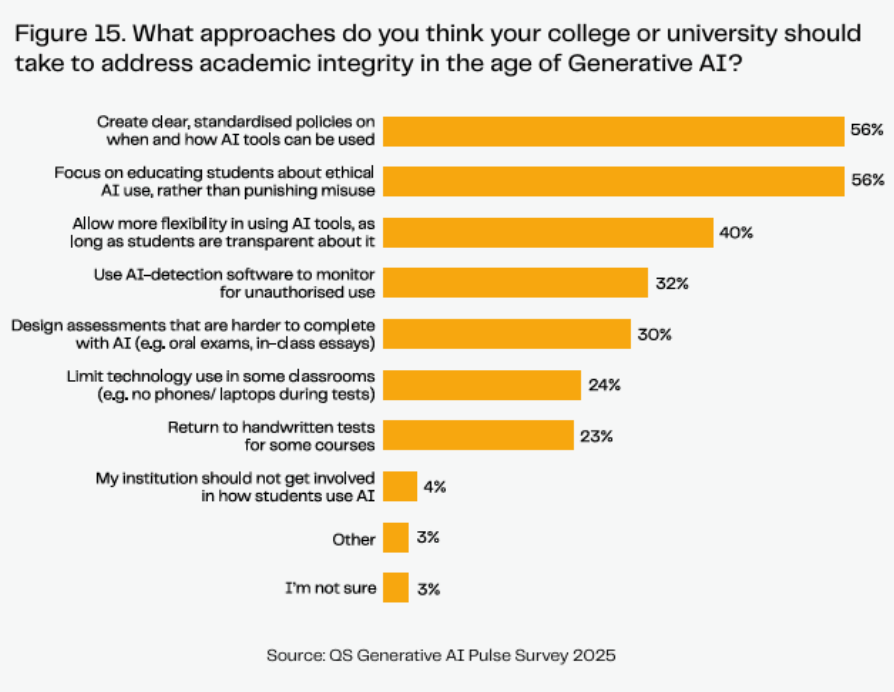
Almost one-quarter of students (24%) report using Generative AI to assist with essay writing. In response, 30% believe universities should design assessments that are more difficult to complete using AI alone.
Rather than calling for outright bans, students generally favour approaches that balance academic integrity with transparency, including clearer disclosure requirements and guidance on acceptable AI use.
A shared vision for the future
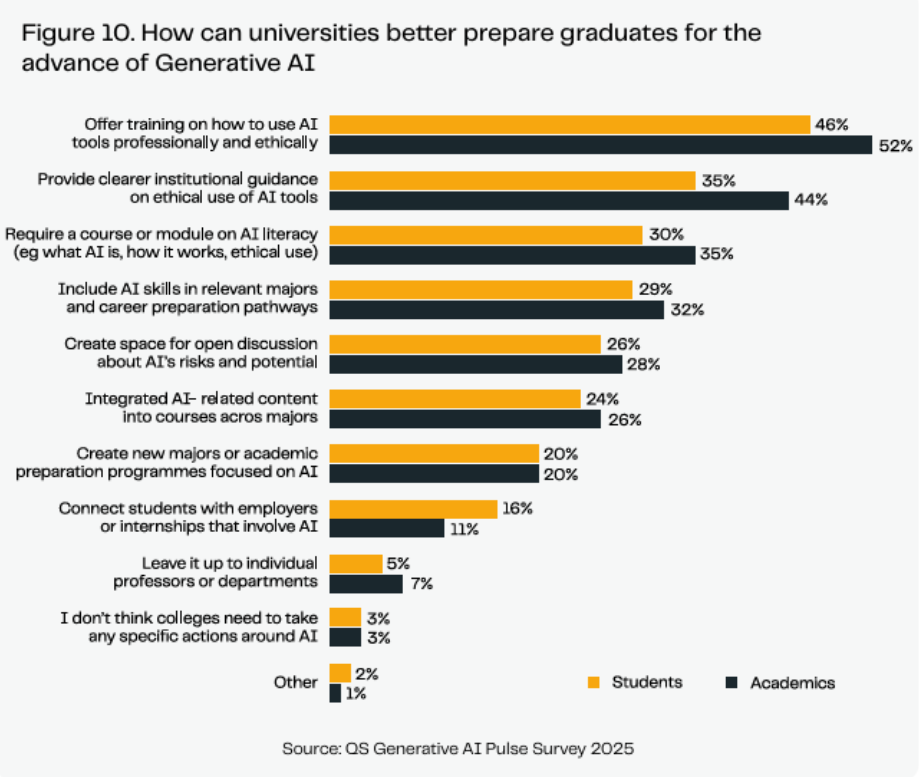
Perhaps the most notable finding is the level of agreement between academics and students. Both groups see AI literacy, ethical capability and responsible use as priorities for higher education.
The challenge for universities is no longer whether to engage with Generative AI, but how to implement it effectively. Institutions that combine practical AI skills training with clear governance and assessment reform are likely to be best positioned as AI becomes a permanent feature of higher education.
Your next read:
- Read the full Generative AI in Higher Education report
- Read our analysis into EdTech Ecosystem hubs
- Hear from Dr Maria Spies, QS Chief Innovation Officer, on the future of learning