How universities can meet the rising demand for sustainability skills
QS MidWeek Brief - November 26, 2025. If employers and students want sustainability, what can unis do? And how can a strong athletics programme lead to strong academic outcomes?

Welcome! Employers clearly care about sustainability. Demand for green skills more than tripled over the period 2017-2023, according to a recent QS report. At the same time, students also clearly care about sustainability. In the same report, over three-quarters of prospective students said they preferred sustainability over a university ranked in the top 1,000 worldwide.
So, if employers want green skills and students want sustainability, what can universities do? In this week’s QS Midweek Brief, we meet Dr Katalin Ásványi, Dean of Sustainability at Corvinus University of Budapest in Hungary, to find out how she shaped and implemented a new curriculum.
We also speak to Olympic swimmer, Camille Cheng, to learn more about how university academics and athletics intersect.
Stay insightful,
Anton John Crace
Editor-in-Chief, QS Insights Magazine
QS Quacquarelli Symonds
Educating every student about sustainability
By Chloë Lane
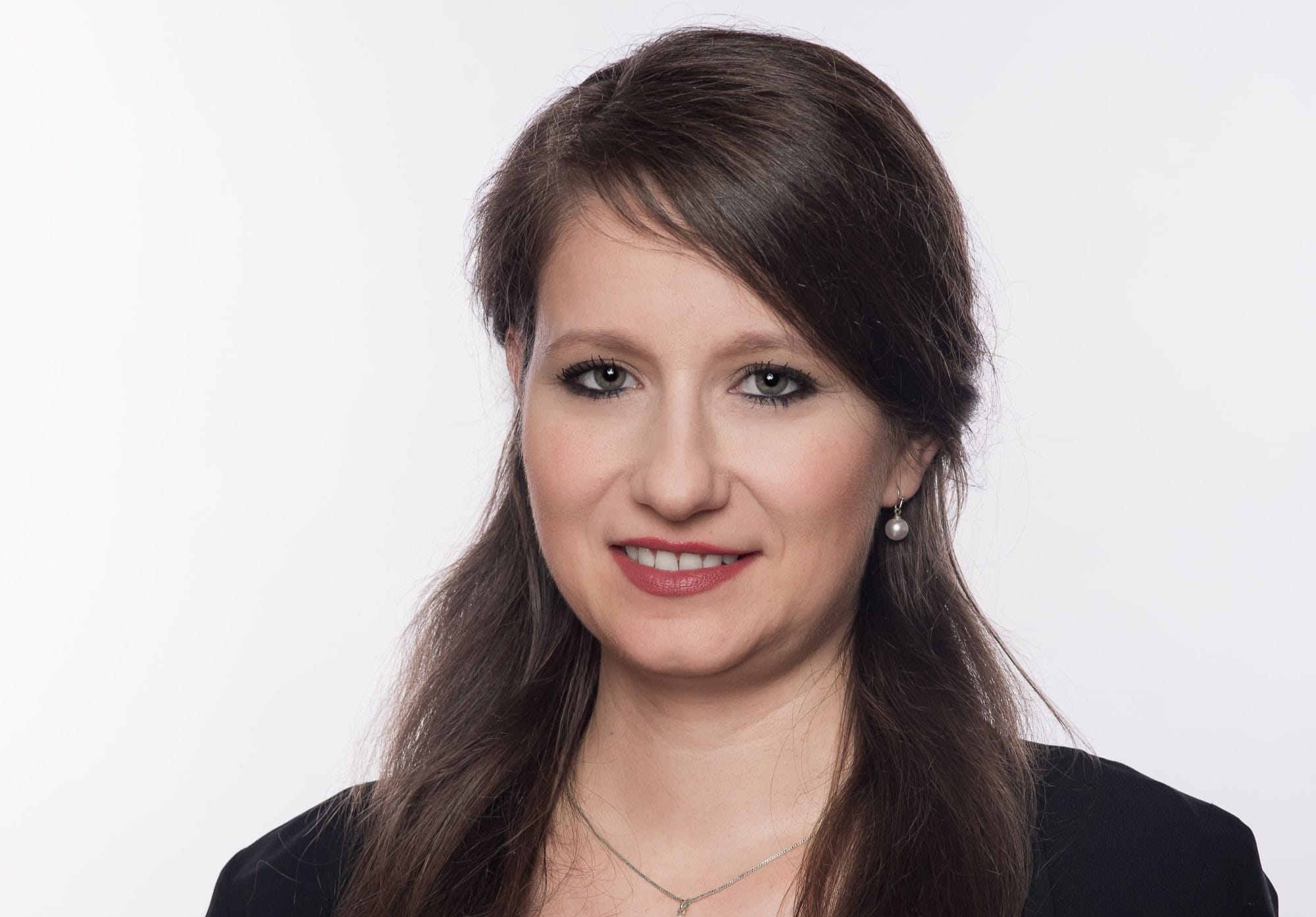
When Hungary’s Corvinus University of Budapest welcomed its first ever Dean of Sustainability, Dr Katalin Ásványi, it stressed that sustainable thinking is “the most critical and inevitable element for the future of business education.”
This is something Dr Ásványi, herself, wholeheartedly agrees with. “It’s not enough for institutions to just talk about sustainability,” she says. “They must also act on it.”
Since stepping into the role at the start of the year, Dr Ásványi has done exactly that. She has embarked on an ambitious mission to embed sustainability into every Bachelor’s and Master’s programme at Corvinus.
It’s a long, challenging and complex journey, but one that she has an unwavering drive to achieve.
Growing up, Dr Ásványi was surrounded by education. Her parents were both teachers, and their careers inspired her. She desperately wanted to follow in their footsteps. Like them, she saw the value in helping students to develop and progress.
She pursued an MSc in Business Administration and Management at Corvinus, studying economics, followed by a PhD in the same subject. “But it wasn’t the research side of the PhD that motivated me, it was the teaching,” she admits.
In lots of ways, Dr Ásványi has already achieved her goal. In the last 10 years, she has taught for more than 2,500 hours. “But you can be a lecturer without truly being a teacher. For me, the real joy has always come from guiding, inspiring and witnessing the personal growth of students beyond the classroom.”
While Dr Ásványi always knew she wanted to teach, her path to sustainability was more fortuitous.
Her PhD’s original thesis focused on ways for orchestras to finance themselves. But a change in supervisors meant that she was working with “a big name in Hungary” who specialised in sustainable economics. It was this supervisor who encouraged her to incorporate a Corporate Social Responsibility (CSR) angle into the thesis, and essentially changed her entire career trajectory.
Now, Dr Ásványi has worked at Corvinus University of Budapest for nearly 19 years, during which her career has changed drastically. After her PhD, she started teaching environmental economics and tourism. After organisational changes, she was transferred to the Marketing Institution, becoming a programme leader, where she taught a course on CSR to marketing students.
“It was really inspiring to teach marketing students. As a programme leader, I not only taught them, but cared about them,” she says. “I loved speaking to my students and seeing their talents develop.”
Dr Ásványi’s passion and drive for both teaching and her subject encouraged many of her marketing students to place a greater focus on sustainability, leading them to write about the CSR aspects of marketing for their thesis.
It was clear to Dr Ásványi that she had the ability to inspire and create positive change among her students.
As the university continued to restructure, her role continued to evolve. The university created a separate institute dedicated to sustainable development, and Dr Ásványi was asked to serve as Head of the Department of Sustainability Management and Environmental Economics.
“It wasn’t a question of whether I would move. I enjoyed teaching marketing students, but [in this new role] I could teach students coming from lots of different programmes,” she explains.
When the ERS (Ethics, Responsibility and Sustainability) Hub Steering Committee was developed at the business school, it was a chance to confront sustainability at an institutional level. Dr Ásványi became its Chair, playing a key role in developing the university’s renewed sustainability strategy. “I learnt how we can engage the community to deal with sustainability,” she reveals.
This year, she was the natural choice for the new role as the Dean of Sustainability. Her aim in this role is to continue the hub’s work, but take it to a different level. “Sustainability has been given an important and transversal role in our university’s new strategy,” she says.
The key here is effective communication, Dr Ásványi tells QS Insights. “If you just say you want people to be more sustainable, they won’t do it, but if you speak with them, communicate with them, and show them that they are doing it already, they are more likely to want to know what else they can do to be more sustainable.”
It’s this continued community engagement that was a big driver to embed sustainability throughout the programmes.
Educating about sustainability
“We don’t want any graduate to leave Corvinus without knowing about sustainability,” states Dr Ásványi. “It’s our duty to educate them about this so they can become responsible leaders.”
But teaching every student about sustainability is a huge task: one she estimates will take three to four years.
To make it possible, it was split into two parts and broken down into achievable steps.
Changing the curriculum
Starting with redesigning the curriculum, the goal for year one was to integrate one sustainability course into every bachelor’s programme.
Dr Ásványi recognised there was already a Global Sustainability Challenges course in the Business and Management Bachelor’s programme, which was very popular among students. During the course, students completed a set of sustainability-related challenges, logged their progress and reflected on their experiences. The completion of the challenges was then assessed.
As this course was such a success already, Dr Ásványi and her team thought it would be a good module to integrate across different Bachelor’s programmes, as a grounding for the curriculum.
“First, the students must gain the sustainability knowledge. Then we can build on this in different topics and disciplines,” she explains.
During these challenges, students often work directly with local communities. For example, the students once visited a poor village in the countryside, which heavily relied on its charity shop. “Students can learn a lot from this community partner engagement. As future corporate leaders, they will learn how they can work with these types of businesses, not just by giving a donation, but by working directly with them,” Dr Ásványi explains.
“It’s not just about transferring knowledge,” she adds. “We want to shape mindsets, influence attitudes, and inspire behavioural change towards a more sustainable way of thinking and living.”
Meanwhile, the leadership team are mapping each of the other modules in the bachelor’s programmes to see how core modules can adopt an SDG focus. “For example, in a finance module, students can also learn about green finance,” advises Dr Ásványi.
To measure the success of these initiatives, the school has integrated TASK™ by Sulitest, an international online test to measure students’ understanding of environmental, social and economic sustainability. Students will complete this 80-minute test at the start of their studies and again at the end, to review how much they’ve learnt during their time at Corvinus. This will allow the team to compare against other schools, and monitor their progress.
But Master’s programmes present a different challenge – one that the team is still figuring out. As one- or two-year courses, there is less time to integrate sustainability elements. As with the undergraduate programmes, these Master’s programmes are in the process of being mapped to understand where sustainable elements can be naturally included or enhanced.
Eventually, Master’s students will have the opportunity to take part in an optional honours programme for extra credits, focusing on sustainable opportunities and projects. It’s still in the planning phase, but Dr Ásványi and her team are enthusiastic about developing it.
Chloë Lane is a gold-standard NCTJ-trained journalist specialising in higher education. A former Content Editor for QS, Chloë has a wide range of experience writing articles for a variety of B2B and B2C publications about topics related to business schools, universities, careers and academic research.
Getting the ball rolling
By Prisha Dandwani

In Brief
- Elite student athletes face immense scheduling and funding demands worldwide. Institutions are transforming support, through flexibility and investment, to ensure student success in both demanding athletic pathways and rigorous academics.
- Participation in university sports fosters vital life skills like resilience, goal management, and time management. Strong athletics programmes also significantly boost campus community, diversity, and positively correlate with higher student mental wellbeing scores.
- Institutions must prioritise investment in infrastructure, flexible academic environments, and high-quality coaching to support diverse athletes. A successful and resilient athletic cohort is a major asset to the university and its wider community.
The sports global market is currently valued at over US$400 billion, according to a report by consultancy, Kearney. Surprisingly, pursuing an athletic pathway does not seem to have the same appeal as getting into medicine, engineering or law.
Perhaps the potential risks outweigh the benefits, with issues such as injuries and possible retirement at a young age. However, things are not so black and white.
University sport programmes can look very different across continents. The United Kingdom and Australia have organisations such as the British Universities & Colleges Sport (BUCS) and Unisport respectively, which act as governing bodies for university sport. In the United States, the National Collegiate Athletic Association (NCAA) serves as the largest governing body for college sport.
According to Sable International, an immigration consultancy, the US offers better value overall for student athletes due to more funding opportunities. However, British and Australian universities may provide students with more flexibility.
Making the cut
Careful selection is imperative since training to be an elite athlete is anything but glamorous. Students typically stretch out their days as much as their muscles will allow. Often, their schedule includes waking up at 5am, training till about 7am, attending lectures and classes, and then more training till evening. Afterward, there’s classwork, some leisure time and the need to get as much rest as possible for optimum performance.
QS Insights spoke with Camille Cheng, an Olympic swimmer in Hong Kong. With an accomplished swimming background, she is now utilising her experience alongside her degree in psychology as the Co-Founder of a mental health charity, Mind the Waves.
While traditional paths of entry into university as an athlete involve advanced recruitment, Cheng’s story deviates slightly from the norm. With a penchant for the water from a young age, swimming came naturally to her. She chose to attend the University of California, Berkeley largely because of their academic reputation and swimming opportunities.
“I wasn’t pushed hard as a kid to train. One of the disadvantages of growing up in Beijing is that I didn’t know much about the US collegiate system and didn’t go through the process that most swimmers wanted to compete go through.”
Surprisingly, this Olympic swimmer arrived at Berkeley without being previously recruited or selected to the swimming team. “I was considered a walk-on [a student who joins a university team without a scholarship] to the swimming team,” she says as she reflects on how her competitive swimming journey began. “I’ve been able to cultivate who I am besides just a swimmer,” she says. Many of the questions she receives are less focussed on how she became a fast swimmer and more on balancing time between academics and sport.
She describes her years at university as her most formative. “Being in an athlete bubble actually helped, I was surrounded by other student athletes who understood the demands of it and we spent many weekends competing and travelling. The men's and women’s swim teams were not integrated and my female coach saw herself more as an educator, creating focus and support.
“I can’t really comment on the non-athlete experience. I had a few friends who finished their eligibility with swimming but had not yet graduated so experienced life as a non-athlete and shared just how different it is; you have so much more time.”
This raises the issue of what universities can do to support the balancing act that student athletes have to manage and whether more flexibility is required, without compromising academic standards. Additionally, since student athletes have limited time to seek part-time work, increased funding support becomes an important issue.
The power of the institution
Philip Wood is the Scholarship and Recruitment Manager in Sports at University of Nottingham in the UK. Since joining the university as a Development Officer in 2012, he says the institution has undergone an incredible transformation.
“In 2012 we had only one national championship and eight medals. A colleague and I spent about one and a half to two years looking at how things were being done, re-evaluating the coaching staff and creating constitutions for the programme to be recalibrated,” he tells QS Insights.
With the willingness from the university to let their development officers restructure key areas, Wood was given time and room for the overhaul required.
“To get great athletes, you need great coaches. We also began international recruitment in 2014 and started bringing in students for sport, which worked well because University of Nottingham has a strong academic reputation.
“Each year that we grew the international cohort, it allowed us to expand our teams and raise the bar for domestic athletes.”
Everything came together at the right time in this success story. With investment in infrastructure, better staff, academic prowess, high quality facilities and the completion of the David Ross Sports Village in 2016, the University of Nottingham enhanced its reputation to be named Sports University of the Year three times since 2018, according to The Times and the Sunday Times Good University Guide.
Prisha Dandwani contributes to QS as a communications and research specialist with over 10 years experience working with companies in Hong Kong and London. As a previous contract Deputy Editor at QS, she feels strongly about developments in the higher education sector that indicate how academic priorities and incoming graduates can shape the global landscape in the years to come.