
🎓 OECD Bachelor's completion rate >40%. Chile’s life expectancy reached >80. Manufacturers prioritize AI quality control.
Chart of the Day #606 looks at OECD average for completing bachelor’s programmes, life expectancy in Chile and planned digital upgrades and AI governance in manufacturing.
Hello 👋
US Education Department grant program for career pathways. Sal Khan is launching an AI-first college offering lower-cost, employer-focused degrees designed with input from Microsoft and Google. South Africa launches adult literacy campaign targeting 3.8 million people with limited reading skills.
Today's Topics
🎓 Higher Education. OECD average for completing bachelor’s programmes exceeded 40%
⚕️ Health Skills. Chile’s life expectancy reached over 80 years
🏭 Advanced Manufacturing. Manufacturers placed priority on AI and ML-based predictive quality control
Thanks for reading!
Not a subscriber yet?
🎓 OECD average for completing bachelor’s programmes exceeded 40%
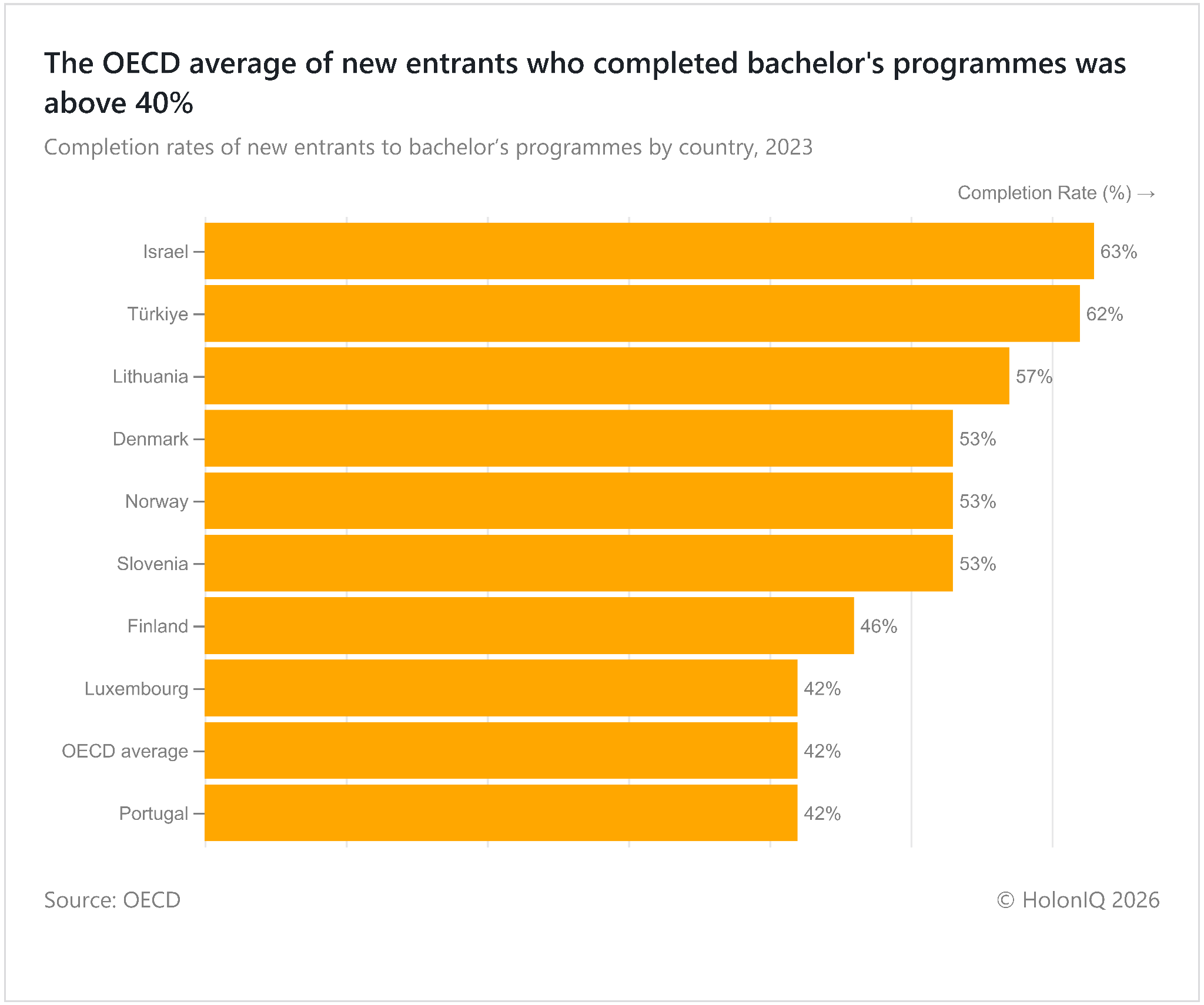
Bachelor’s completion rates across the OECD average was above 40% in 2023. The variation reflects differences in student support systems and programme structure. Higher performing countries often provide flexible pathways and financial support, improving student retention. Strong alignment between education and labour market needs also encourages completion. The Education 2030 framework led by the OECD promotes student success and progression.
⚕️ Chile’s life expectancy reached over 80 years
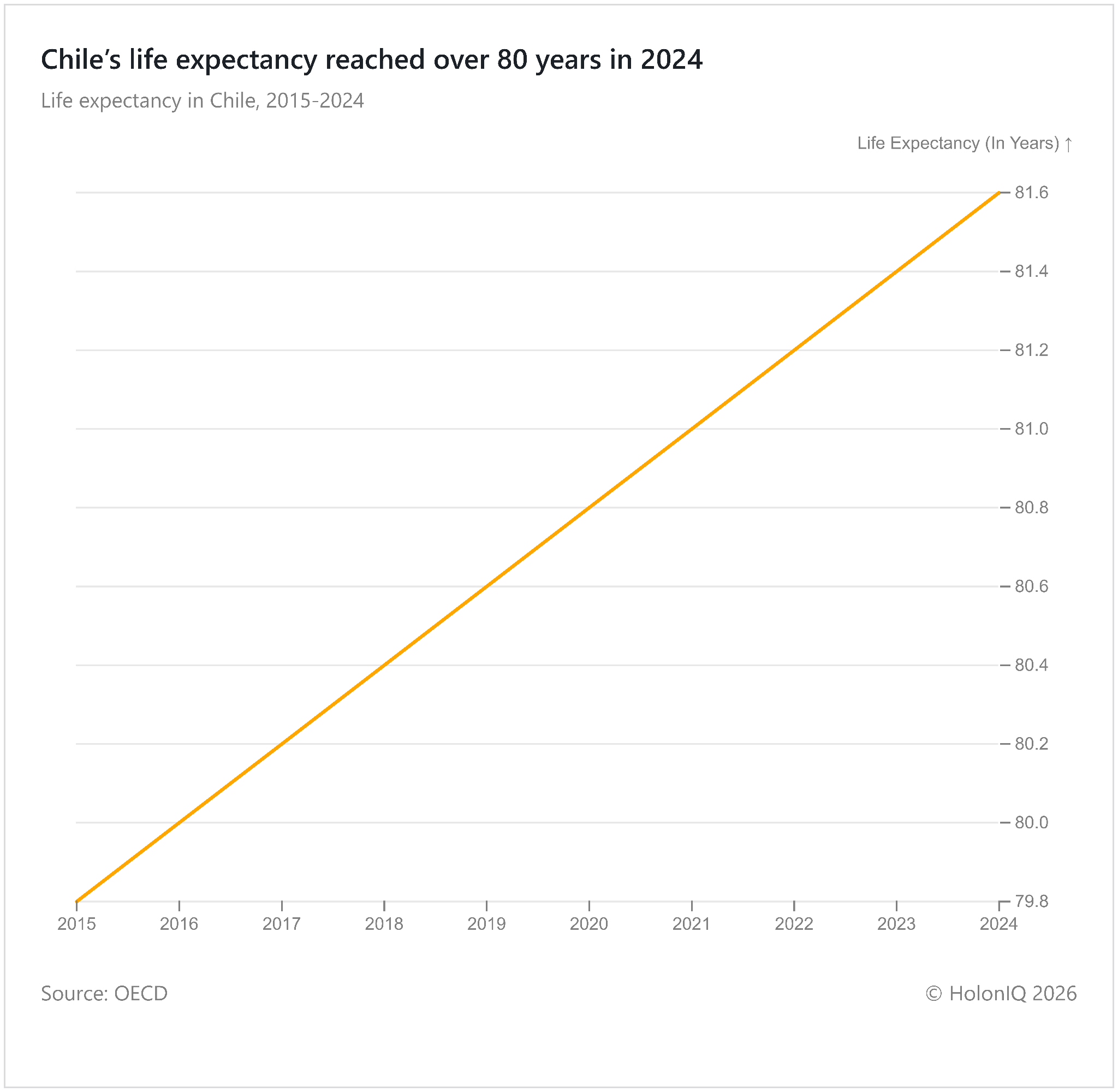
Life expectancy in Chile increased steadily from 79.8 years in 2015 to 81.6 years in 2024, remaining above the global average. The upward trend reflects consistent improvements in healthcare access and living conditions, making Chile’s healthcare system one of the best in the world. Strong primary care systems and good nutrition have supported longer life expectancies. The Universal Health Coverage framework supported by the World Health Organisation promotes accessible and quality healthcare services.
🏭 Manufacturers placed priority on AI and ML-based predictive quality control
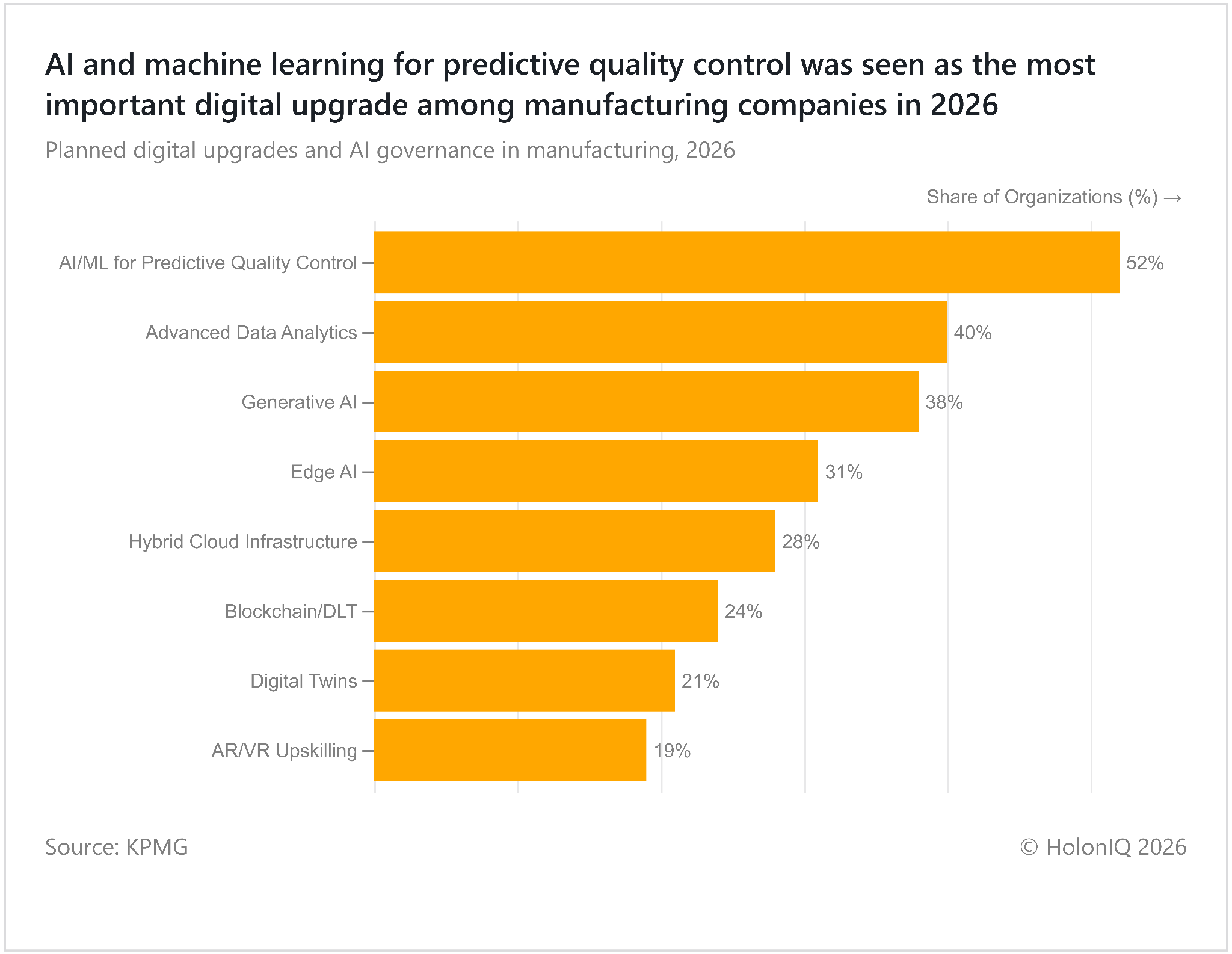
AI and machine learning for predictive quality control lead planned manufacturing upgrades in 2026 at 52%. It is the most important because it directly improves production accuracy by detecting defects early and reducing waste before products are completed. This lowers costs and improves consistency across large scale manufacturing systems. Unlike other tools, it has an immediate operational impact on output quality. Industry adoption is growing rapidly, supported by smart factory transformation programmes led by the Siemens.
Like getting this newsletter? Request a demo for unlimited access to over one million charts
Thank you for reading. Have a great week ahead!
Have some feedback or want to sponsor this newsletter? Let us know at qs.com.