
🛠️ Skills and Workforce #63
Hello 👋
In today’s newsletter:
- Employers report growing shortages in the human skills needed to complement AI
- The economies most ready for the future of work
- Which jobs are most critical to delivering the UK’s Industrial Strategy?
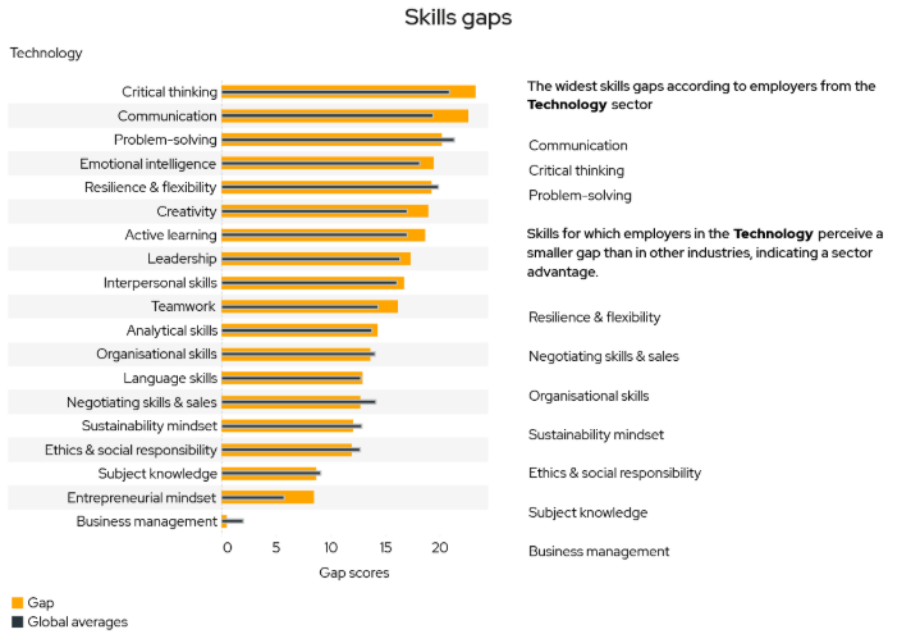
Skills Gaps Present Across Industries
Across thousands of employers surveyed globally, the same gaps come up again and again. Graduates struggle most with critical thinking and judgement, not subject knowledge.
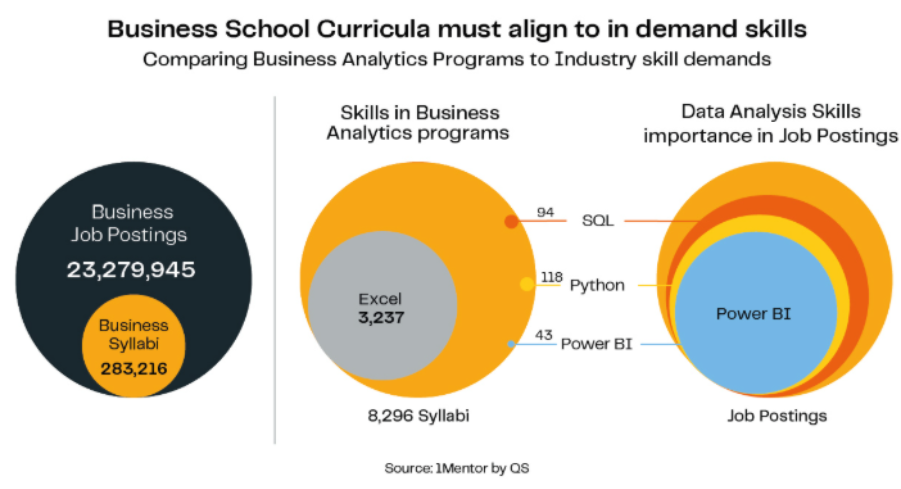
However, that isn’t to say that technical skills are not sought after. Out of the 8,296 business analytics syllabi QS analyzed, fewer than 100 mention SQL, but 11.8% of the 1M+ data analysis roles we analysed mention SQL. A similar trend is found for Python, and Power BI.
Join 500+ leaders from higher education, business, government, investment, and technology to explore the forces reshaping learning, work, and society.
The next 25 years start here.
Don't miss out. Early Bird registration closes on June 30.
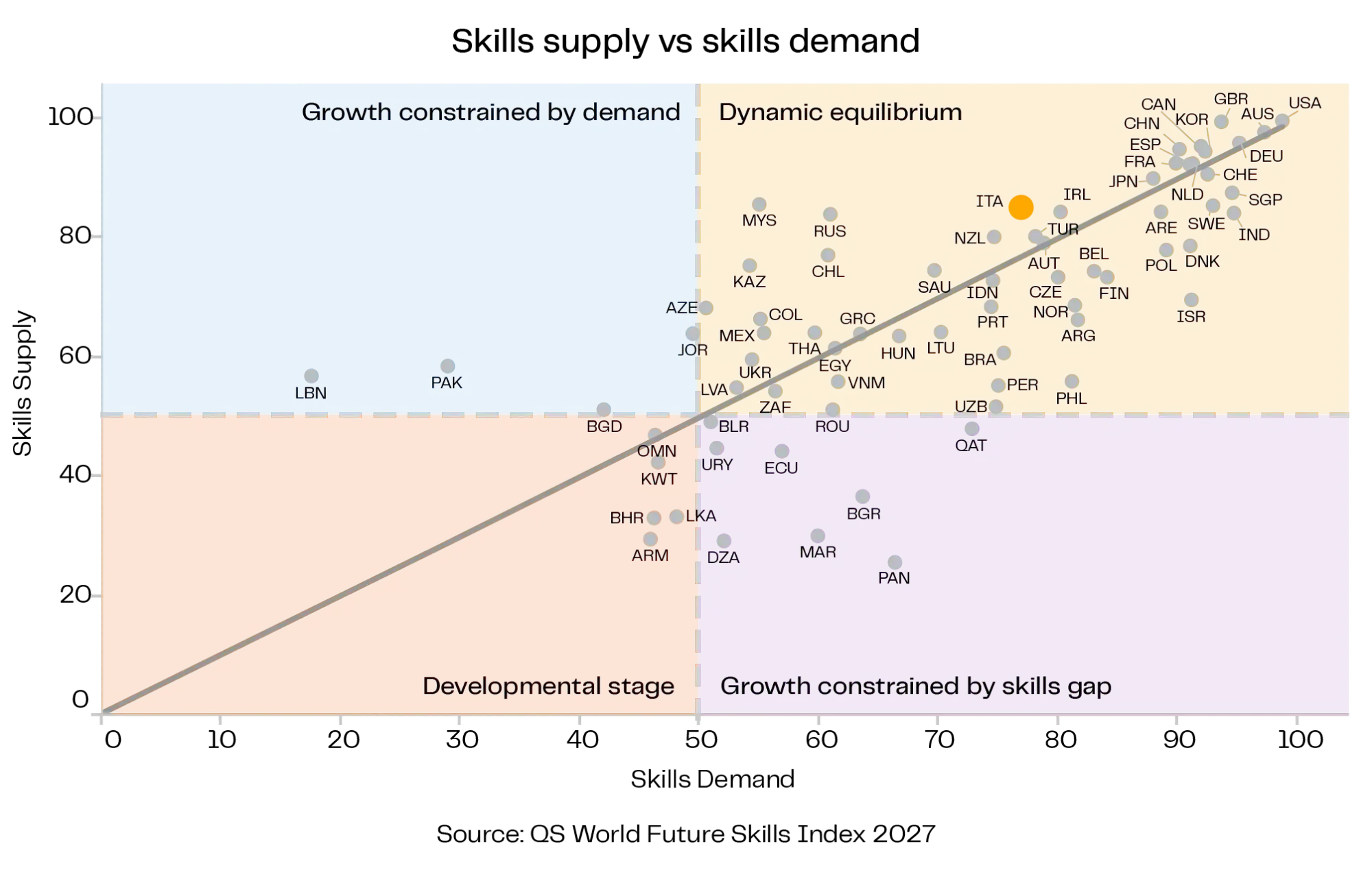
QS World Future Skills Index 2027
Three years into widespread AI adoption, the QS World Future Skills Index 2027 finds that labor markets are unevenly prepared for the future workforce. Economies with stronger links between higher education, employer demand and economic strategy are performing best, while gaps persist elsewhere, whether it’s a failure to convert academic excellence into economic prosperity, or a high proportion of roles at risk of AI automation. Read the full report to understand where systems are aligned, and where change is needed.
Skills News From Around the World
Governments and corporations are scaling AI skilling into the millions through national plans and large training commitments, with mass skilling increasingly anchored to national strategy and corporate delivery at population scale. Oracle is training 300,000 in Uttar Pradesh in AI and cloud skills, and Ho Chi Minh City launched a massive AI literacy drive aimed at the general population, rather than students alone. Turkey unveiled a national AI action plan setting central direction, while UNESCO and Bangladesh launched AI training for civil servants, extending upskilling into public administration. South Korea launched a youth training program with major companies. The programs consistently frame AI capability as economic infrastructure, delivered through combined state and corporate channels rather than the formal education system alone.