What happens when technical fluency outpaces critical AI literacy?
QS Midweek Brief - September 23, 2026. The first cohort of AI-natives is knocking on the doors of unis. Are they ready?
Welcome! You will remember some years ago that universities were preparing to face their first cohort of net natives. Universities survived and adapted, but we are now fast approaching what will be the first cohort of AI-natives. This week, we meet them and ask how universities again thrive and survive.
In our second piece, we also speak to one leader in Korea about how universities should adapt and what they should teach in the AI era.
Stay insightful,
Anton John Crace
Editor in Chief, QS Insights Magazine
QS Quacquarelli Symonds
Meet the first AI-native university cohort
By Chloë Lane
In brief
- "AI-native" students are arriving at university, having used generative tools for every formal exam and assignment.
- While technically fluent, students lack critical literacy, necessitating a massive redesign of institutional teaching and support.
- Universities must adopt proactive pedagogical redesign, using oral exams and complex real-world projects to verify genuine understanding.
For this year’s undergraduate cohort, AI is unlikely to feel like new technology. Many of these students are 18 years old and have been using AI since ChatGPT was released to the public in 2022. This means that they’ve had access to it to study for every formal exam and assignment, while also using it frequently in their personal lives.
According to Eurostat, 44 percent of young people aged 16-24 were using AI for private purposes in 2025, and 39 percent were using it in formal education: the highest rates of any age group.
Elizabeth Ngonzi, an Adjunct Assistant Professor who teaches AI for Impact at New York University (NYU), says AI will not be a strange new technology for this year’s cohort, but is already a way many of them study, write and prepare for exams.
“The question for universities is not whether they should use it. They will. The question is whether students will learn enough to know when an answer is weak, when a source is questionable, or when a tool has pushed them away from doing the thinking they still need to do themselves,” she says.
The call to invest in formal training
Universities must support faculty through this change, Professor Ngonzi states, as it is not easily solved individually, especially when the questions involve privacy, accessibility, academic integrity, intellectual property and equity.
“Faculty need time to redesign assignments and somewhere to turn when they are unsure what is appropriate in their discipline,” she adds.
The rise of AI is reminiscent of the spring of 2020 when the pandemic hit. As the world switched to digital, many universities asked faculty to move their entire curricula online with just a few days of notice – something which understandably caused huge backlash.
Institutions had to find ways to support their staff: providing software and online teaching training, identifying peer mentors among the faculty who could guide others and developing new policies around remote assessments.
“We are in an almost identical moment today with the arrival of AI-native students, and it is going to require the exact same level of institutional support,” she explains, adding that it isn’t enough for universities to just issue vague academic integrity statements. They must instead invest in formal, role-specific retooling.
That support will need to extend beyond simply helping faculty police AI use. One of the ways AI can help is redesigning the curriculum itself, offloading the mechanical, repetitive parts of teaching and freeing up professors to focus on mentorship.
It can be used to meet students where they already are – customising explanations, formats and pace to match an individual’s learning style and interests.
“We stop forcing everyone to fit into a single, standardised mould and instead use the technology to normalise excellence,” says Professor Ngonzi. “That is the real support faculty need — the permission, the compensation and the training to let go of legacy grading models so they can focus on the human interactions where real learning actually happens.”
Instead of reacting to advancements in AI, universities must instead move to proactive pedagogical redesign, agrees Professor Alison Gibb, Director of Learning, Teaching and Scholarship at Adam Smith Business School in the UK.
“We must invest in staff development and redesign assessments so that AI use is either meaningfully integrated or deliberately excluded where unaided human capability is the learning outcome,” says Professor Gibb.
It’s likely that this generation of learners will be comfortable moving between human and AI work, but some will struggle to deviate from what they already know the tool can do, particularly when they’re under time pressure or carrying out unfamiliar tasks.
“Their technical fluency will be high, but their critical and ethical literacy around citation, bias, accuracy and responsible use will be uneven and untrained, so we will need to ensure that programmes explicitly teach and assess these skills,” she adds.
Professor Glib also raises the point that access to premium tools and reliable devices may create an “AI divide” that could disadvantage students who only have access to the free ‘lite’ versions or have not had the opportunity to experiment with prompting and evaluation.
To target that, Professor Gibb says business schools and universities must establish a school-wide approach to AI in learning and assessment, so they avoid contradictory expectations between courses about what AI use is allowed, expected or prohibited.
“Programme directors should articulate a short, shared statement on where AI is expected and where it is permitted or prohibited,” she says.
Chloë Lane is a gold-standard NCTJ-trained journalist specialising in higher education. A former Content Editor for QS, Chloë has a wide range of experience writing articles for a variety of B2B and B2C publications about topics related to business schools, universities, careers and academic research.

What should universities teach in the age of AI?
By Eugenia Lim
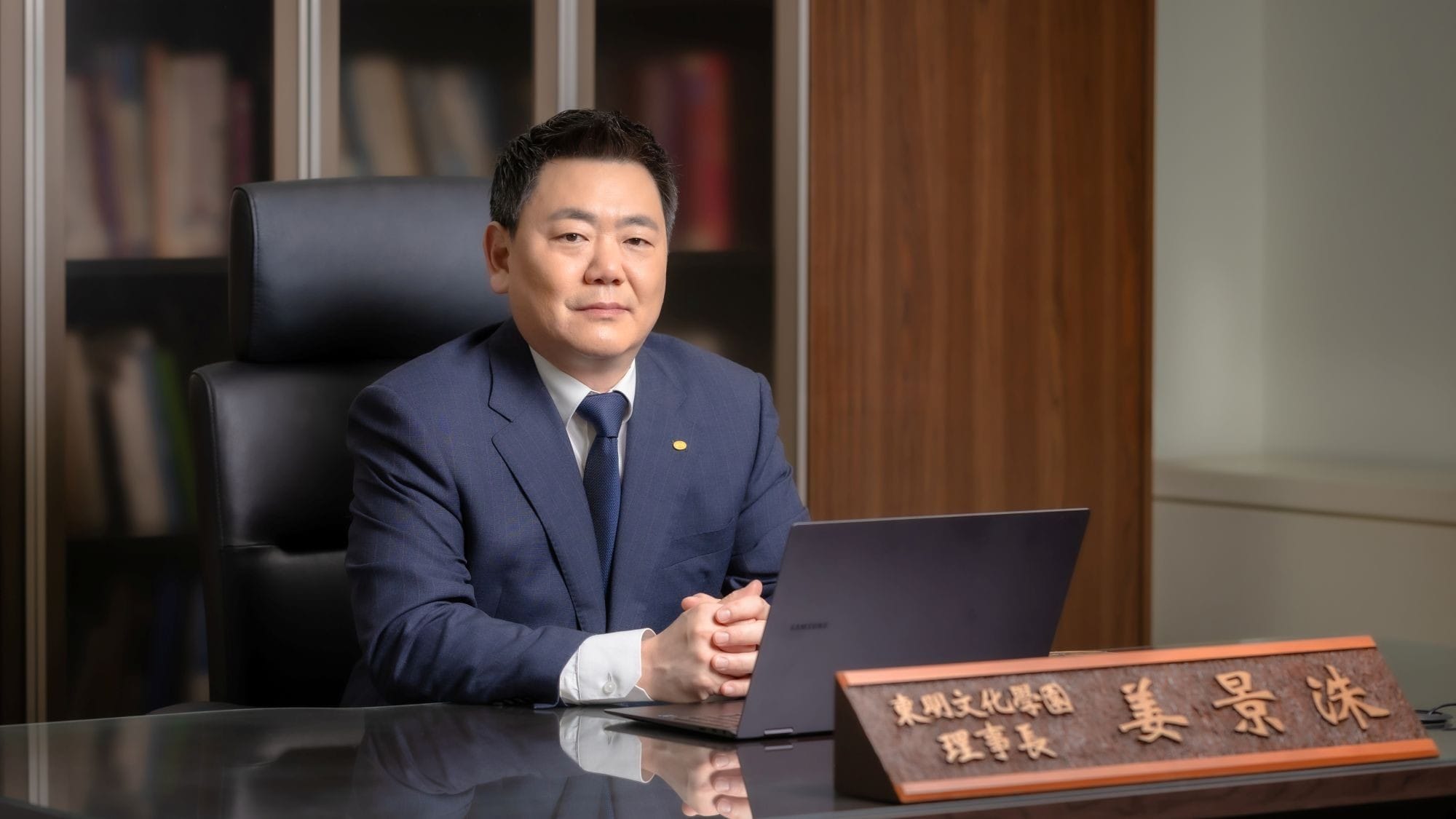
Sitting at the crossroads of tradition and the future of South Korea’s higher education sector is the Chief Executive Director of Tongmyong Culture and Education Foundation, Greg Kang.
Kang started the role in March 2025, taking on both a family legacy and the challenge of future-proofing Tongmyong University’s place in the world.
Tongmyong University (TU), located in Busan, South Korea, was founded in 1977 by the late Dr Kang Seok-jin, Kang’s paternal grandfather. Kang’s own father, the late Dr Kang Jeong-nam, served as its sixth president more recently in 2011.
The expectation to continue in his family’s footsteps weighs heavily on Kang’s shoulders. In the 1980s, the South Korean military government under General Chun Doo-hwan forcibly dismantled the family-owned Tongmyong Group and confiscated all assets. The only entity not seized was the Tongmyong Cultural Foundation, which Kang now heads.
“I see it as a duty to my family,” he tells QS Insights, sharing that he returned to South Korea in 2024 to take up the position and be with his then-ailing father, after living abroad for most of his adult life.
His relative youth sets him apart from other leaders of higher education institutions.
“I believe I am probably a needle in a haystack,” he says, “the average age of a Chairman [of South Korean private institutions] is 80 years old. There are only five Chairs who are under 55 years old, including myself.”
But age isn’t the only thing that distinguishes Kang. Instead of a life in academia, Kang brings 20 years of private-sector experience in maritime economics, working as an analyst, a trader and eventually a fund manager.
It is this industry-focussed experience that has shaped his approach to tackling some of the most pressing challenges confronting the higher education space today: the existential crisis of what university is for, and AI’s impact on education.
Restructuring traditional education
Building on TU’s founding philosophy of industry-academia collaboration, Kang advocates for a fundamental reorientation of what a university is for. This question is becoming more urgent today, when the right answer to a question is just a couple of clicks away.
“Education was optimising for the wrong output. It was producing people who were excellent at finding correct answers to well-defined problems,” says Kang.
“Traditional education trained students to become good employees. Today's students must graduate with what I call ‘CEO competencies’, the ability to set the goal, design the process and execute it without waiting for permission,” he says.
For Kang, that means restructuring the curriculum to teach students how to perform in the real economy. Project-based learning that mirrors distributed team environments, as well as residency programmes where global practitioners work alongside students on real applied challenges, are prioritised at TU.
TU also puts an emphasis on financial literacy and jurisdictional awareness so that students build an understanding of how to structure work, compensation and ventures across borders.
“These are skills the market rewards and universities have yet to fully embrace,” says Kang, who emphasises that higher education needs to go beyond just preparing students for jobs.
“We are preparing them for a world where the concept of a job is being reconstructed in real time,” he says.
Eugenia Lim is a writer with over 10 years of experience in Singapore's broadcast industry. She is also a producer for Channel NewsAsia and is based in Seoul, South Korea.