
⚕️ WHO received $4B in funding. Global labour income share of GDP up 50%. One-fourth of ICT security uses AI.
Chart of the Day #543 Looks at the labour income share of GDP, WHO funding, and enterprises' usage of AI.
Hello 👋
Oregon Tech to upskill energy workforce. Colorado Space Institute to upskill US space workforce. UK to upskill digital workforce. Craven County receives $2.4M in workforce grants.
Tanzania’s government distributes 18,000 free vocational textbooks to support technical education programs. IBM offers free cybersecurity training and certification. The US Department of Labor announced a $145M funding opportunity to expand registered apprenticeship programs.
Today's Topics
💼 Workforce. Global labour income share of GDP surpassed 50%
⚕️ Health Skills. WHO received nearly $4B in funding
🤖 Artificial Intelligence. One-fourth of ICT security enterprises used AI in the EU
Thanks for reading!
Not a subscriber yet?
💼 Global labour income share of GDP surpassed 50%
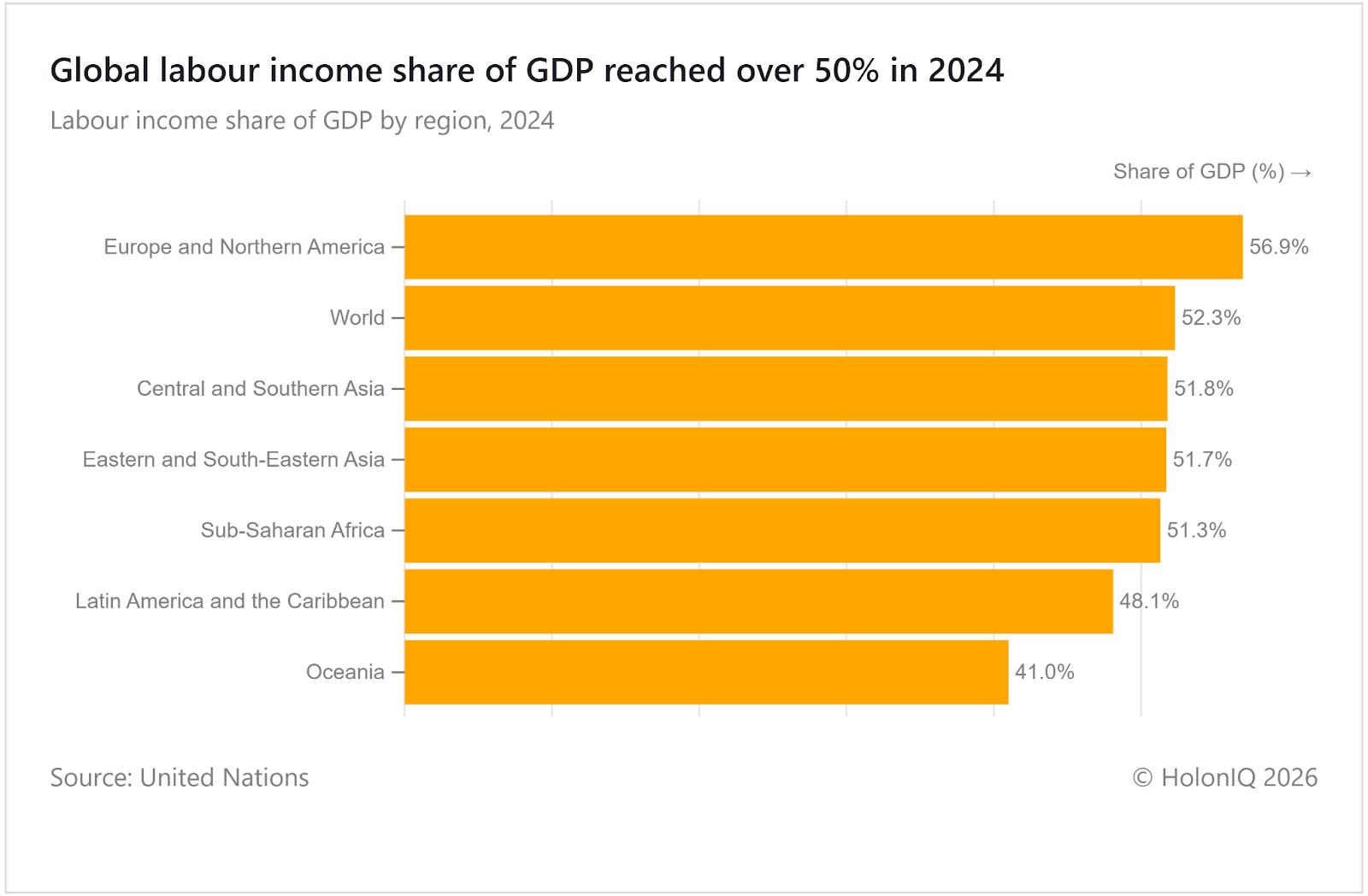
In 2024, labour income accounted for over 50% of global GDP, with Europe and North America recording the highest share. This indicates that wages and salaries remain the primary source of income for most workers worldwide. A strong labour income share supports household spending and economic stability. It also reflects the role of skilled employment and formal job markets. Regions with weaker labour shares often face informality and limited worker protections. Strengthening labour rights and decent work policies remains central to the UN Sustainable Development Goals.
⚕️ WHO received nearly $4B in funding
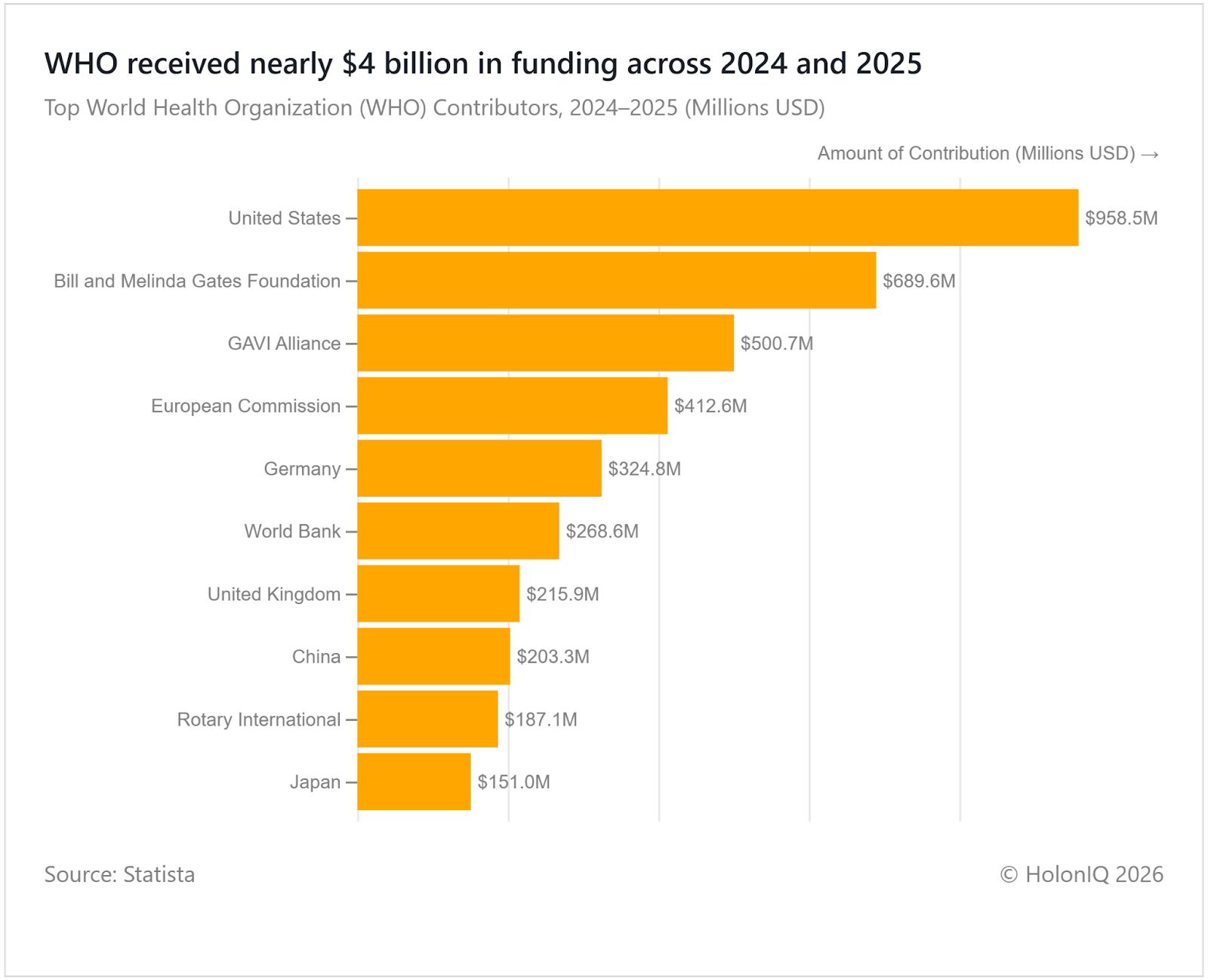
From 2024 to 2025, the United States remained the largest contributor to the World Health Organisation. This highlights the WHO’s strong financial reliance on a small group of major donors. This concentration creates vulnerability when political priorities change. The recent US withdrawal has renewed concerns about funding stability. Steady contributions are essential for the WHO to sustain global health programs and respond effectively to emergencies.
🤖 One-fourth of ICT security enterprises used AI in the EU
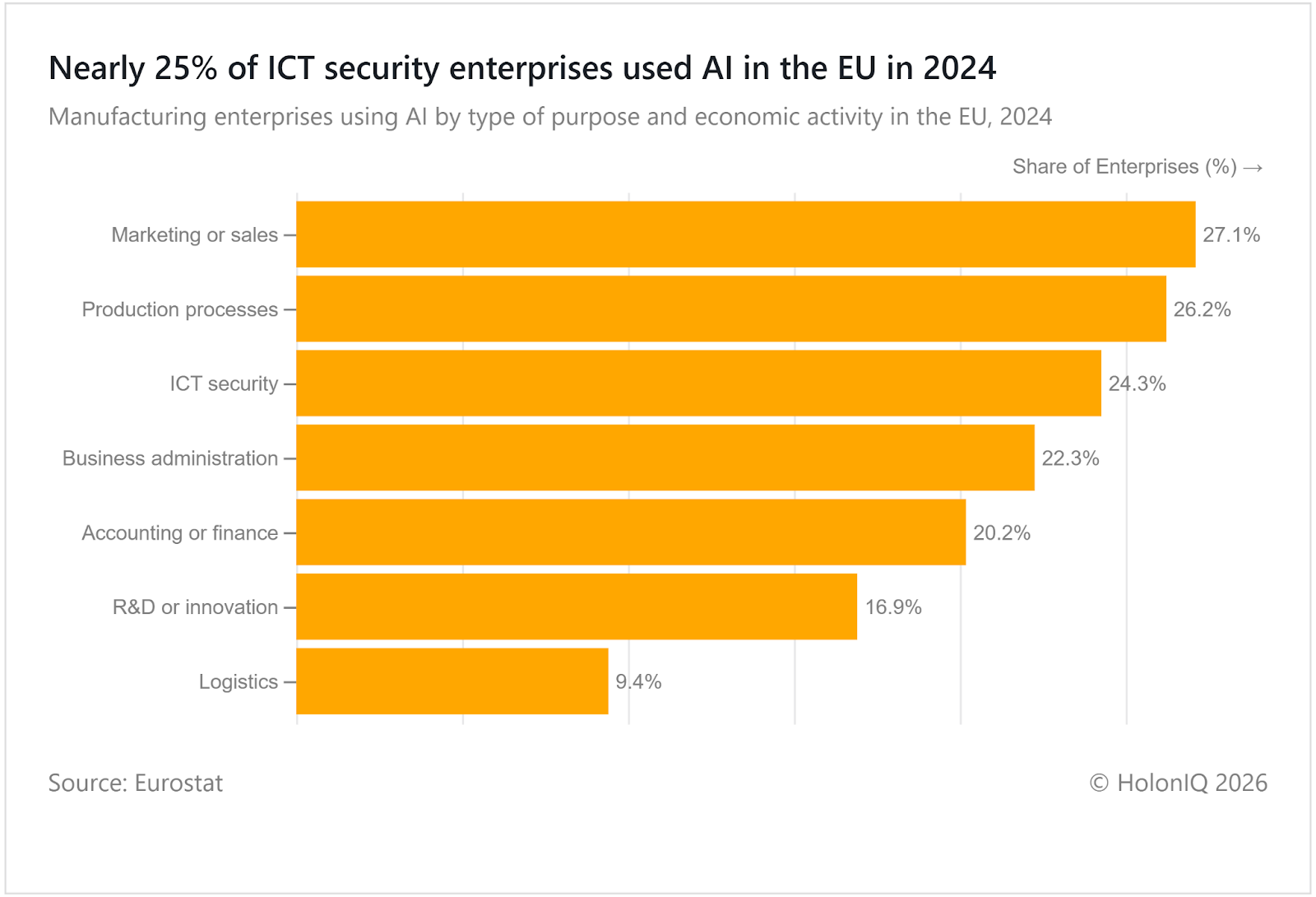
EU data for 2024 shows that nearly 25% of manufacturing enterprises used AI for ICT security alongside strong adoption in sales and production. This reflects rising concern over cyber threats as factories become more connected through cloud systems and smart machines. According to a recent Forbes analysis, AI tools now detect intrusions, predict attacks and protect industrial networks in real time. Strong digital security is becoming essential for safeguarding data production systems and supply chains. Future EU digital resilience policies aim to expand secure AI adoption across manufacturing.
Like getting this newsletter? Request a demo for unlimited access to over one million charts
Thank you for reading. Have a great week ahead!
Have some feedback or want to sponsor this newsletter? Let us know at qs.com.