
Email exclusive insight from the QS World Future Skills Index. Plus, the US is the most future ready economy. The UK fails to convert academic excellence into economic growth.
The QS World Future Skills Index 2027 is now live. In this special edition of Chart of the Day, get our top three insights from the report, plus an exclusive subscriber-only chart.
Hello,
The QS World Future Skills Index 2027 is now live. In this special edition of Chart of the Day, get our top three insights from the report, plus an exclusive subscriber-only chart. Across 89 economies, the Index shows that future readiness depends on the alignment of higher education, employer demand and economic strategy.
The most future-ready skills systems
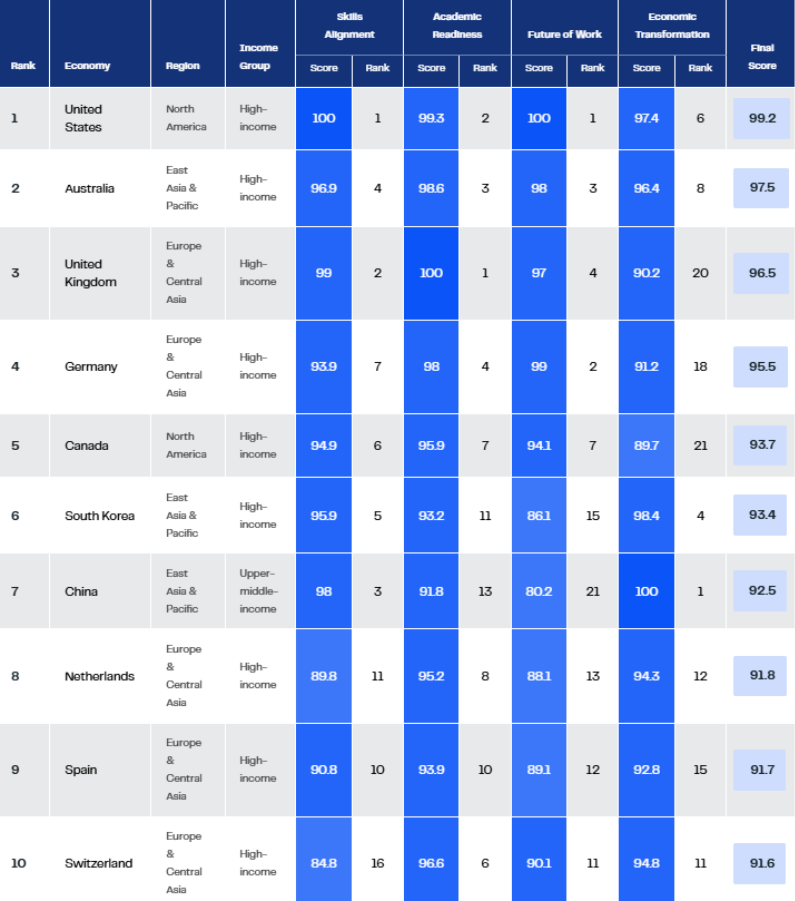
The United States ranks first overall in the QS World Future Skills Index 2027, followed by Australia, the United Kingdom and Germany.
Australia stands out as the most balanced economy in the top 10, with consistently high performance across Skills Alignment, Academic Readiness, Future of Work and Economic Transformation. China, by contrast, ranks seventh overall but shows the widest imbalance among the top 10: very strong Economic Transformation and Skills Alignment, but lower Future of Work readiness.
AI readiness is not the same as skills alignment
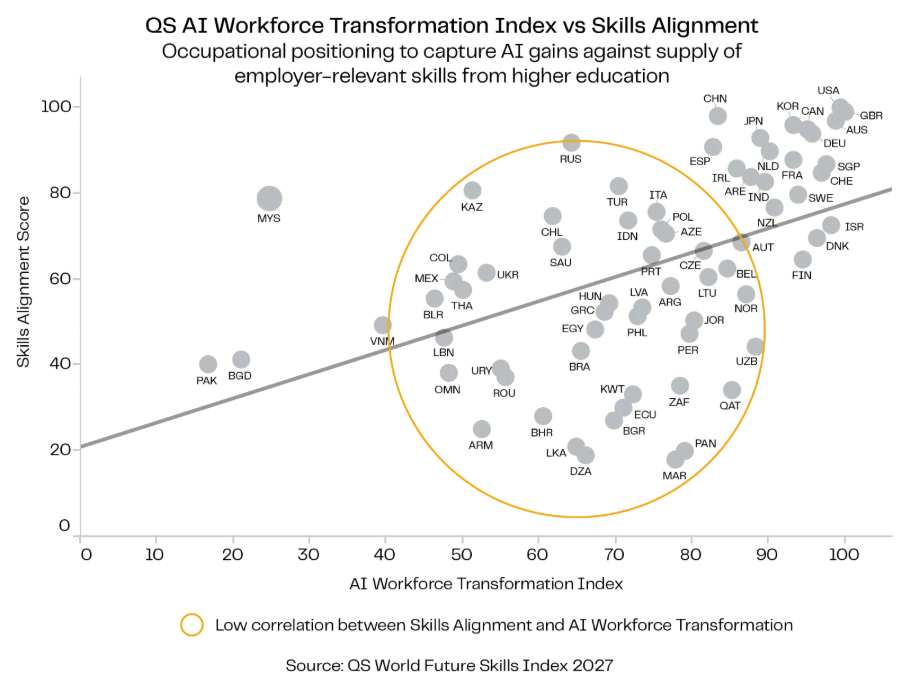
The Future of Work indicator reveals where labour markets are structurally prepared for AI transformation. The United States, Germany, Australia and the United Kingdom lead this measure because their workforces are concentrated in roles where AI is more likely to augment human capability than replace it.
But some economies show signs of pressure. India ranks fifth for Future of Work readiness but eighteenth for Skills Alignment – which measures employer satisfaction of graduates – indicating a gap between labour-market transformation and the supply of future-ready graduates.
Strong universities do not automatically create growth
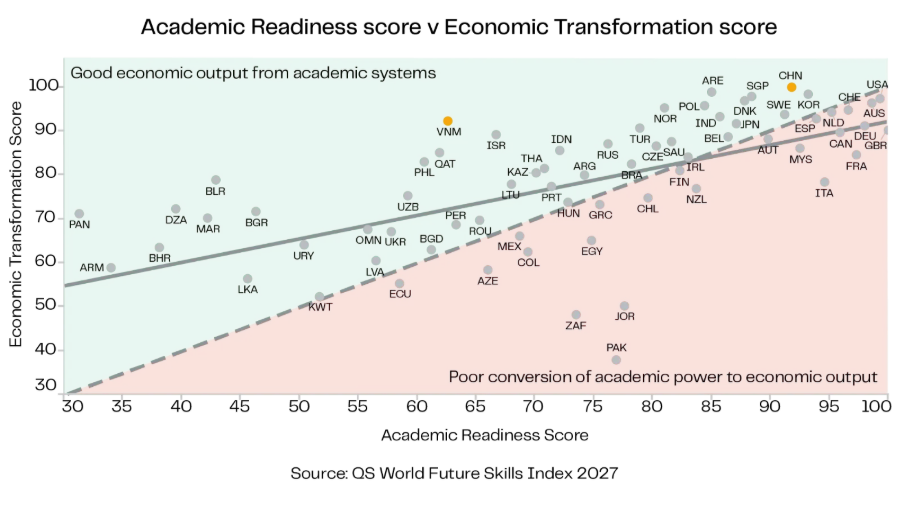
The Index also shows that academic strength alone is not enough. The United Kingdom ranks first for Academic Readiness, but its Economic Transformation score lags behind the rest of the top 10. China and Vietnam show the opposite pattern, ranking lower for Academic Readiness but achieving higher Economic Transformation scores.
The economies most likely to benefit from AI are not just those with strong universities or fast-growing labour markets. They are the ones that connect education, industry, investment and public policy into a coherent skills ecosystem.
Exclusive insight: Singapore’s supply gap
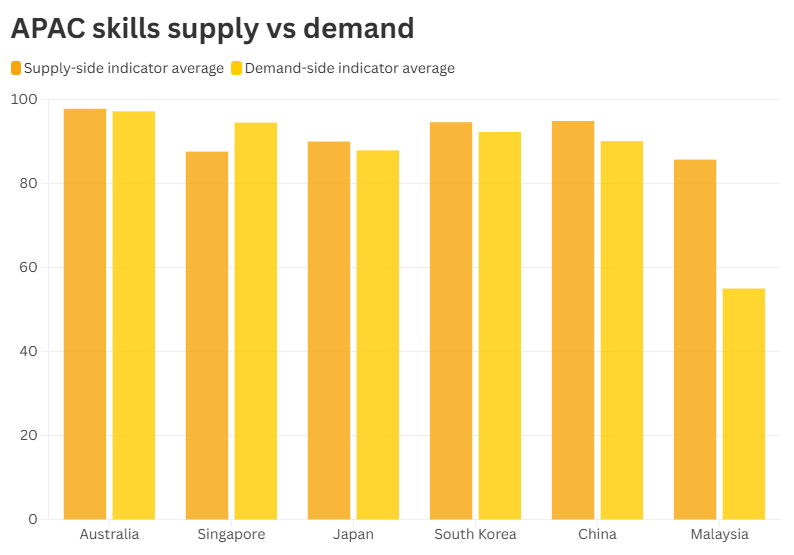
Singapore has the demand-side engine for future growth, but its skills supply is still catching up.
In the QS World Future Skills Index 2027, Singapore’s average demand-side score is 94.5, compared with a supply-side average of 87.6. That +6.9pt gap suggests its labour market is moving faster than its education and skills pipeline.
The bigger picture
The QS World Future Skills Index 2027 points to a more nuanced AI future than the mass-displacement narrative suggests. AI may create significant disruption, but the bigger divide will be between economies that can turn skills into productivity – and those where talent, demand and strategy remain misaligned.
The next phase of competitiveness will belong to systems that can align higher education, labour-market needs and long-term economic transformation at speed.