How do scholarship restrictions reshape access, merit, and competitiveness across US states?
QS Midweek Brief - May 13, 2026. America’s universities need the world. Some states don’t agree. And meet the new president of Singapore's LASALLE College of the Arts.

Welcome! There’s an old saying that those who plant a tree knowing they won’t enjoy its shade are public benefactors. Without unpacking its meaning too much because I think it’s clear, education is imparted by those who are unlikely to experience the benefits of doing so, and even less likely to see exactly who was touched by it. It’s why I think we’re drawn to inspirational stories of students succeeding such as being the first in their family to attend university – at least to confirm that what we do has mattered.
This week, we carry two stories on opposite ends of this paradigm. In our first, we unpack what happens as financial aid – and therefore access to education – is restricted to international students going to the US. In our second, we meet a capacity builder in Singapore’s arts and humanities scene.
Stay insightful,
Anton John Crace
Editor in Chief, QS Insights Magazine
QS Quacquarelli Symonds
What happens when America stops betting on international students?
By Jamaal Abdul-Alim

In brief
- New US laws restrict international students’ access to scholarships, visas and essential financial aid.
- Republican-led states follow federal trends by cutting funding to prioritise local workforce needs.
- Experts warn disinvestment stifles innovation, hurts economies and erodes global academic prestige.
When the Trump administration took over for a second term in 2025, it wasted no time in implementing a series of restrictions that made it more difficult for people from abroad to study or work in the United States.
Among other things, the administration revoked thousands of student visas, imposed a travel ban on people coming from a total of 19 countries, and started charging employers $100,000 for the H1-B visas that non-immigrant workers need to be hired to fill specialty positions.
Now, lawmakers in several Republican-controlled state legislatures are following suit.
In Oklahoma, state Senator Micheal Bergstrom introduced a bill that would prohibit state colleges and universities from using state funds to provide scholarships, grants, tuition aid or discounted tuition to foreign national students beginning with the 2026-2027 academic year.
In Ohio, several Republican lawmakers introduced a bill that would cap the number of scholarships, grants, or other financial assistance for international student-athletes to no more than 25 percent of the total scholarships in any given academic year for an athletic program. Idaho is pursuing a similar measure.
Scholars who specialise in international higher education say the legislative efforts to curtail or eliminate scholarships and other forms of aid at the state level are shortsighted and wrongheaded, will lessen the vibrancy and global appeal of US institutions of higher learning, and hurt state economies as well as the national economy.
Krishna Bista, a Professor of Higher Education at Morgan State University in Maryland, and Founding Editor of the Journal of International Students, warns efforts to restrict scholarships for international students will put the US at a “real disadvantage.”
“Yes, the government is saving some money or some of our leaders are thinking that way,” Bista says. “But in the long run, it is impacting our economy, it’s impacting our technology.”
He notes that some of the nation’s most successful entrepreneurs were once immigrants who “came to the country with two pieces of luggage”.
“And now look at the positive impact,” he says of individuals such as Google co-founder Sergey Brin, who came to the United States at age six with his family as they fled institutional antisemitism in the former USSR. Brin’s father is a retired mathematics professor at the University of Maryland. His late mother was a research scientist at NASA’s Goddard Space Flight Center. The couple once donated $27.2 million to the Department of Mathematics at the University of Maryland to endow the Brin Mathematics Research Center and pilot a Brin Maryland Mathematics Camp for talented high school students in the state.
David L. Di Maria, Vice Provost for Global Engagement at the University of Maryland, Baltimore County, or UMBC, makes similar points. He notes that while international students only comprise 6.1 percent of the total US higher education population, 25 percent of US start-ups worth more than $1 billion have a founder who first arrived as an international student.
But the cost of excluding international students goes beyond economics and business. Rather, he says, it could affect the high esteem in which US institutions of higher learning are held. Universities, he says, “cannot offer a world-class education or solve the world’s most pressing problems when they do not engage with the world”.
“Most US students will never study abroad and may never travel abroad during their lifetime,” Di Maria said. “Bringing international students to campus ensures that more US students have the opportunity to encounter peers from different countries, experience alternative perspectives and develop relationships that result in global professional networks and friendships.”
Di Maria cites research on academic rankings and economic impact that suggests public institutions of higher education in restrictive states will “become less competitive nationally and internationally”.
“Talented students who would otherwise have chosen those institutions will simply study elsewhere,” Di Maria says. “If one state chooses to disinvest from recruiting the best and brightest from around the world, then that ultimately makes it easier for leaders in other states to compete for talent.”
Idaho Senator Doug Okuniewicz, the sponsor of the Idaho bill, told Inside Higher Ed that his objective is to ensure that more scholarship opportunities go to US residents in general – and Idahoans in particular – in order to fulfil the state’s workforce needs.
“It seems it would be better if we had US residents, and if at all possible, Idahoans, have more of these scholarship opportunities so we can train and create more teachers and police officers and people who can work in the medical field,” Okuniewicz told Inside Higher Ed.
Di Maria, of UMBC, says it’s important to look at specific data that shows the positive economic impact that international students have on the economy in the states that are seeking to restrict scholarship from going to such students. In Idaho, for example, there are 3,601 international students enrolled in college. Collectively, they support 586 jobs and contribute $85.5 million to the economy, according to a database maintained by NAFSA.
Robert Kelchen, Professor of Educational Leadership and Policy Studies at the University of Tennessee, Knoxville, says he is “not surprised that a growing number of Republican-led states are trying to restrict scholarships for international students”.
“This follows decisions to eliminate in-state tuition benefits for DACA students and also matches efforts from the Trump administration to restrict immigration,” Kelchen says. DACA is an acronym for Deferred Action for Childhood Arrivals and refers to students who arrived in the United States as children without lawful status.
Kelchen says while the proposed measures could potentially grant more financial aid to in-state students, it would also take away from allocating financial aid based on merit alone.
“I expect this trend to continue, especially as Republican primary voters are focused heavily on immigration,” Kelchen says.
Jamaal Abdul-Alim is a veteran education journalist who resides in Washington, D.C. His articles have appeared in Washington Monthly, Education Week and Diverse: Issues in Higher Education. An avid chess player, Jamaal was named “Chess Journalist of the Year” in 2013. Known as “Professor J” among his students at the University of Maryland, College Park, where he teaches journalism, Jamaal is the founding editor of Sneaker Theory, a website that grew out of a project he did to complete a “Sneaker Essentials” course in 2024 at the Fashion Institute of Technology.
The accidental academic
By Anton John Crace
Sometimes mimes give the best advice.
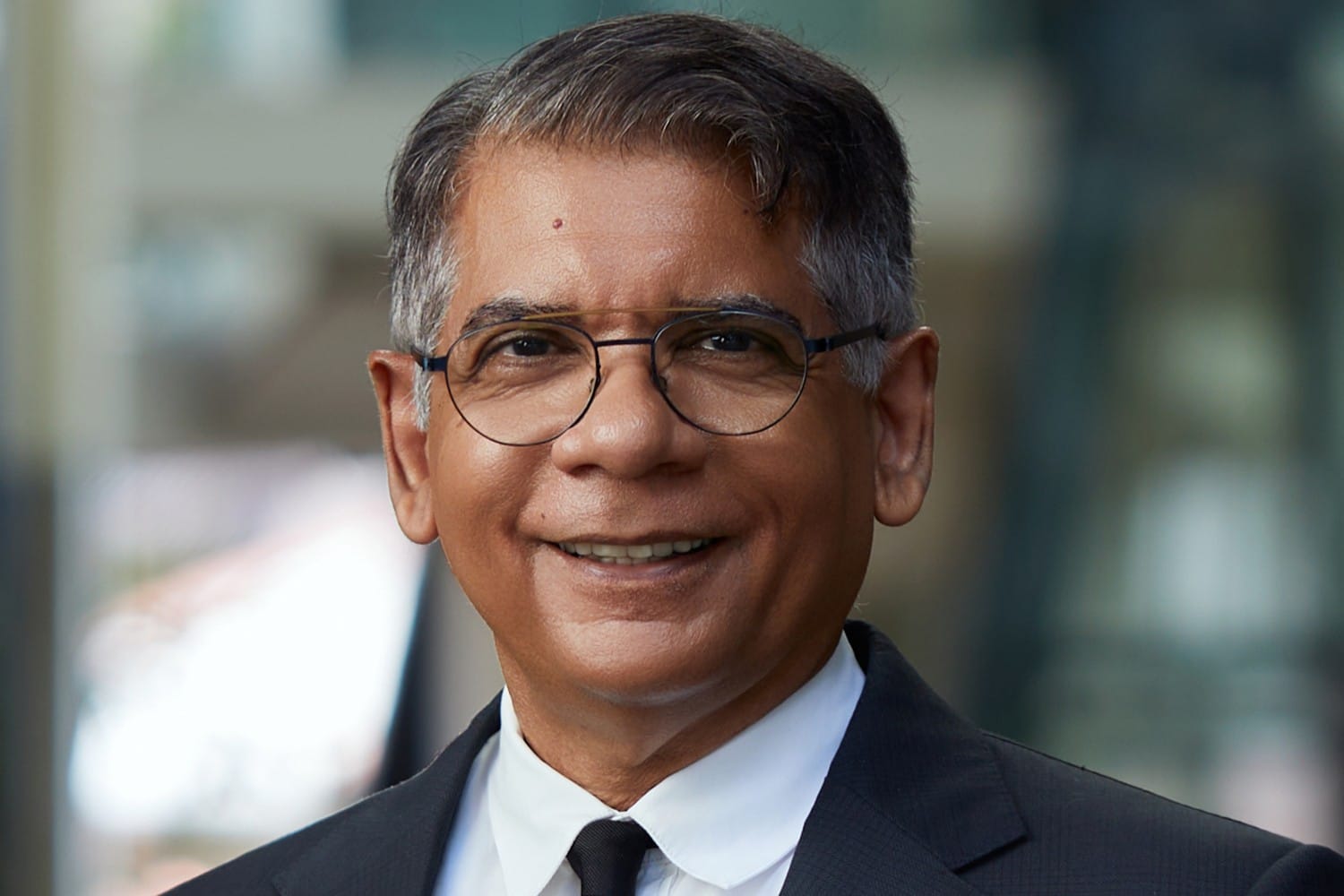
It was while working on secondment as the Director of Marketing for the Singapore Arts Festival that Dr Venka Purushothaman, recently appointed President of LASALLE College of the Arts, says his interest was piqued in doctorate studies.
His role in the festival, which came after proving himself as a capacity builder in Singapore’s bourgeoning arts scene, helped to crystalise a number of experiences and interests together.
In that role, he served as liaison for French actor and mime Marcel Marceau, who, for his own reasons, chose to dismiss the team assisting of their duties and requested Dr Purushothaman accompany him for the day.
The experience opened his eyes to the philosophy of place and connection.
“[Marceau] knew people like [French philosopher Michel] Foucault,” he tells QS Insights.
“I learnt so much about how his own practice was very much influenced by the French intellectuals. And that situating knowledge production, at the heart, is not divorced from the philosophy that you live in.”
The small interaction within the context of the broader discoveries of the role would play no small part in Dr Purushothaman eventually completing a PhD in Cultural Policy and Asian Cultural Studies, teaching him lessons he now bring to his role as President of LASALLE.
Building Singapore’s arts scene from the ground up
Singapore-born Dr Purushothaman jokes that he’s an “accidental academic”. Accidental or not, he began his studies purposefully, undertaking a Bachelor of English Literature and Communication Studies at York University in Toronto, Canada. He would later study a Master of Arts with a focus on Shakespeare and Postcolonial Studies at the same institution.
“I was always kind of curious about cultures, histories, traditions and communities,” he observes.
It was in the 1990s, when he returned to Singapore, that his “accidental” journey to academia began. At the time, Singapore was in a period of capacity building and infrastructure development which would lead the way for the city-state to become a global hub.
As part of that transition, there was also a renewed focus on the arts, and Dr Purushothaman secured a role within the National Arts Council Singapore, his first position within the arts industry.
Among the council’s responsibilities was the conception of what would become the Esplanade – Theatres on the Bay, a durian-shaped arts centre and landmark that forms part of the Marina Bay skyline. When its design was unveiled in 1994, The Straits Times called it “a landmark for the year 2000”.
Dr Purushothaman says working on the project came with a number of challenges. One was meeting the needs of stakeholders including artists, government agencies and the public. But, he says he and his team were also mindful of creating a space that was not only practical, but also created a “a situated experience of being in Asia”, a philosophy rooted in his own interests around cultures and histories.
Reflecting on this time, he says he was excited to be part of a team that built something from the ground up. “In many ways it… [building from the ground up] became a kind of defining feature of my career,” he notes.
Within that was also capacity building. “In Singapore… while infrastructure was very good in the “hardware”, the “software” development of the community or the pipeline was not there,” he says.
“I felt that that needed better connective tissue between the creatives who ultimately would populate not only content, but also be a lifeline of the environment that they create.”
It was this role that would lead Dr Purushothaman to his secondment to the Singapore Arts Festival and time with Marceau, culminating in his PhD and a philosophy for the arts in Singapore that would carry over to LASALLE.
Anton is Editor in Chief of QS Insights. He has been writing on the international higher ed sector for over a decade. His recognitions include the Universities Australia Higher Education Journalist of the Year at the National Press Club of Australia, and the International Education Association of Australia award for Excellence in Professional Commentary.