
🏫 Medtech R&D Expenditure Grew. APAC To Lead Global Semiconductor Spending. Teachers Earned 25% Less.
Chart of the Day #511 Looks at Teacher Pay Gap in US, Medtech R&D Expenditure, and Global Spending on Semiconductors by Region.
Happy New Year! 🎆
Aberdeenshire Oil & Gas workers to gain new training for clean energy careers. Honolulu CC launches first advanced manufacturing training hub to build local workforce. Women’s Health startup secures $30M to scale healthcare innovation. US Attorney receives grants for workforce programs.
PowerSchool launched an AI-powered Coaching & Mentoring platform to improve district teacher growth, retention, and instructional quality. Pearson’s Connections Academy partners with SkillsUSA, boosting college and career readiness for over 1M students. Vietnam introduced a free AI training initiative targeting 2M youth by 2026 through youth unions. The UK has introduced a $4B skills initiative to reduce reliance on foreign labor by enhancing domestic workforce training.
Today's Topics
🏫 K12 Education. Teachers earned 25% less than their graduate peers
⚕️ Health Skills. Medtech R&D expenditure grew with demand for advanced healthcare
🏭 Advanced Manufacturing. APAC to extend status as central hub for semiconductors
Thanks for reading!
Not a subscriber yet?
🏫 Teachers Earned 25% Less Than Their Graduate Peers
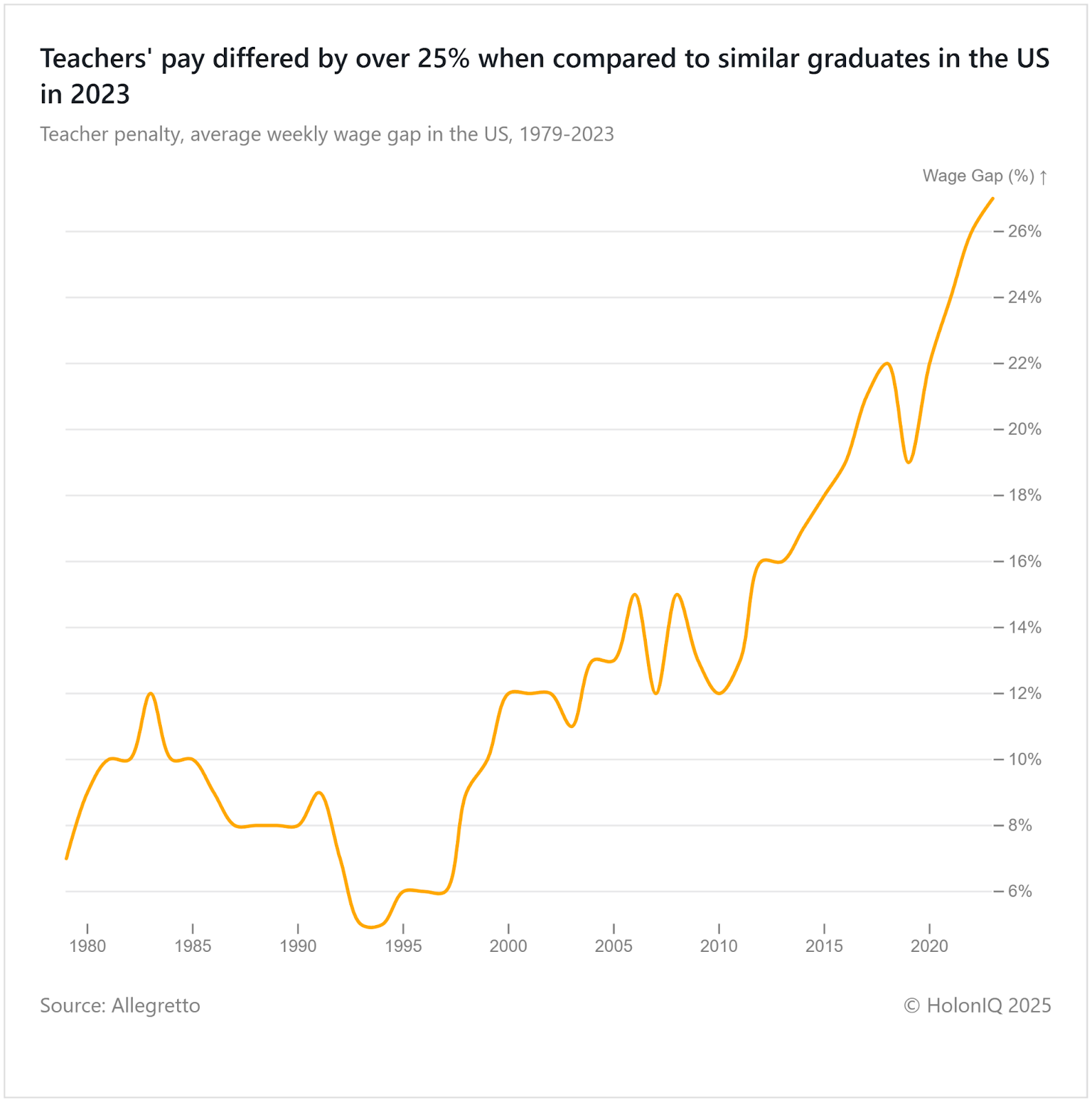
The teacher pay gap in the US has widened considerably to over 25% in 2023, marking the highest differential since data collection began in 1979. This stark wage penalty reflects a decades-long trajectory where educators earn substantially less than comparable college graduates, accelerating sharply from around 6% in the mid-1990s. This compensation crisis contributes to persistent teacher shortages nationwide. In 2021, the American Rescue Plan allocated $122B through the Department of Education to support K-12 schools, including provisions for improving educator compensation and addressing staffing shortages.
⚕️ Medtech R&D Expenditure Grew With Demand for Advanced Healthcare
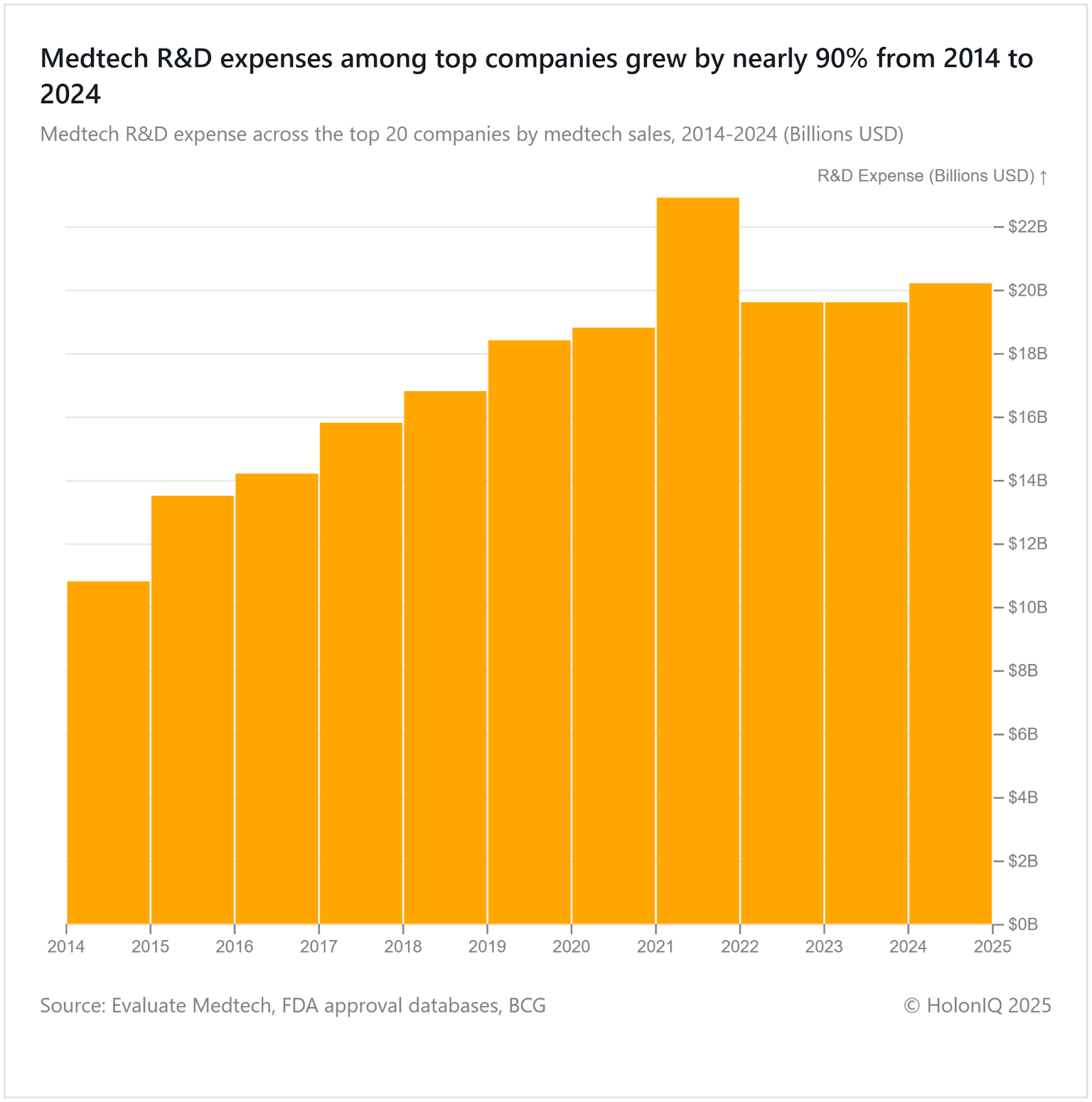
R&D spending among top medtech companies climbed nearly 90% from 2014 to 2024, reaching approximately $22B by 2022 before stabilising. This sustained investment reflects industry priorities in artificial intelligence integration, minimally invasive devices, and digital surgery platforms. Leading firms now allocate 7-8% of revenues to R&D, with AI-enabled medical devices surpassing 1K FDA clearances in 2024, more than tenfold the 2020 count. The FDA established its Artificial Intelligence/Machine Learning Medical Device Action Plan in 2021, creating regulatory pathways for adaptive algorithms and advancing healthcare innovation.
🏭 APAC To Extend Status As Central Hub for Semiconductors

APAC leads with nearly 70% of global semiconductor equipment spending through 2030, with the USA accounting for nearly 25% while EMEA and other regions remain marginal at 8% combined. This concentration reflects Taiwan, South Korea, and China driving equipment investments as foundries expand cutting-edge fabrication capacity and advanced packaging facilities to supply surging AI chip demand. China accelerates domestic equipment purchases despite export restrictions, while Taiwan and South Korea dominate leading-edge production. The US CHIPS and Science Act, signed in August 2022, deployed $52B in subsidies to reshore manufacturing and reduce strategic dependence on Asian supply chains.
Like getting this newsletter? Request a demo for unlimited access to over one million charts
Thank you for reading. Have a great week ahead!
Have some feedback or want to sponsor this newsletter? Let us know at qs.com.