
New QS insight: How students really perceive study destinations
New QS analysis shows how international students see major study destinations, how perception shifts faster than policy and what education marketers should do next.
Hello,
New QS analysis shows that study decisions are shaped as much by what students believe a destination offers as by the facts on the ground. Policy volatility, affordability concerns and peer-shared experiences are now influencing destination appeal well before students reach the application stage.
Perception can matter more than reality
Students act on what they believe a destination offers, and national narratives often lag behind lived or peer-shared experience. Any disconnect between a destination’s perception and marketing risks a loss of credibility.
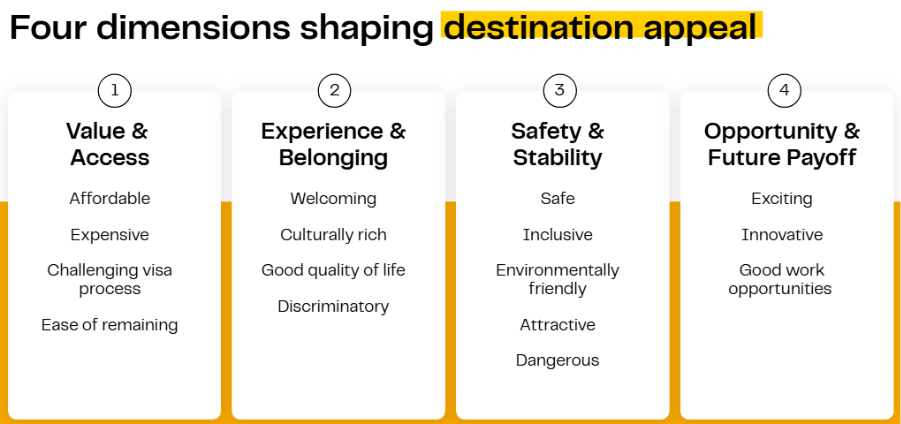
Access and affordability are filters, not selling points
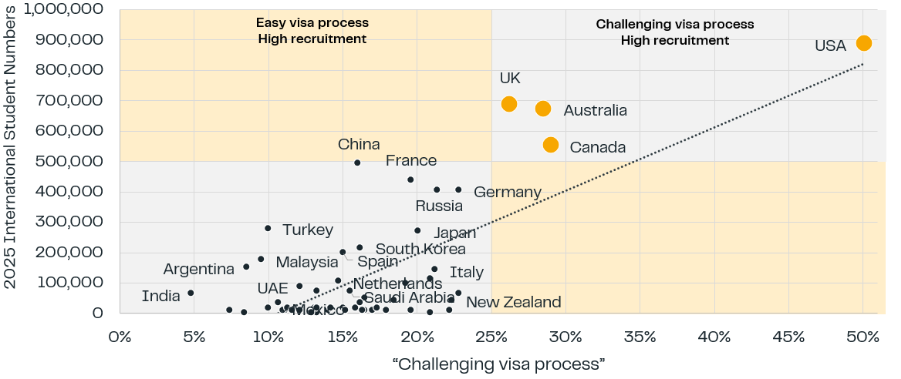
Affordability and visa access do not always win students over, but they can quickly rule destinations out. QS analysis shows that high levels of international student recruitment can still coexist with perceptions of challenging visa processes, especially for the ‘Big Four’ destination markets.
The ‘Big Four’ destinations are all among the top 10 countries which are perceived as most expensive, while destinations in Eastern Europe and South East Asia are seen as more affordable.
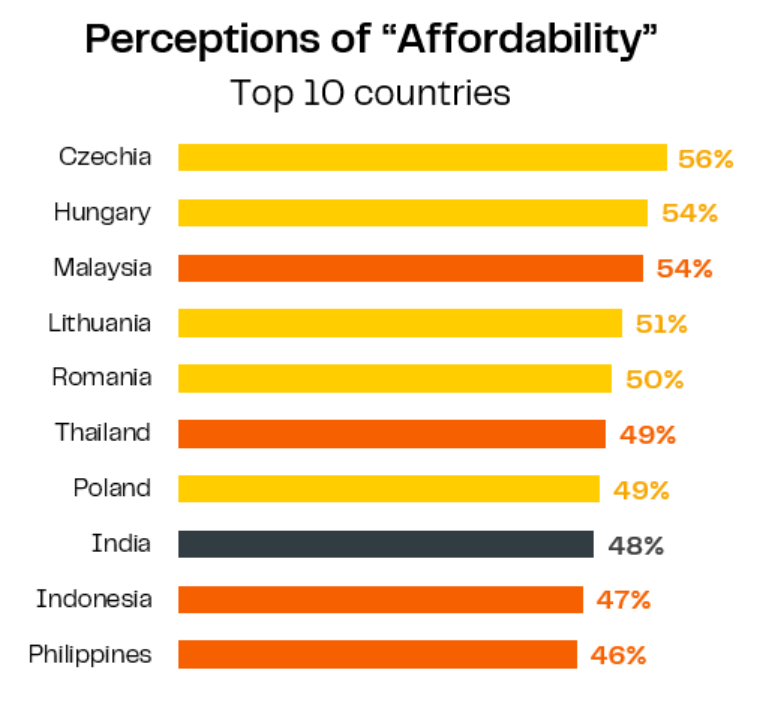
That creates an opening for emerging destinations, while also creates a messaging risk for established ones. Generic “value for money” claims are unlikely to be enough. Students need clearer explanations of cost, return, support and likely outcomes.
Policy uncertainty now affects destination trust
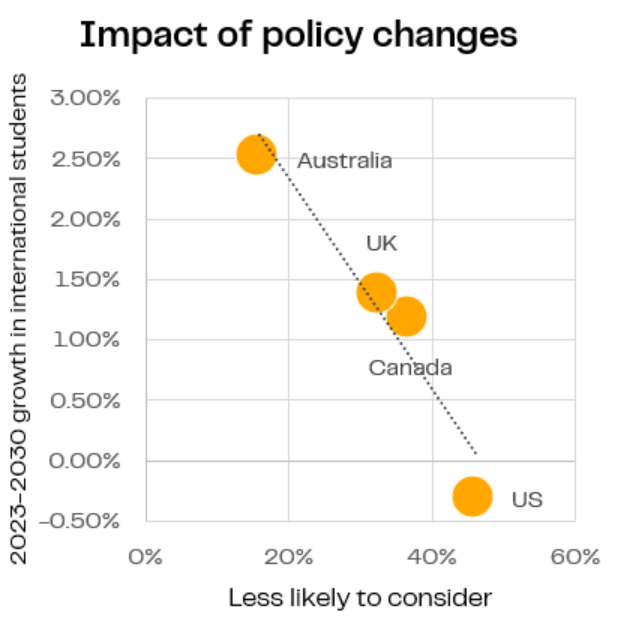
Policy changes do not need to be fully implemented to affect behaviour. The perception of instability is enough to make some students reconsider. 46% of students are less interested in the US because of restrictions on post-study leave, 37% are less interested in Canada because of the international student cap, 33% are less interested in the UK because of the as-yet unimplemented international student levy and 16% are less interested in Australia because of international student quotas. The severity of policy changes and the subsequent uncertainty that creates for international students has a direct impact on future enrolment rates.
The bigger picture
As the number of international students increases through to 2030, competition for talent will continue to increase with emerging markets growing their market share. QS Global Student Flows forecasts 8.5m international students by 2030, representing a CAGR of just below 4%. The destinations that capture this market most effectively will be those that understand how students already see them, identify where perception diverges from reality, and decide what to correct, contextualise or evidence more clearly.